
24/7 Customer Support

Free returns

Same-day & Next-day Delivery

Quality Guaranteed

Unlock Your Welcome Offers: FREE Delivery | Up to 80% OFF | Free 30-day JoyPlus trial
Download the APP
Writing by hand should be a simple, even pleasant, task. Yet for many, conditions like arthritis, carpal tunnel syndrome or general hand fatigue can turn it into a painful and frustrating experience. A standard slim pen can demand a tight, precise grip that puts unnecessary strain on sensitive joints and muscles.
The good news is that the right writing tool can make a significant difference. This guide is designed to help you navigate the options and find a pen that offers comfort without compromising on performance. We will explore what makes a pen ergonomic and highlight a few models that prioritise a more comfortable writing experience.
Finding a pen that feels right is a personal journey, but there are a few key features to look for that can help alleviate discomfort.
The diameter and material of the pen's body are perhaps the most critical factors. Wide grip pens or chunky pens for adults allow you to hold the pen with a more relaxed, open grip. This reduces the pressure needed from your fingers and thumb, easing strain on the joints. Look for pens with soft, cushioned or rubberised grips that provide a secure, non-slip surface, which can be particularly helpful for those with limited grip strength.
A pen that glides effortlessly across the page requires less downward pressure, which directly translates to less hand strain. Both gel and modern low-viscosity ballpoint inks are known for their smooth performance. Additionally, bold point pens for poor grip can be an excellent choice. A broader tip often delivers a richer, more consistent line with minimal effort, making the physical act of writing feel smoother and less strenuous.
The weight of a pen can influence how it feels in your hand. Some people find that a slightly heavier, well-balanced pen offers more stability and control, which can be beneficial for counteracting tremors. Conversely, others may find a lightweight pen is better for preventing hand fatigue during long writing sessions. There is no single correct answer; the ideal weight depends entirely on your personal comfort and needs.
Here are a few recommendations for pens designed with comfort and ease of use in mind.

Why It Stands Out: The Z-Grip Max is built around the concept of a substantial, comfortable hold. Its defining feature is the significantly wider, chunky barrel, which is designed to increase the surface area for your hand and encourage a more relaxed grip.
This model is paired with a 1.2mm bold point that lays down a smooth, consistent line of black ink. The combination of a wide body and a free-flowing, bold tip means the pen does most of the work for you, requiring very little pressure to produce clear, legible writing.
Pros:
Who is it for? This pen is an excellent choice for anyone who finds standard pens too thin and difficult to hold. It is particularly suited for individuals seeking chunky pens for adults to alleviate grip-related discomfort.

Why It Stands Out: The Z-Grip Soft Touch focuses on the tactile experience of holding a pen. The entire barrel is covered in a specialised rubberised coating, providing a velvety, non-slip surface from top to bottom. This "soft touch" finish ensures a secure hold without needing to grip tightly.
While not as wide as the Z-Grip Max, its standard-sized barrel with a full-body grip offers a different kind of ergonomic support. It combines this comfortable feel with reliable, smear-resistant black ink and a 1.0mm medium point, making it a versatile tool for everyday tasks.
Pros:
Who is it for? This is a great option for students, professionals or anyone who writes extensively and is looking for an easy grip pen. Its non-slip texture is ideal for users who want enhanced control and comfort without the bulk of an oversized pen.
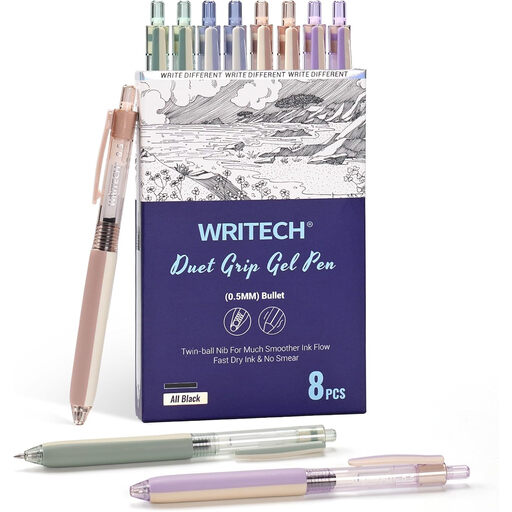
Why It Stands Out: The WRITECH gel pen offers a unique approach to ergonomics with its triangular barrel. This shape is designed to naturally guide your fingers into a proper writing posture, which can help reduce strain over time.
It features a very smooth gel ink that dries quickly, making it an excellent choice for left-handed writers or for tasks like journaling where smudging is a concern. The 0.5mm fine point tip is engineered for precision and requires almost no pressure to write. A patented silent clicker mechanism also makes it a discreet choice for quiet environments like libraries or meetings.
Pros:
Who is it for? This pen is ideal for those who prefer the fluid feel of a gel pen and appreciate a structured grip. It is well-suited for detailed note-taking, journaling and anyone looking for a pen that helps correct their writing posture to reduce hand fatigue.
Pen preference is highly subjective, and what works for one person may not work for another. The models above are just a starting point. If you would like to see a wider variety of styles and grip types, we invite you to explore our full collection of handwriting pens to find the perfect match for your needs.
Pens with wide, cushioned or specially shaped barrels are often considered easier to hold for individuals with arthritis. These designs, found in wide grip pens and chunky pens for adults, allow for a more relaxed grip that puts less stress on finger and hand joints.
Both can be excellent choices, provided the ink is of high quality. The key is to find a pen that writes smoothly with minimal pressure. Many gel pens are known for their effortless glide, which can significantly reduce hand fatigue. However, modern low-viscosity ballpoint inks can offer a similarly smooth experience.
For some individuals, particularly those with hand tremors, a pen with a bit more weight can provide added stability and make it easier to control their handwriting. However, for those with muscle weakness or joint pain, a very lightweight pen may be more comfortable for extended use as it requires less effort to hold and move.