
24/7 Customer Support

Free returns

Same-day & Next-day Delivery

Quality Guaranteed

Unlock Your Welcome Offers: FREE Delivery | Up to 80% OFF | Free 30-day JoyPlus trial
Download the APP
Watching your child learn to write is a significant milestone. However, for many children, the physical act of writing can be a challenge. Complaints of tired hands, a tight or awkward grip and messy, inconsistent lettering are common hurdles. Choosing the right writing tool is a simple yet effective way to support their journey, making handwriting a more comfortable and enjoyable activity.
This guide is designed to help you navigate the options for ergonomic pens for children. We will explore what features to look for and provide some practical recommendations to help your child build a solid foundation for neat and confident handwriting.
Finding a comfortable writing pen for kids involves more than just picking one off the shelf. Consider these key factors to ensure you are providing the best support for their developing hands.
The most crucial feature of an ergonomic pen is its grip zone. Look for pens with moulded, non-slip areas designed to encourage the tripod grip—where the pen is held between the thumb and forefinger, resting on the middle finger. This grip is widely recommended by teachers and occupational therapists as it allows for greater control and reduces muscle strain. Many modern ergonomic pens have specific indentations to guide small fingers into the correct position.
Children's writing needs evolve as they progress through primary school.
Approximately 10% of the population is left-handed, yet many standard pens are designed with right-handers in mind. For a left-handed pen for a child, look for models with specific left-handed grips. These are moulded in the opposite direction to prevent the hand from cramping and smudging the ink as it moves across the page.
Here are our recommendations for ergonomic writing tools that are popular with parents and frequently appear on lists of teacher recommended pens.

Why It Stands Out: The STABILO EASYergo 3.15 is specifically designed for children just starting to write. Its innovative design features a non-slip, cushioned grip zone that guides fingers into the correct tripod position. The extra-thick 3.15 mm HB lead is exceptionally sturdy and break-resistant, which is ideal for young writers who may apply heavy pressure. This pencil is also approved by the National Handwriting Association.
Pros:
Who is it for? This is an excellent choice for children in Reception and Year 1 (ages 4-6) who are developing their grip and letter formation skills. It is also suitable for any child who tends to break pencil leads frequently.
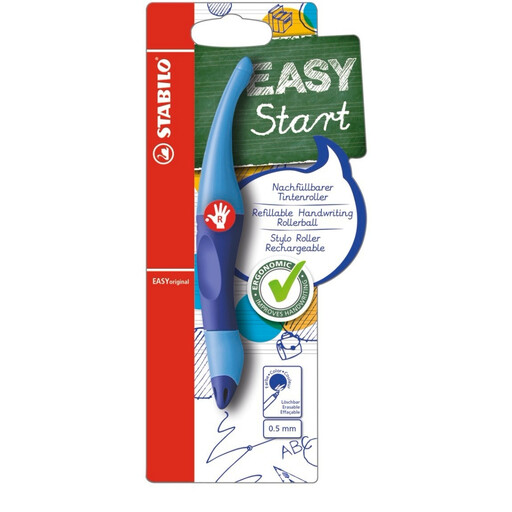
Why It Stands Out: The STABILO EASYoriginal is a widely recognised handwriting pen in UK schools. Its rollerball technology allows the nib to glide effortlessly across the page, promoting a relaxed hand posture and preventing muscle fatigue. The ink flow is consistent, ensuring neat, blot-free work. Each refill cartridge conveniently comes with a brand-new nib, so the pen always feels fresh and writes smoothly.
Pros:
Who is it for? Ideal for children (ages 6+) who are transitioning from pencil to pen. Its ease of use helps build confidence and stamina for longer writing tasks.
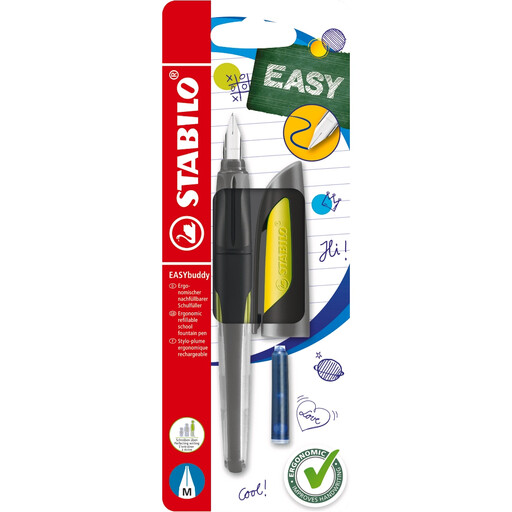
Why It Stands Out: The STABILO EASYbuddy introduces children to the refined experience of writing with a fountain pen. It features a universal soft grip zone suitable for both left and right-handers, promoting a relaxed hold. The durable iridium-tipped M-nib is robust enough for young users, while the spring-loaded cap helps prevent leaks in a pencil case. An extra-large viewing window makes it easy to see when the ink is running low.
Pros:
Who is it for? This pen is suited for older primary school children (ages 8+) who are ready to master fountain pen writing, a skill often encouraged in Key Stage 2.
The right tool can make a significant difference in your child's attitude towards writing. If the recommendations above are not quite what you are looking for or if you wish to see a broader selection of styles and colours, we invite you to browse our full collection.
Explore our complete range of ergonomic pens
Look for signs of writing fatigue, such as your child shaking their hand, complaining of aches or stopping frequently. An unconventional or overly tight grip, messy work and inconsistent letter size can also indicate that a standard pen is not providing enough support. An ergonomic pen is designed to alleviate these issues.
A child can benefit from an ergonomic writing tool as soon as they begin to form letters, typically around age 4 or 5. Starting with an ergonomic tripod grip pencil like the STABILO EASYergo can help establish good habits from the very beginning, preventing poor grip techniques from becoming ingrained.
Yes, for many children, a fountain pen can be an excellent tool for handwriting refinement. The nature of a nib requires a lighter touch and more deliberate strokes, which can slow a child down and encourage them to be more mindful of their letter formation. A specially designed children's fountain pen is a great way to introduce this classic writing instrument.