
24/7 Customer Support

Free returns

Same-day & Next-day Delivery

Quality Guaranteed

Unlock Your Welcome Offers: FREE Delivery | Up to 80% OFF | Free 30-day JoyPlus trial
Download the APP
Watching a child learn to write is a significant milestone. However, it can also be a source of frustration for both parent and child when uncomfortable grips and tired hands get in the way. The right tool can make all the difference, transforming handwriting practice from a chore into a confident and comfortable experience. This guide is designed to help you navigate the options and find suitable ergonomic pens for children, focusing on features that support a proper grip and encourage neat, legible handwriting from the start.
As the Joybuy Product Recommendation Officer, my role is to provide clear, practical information to help you make an informed choice for your child's educational journey.
Before looking at specific products, it's helpful to understand what makes a pen or pencil "ergonomic" and which features are most important for a young learner.
The most critical feature of any ergonomic writing tool is its grip. Young children are still developing the fine motor skills needed for a proper tripod grip (holding the pen between the thumb and index finger, resting on the middle finger).
Look for pens with:
A comfortable writing pen is one that a child can use without their hand cramping or tiring quickly, allowing them to focus on forming letters rather than on the discomfort of holding the pen.
The type of pen can significantly impact a child's experience. The main options for school pens for children include:
Handedness is a key consideration. Many ergonomic pens are specifically designed with moulded grips for either left-handed or right-handed users. Using a pen designed for the wrong hand will be counterproductive and uncomfortable. Always check the product description for a version that matches your child's needs to ensure they are learning a pen for correct grip.
Here are a few recommendations that focus on ergonomic design and are popular choices among parents and educators for children learning to write.
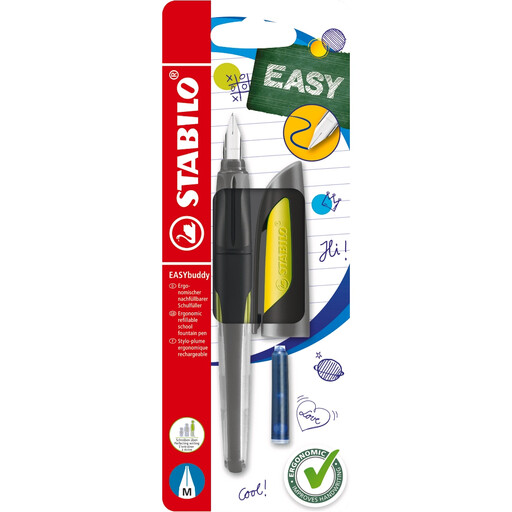
Why It Stands Out: The EASYbuddy introduces children to the classic feel of a fountain pen within a modern, supportive design. Its universal, non-slip soft grip zone is designed to encourage a relaxed hand posture, which is crucial for preventing muscle fatigue during homework or classwork. The spring-loaded cap helps prevent leaks in a pencil case and the large viewing window makes it easy to see when the ink is running low.
Pros:
Who is it for? Primary school children who are ready to move on to a fountain pen. It’s a great tool for those looking to refine their handwriting and learn to write with a lighter touch.
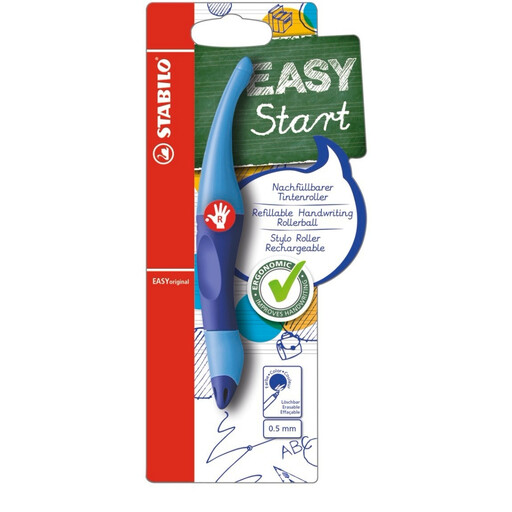
Why It Stands Out: This rollerball is a widely recognised tool in UK schools and is often recommended by teachers. The EASYoriginal combines the ease of a ballpoint with the smoothness of a fountain pen. Its key feature is the specifically moulded grip zone, with distinct versions for left and right-handers. The rollerball technology allows the ink to glide effortlessly, preventing the scratching and blotting that can frustrate young writers.
Pros:
Who is it for? Children at the early stages of learning to write with ink. Its ease of use and blot-free performance make it one of the most popular pens for learning to write.
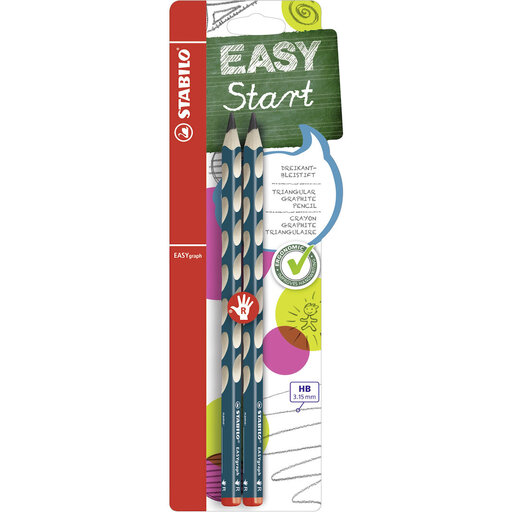
Why It Stands Out: The EASYgraph is often the very first step in a child's ergonomic writing journey. Its chunky, triangular shape and non-slip grip moulds are scientifically designed to encourage the correct tripod grip from the outset. The pencil is made from PEFC-certified wood and features clear colour-coding at the end (yellow for left-handers, red for right-handers) for easy identification in a busy classroom or pencil case.
Pros:
Who is it for? Young children (ages 4+) who are just beginning to write. It is an excellent foundational tool for teaching the correct pencil hold before they progress to ink.
The journey to neat handwriting often begins with a pencil. If you're looking for the foundational tools to help your child master their grip, there is a wide range of options available.
? Explore our full collection of ergonomic pencils to find the perfect starting point.
Ergonomic pens are designed to fit a child's hand naturally. Features like moulded grips, non-slip surfaces and balanced weight guide their fingers into the correct tripod grip. This reduces muscle strain, allowing the child to write comfortably for longer periods and focus on letter formation, which can lead to neater and more consistent handwriting.
Children can start with an ergonomic pencil, like the STABILO EASYgraph, as soon as they begin to show an interest in drawing and writing, typically around age 4 or 5. As their fine motor skills develop and they enter Key Stage 1, they can transition to an ergonomic rollerball or fountain pen. Many schools have their own policies on when children should start using ink, so it's always a good idea to check with your child's teacher.
Fountain pens can be an excellent tool for improving handwriting. They require a lighter touch than ballpoints, which encourages a more relaxed grip and can lead to a smoother, more flowing script. An ergonomic fountain pen, like the STABILO EASYbuddy, provides the benefits of a fountain pen nib with the supportive grip a child needs, making it a suitable option once they have a basic grasp of letter formation.