
24/7 Customer Support

Free returns

Same-day & Next-day Delivery

Quality Guaranteed

Unlock Your Welcome Offers: FREE Delivery | Up to 80% OFF | Free 30-day JoyPlus trial
Download the APP
Waking up with a stiff neck, aching shoulders or a dull headache is a frustratingly common experience. While many factors can contribute to this discomfort, the pillow you use every night plays a crucial role in either alleviating or aggravating the problem. An unsupportive pillow can force your neck into an unnatural position, leading to muscle strain and poor sleep quality.
Finding the right ergonomic pillow for neck pain is about more than just comfort; it is about promoting proper spinal alignment throughout the night. This guide is designed to help you understand what to look for in a supportive pillow and to highlight a few noteworthy options that cater to different support needs, from deep sleep to upright relaxation.
Navigating the world of specialised pillows can be confusing. Here are a few key considerations to help you make an informed choice.
The ideal pillow provides a level surface for your head and neck, keeping your spine in a neutral position.
The filling of a pillow determines its feel, support and durability. Memory foam is a popular choice for supportive pillows due to its unique properties.
Many ergonomic pillows move beyond the traditional rectangular shape. A contoured pillow, sometimes referred to as an orthopaedic neck pillow, features a curved design with a depression in the centre. This shape is engineered to cradle the head and provide targeted support to the neck, encouraging natural alignment and helping to relieve tension in the neck and shoulder muscles.
Here are a few products selected for their supportive designs, whether for achieving a restful night's sleep or for maintaining comfortable posture during the day.
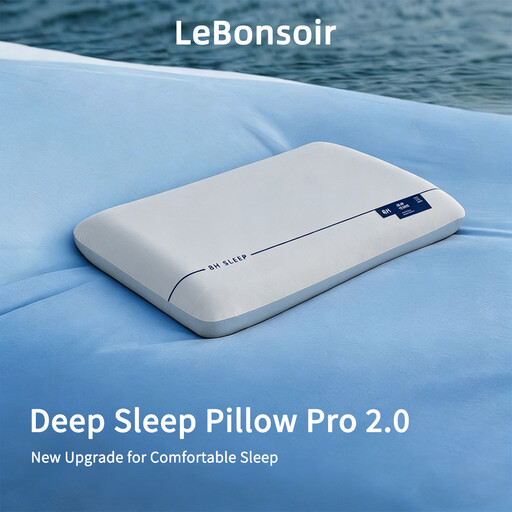
Why It Stands Out: This pillow is specifically engineered for comprehensive neck and shoulder support during sleep. Its standout feature is the 3-layer foam construction. The top layer provides soft, slow-rebound comfort, the middle layer prevents your head from sinking too deeply and the firm base layer ensures stable support. The central depression and cervical contour work together to align the head, neck and spine.
Pros:
Who is it for? This is an excellent choice for individuals actively seeking a deep sleep pillow to address sleep-related neck or shoulder pain. It is particularly well-suited for office workers, students or anyone whose lifestyle contributes to neck tension.

Why It Stands Out: While designed as a nursing aid, the ergonomic principles of this U-shaped pillow make it a versatile tool for postural support. Its primary function is to reduce strain on the arms, back and neck during seated activities. The adjustable waist strap secures it firmly against the body, providing stable support when reading, using a laptop in bed or simply relaxing upright.
Pros:
Who is it for? This pillow is ideal for anyone who needs extra support while sitting up in bed or on the sofa. It is a practical solution for preventing the neck strain that comes from hunching over a book, tablet or baby.

Why It Stands Out: This large wedge cushion is designed to provide robust back support, which is foundational to good neck posture. Poor sitting posture is a major contributor to neck pain, and this cushion helps correct that by promoting an upright, supported position. Its high-density polyester filling offers firm yet comfortable support that won't collapse under weight.
Pros:
Who is it for? This is a must-have for anyone who spends significant time reading, working or watching TV in bed. It acts as a preventative tool, creating an ergonomic environment that reduces the daily strain on your back, shoulders and neck.
A pillow is a highly personal item, and finding the perfect fit is key. If these recommendations aren't quite what you're looking for, or if you want to ensure your new pillow stays fresh and protected, why not explore our wider collection?
Discover more supportive solutions in our full range of pillow and bolster protectors.
For back sleepers, your head should rest in the central contour, with the supportive curve tucked under your neck. For side sleepers, your head should also be in the centre, with your neck supported by the raised side of the pillow. The goal is to keep your spine as straight as possible from your head to your hips.
Yes. A pillow that is too high or too low can cause your neck to bend, putting strain on your shoulder muscles and joints. A proper pillow for shoulder pain helps by maintaining neutral alignment. For side sleepers, it fills the gap between the head and mattress, preventing the top shoulder from collapsing forward and stretching the rotator cuff.
It is normal to experience an adjustment period of a few days to a week. Your body has become accustomed to your old sleeping posture, and it may take some time to adapt to the new, more supportive alignment provided by a contoured pillow. Be patient, as your muscles learn to relax into this healthier position.