
24/7 Customer Support

Free returns

Same-day & Next-day Delivery

Quality Guaranteed

Unlock Your Welcome Offers: FREE Delivery | Up to 80% OFF | Free 30-day JoyPlus trial
Download the APP
Bringing the rich aroma and complex taste of a café-quality coffee into your own kitchen is a daily luxury many of us aspire to. An espresso coffee machine with milk frother promises just that: the power to pull a perfect espresso shot and craft a velvety latte or cappuccino. However, the market is flooded with models that often over-promise and under-deliver, leading to buyer's remorse.
Before you invest, it is crucial to see past the marketing jargon. Many aspiring home baristas in the UK fall into a few common traps that result in a disappointing brew and a wasted purchase.
To make a smart choice, focus on the functional specifications that truly impact your daily coffee experience. Here are the three most important factors to analyse.
Instead of focusing on the maximum advertised pressure, consider the system's consistency. A quality 15 bar espresso machine or 20 bar coffee machine will have a pump capable of delivering stable pressure at the group head (where the coffee is brewed), which is far more important than a high peak number.
Equally important is the heating system. Most modern home machines use a Thermoblock system. This technology heats water on demand, resulting in a much faster start-up time—perfect for a quick coffee before you head out the door. This is generally more efficient for home use than traditional boiler systems, which take longer to heat up and recover between brewing and steaming.
Given that kitchen space is often at a premium, a compact espresso machine is a practical necessity for many. Always check the dimensions (width, depth and height), ensuring you have enough clearance under your cabinets. Look for models with stainless steel housing, as they tend to be more durable and easier to wipe clean than their all-plastic counterparts. A removable water tank and drip tray are also non-negotiable features for easy refilling and cleaning.
For those who love a good cappuccino or latte, the steam wand is critical. A good manual espresso machine will feature a proper steam wand, often made of stainless steel, with one or more small holes at the tip. This design allows you to control the aeration and texturing of the milk. Avoid basic panarello-style wands (often a thick plastic or metal sleeve) if you are serious about creating silky microfoam, as they are designed to inject a lot of air quickly, which creates stiff foam but not a smooth texture.
We have filtered through the options to find machines that balance performance, design and value, helping you avoid the common pitfalls.

Why This Fits Their Persona: Ideal for those new to the world of home espresso. It offers the reliability of a well-known brand with simple, intuitive controls, making it a great starting point for learning to pull shots and steam milk without an overwhelming number of features.
Its 15-bar pump provides ample power without getting caught in the marketing hype of higher numbers. The compact design ensures it fits neatly into smaller kitchens, avoiding the "countertop hog" problem.
Features a durable stainless steel boiler and a two-tier drip tray to accommodate taller mugs. It is also compatible with ESE pods for added convenience.

Why This Fits Their Persona: For the user who wants versatility and style. This machine not only makes an excellent espresso and cappuccino but also features a dedicated cold extraction mode, making it a true iced coffee machine for refreshing drinks in the summer.
Its ultra-slim 15cm width is a direct solution to the "countertop hog" problem. The advanced 'My LatteArt' steam wand is specifically designed for silky microfoam, steering clear of the "froth-fail" issue.
The unique Cold Extraction Technology prepares a smooth cold brew in under 5 minutes. It also features a fast-heating Thermoblock system and intuitive touch controls.
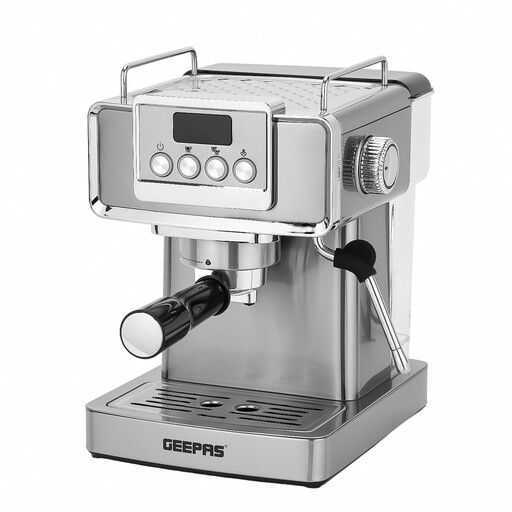
Why This Fits Their Persona: For the user upgrading from a basic maker who wants more power and features without a premium price tag. This machine offers a robust set of specifications for consistent daily brewing and milk frothing.
While it uses the 20-bar figure in its marketing, its real value lies in its complete feature set—a rapid heat system, adjustable steam wand and large 1.8L water tank—which deliver tangible performance benefits.
Includes a cup warming tray to keep your espresso at the ideal temperature and a large water reservoir that reduces the frequency of refills, making it great for households with multiple coffee drinkers.
We have compiled a complete, real-time list of products that fully satisfy these strict selection criteria and UK safety regulations.
Not necessarily. The industry standard for optimal espresso extraction is around 9 bars of pressure applied at the coffee grounds. Both 15-bar and 20-bar pumps are more than capable of achieving this. The consistency of the pressure and the machine's ability to maintain a stable brewing temperature are far more important factors for a quality shot of espresso.
The lifespan of a home coffee machine depends on its build quality and how well it is maintained. Entry-level models may last around 3 to 5 years with regular use. Mid-range machines with more robust components, like stainless steel boilers and housing, can last from 5 to 10 years or more if they are descaled regularly and cleaned after each use.
Yes, you can use pre-ground coffee, but for the best results with a cappuccino maker, you should use a fine, consistent grind labelled for espresso. Coffee ground too coarsely will result in a weak, under-extracted shot, while coffee ground too fine can clog the filter. For ultimate control over your brew, investing in a separate burr grinder is a worthwhile step.