Making the most of your living space is a common goal for many of us in the UK, especially when it comes to dining. Whether you live in a compact flat, a modern open-plan home, or simply want a more flexible layout, finding the right furniture is key. An extendable dining table offers a practical solution, transforming from a modest everyday table into a spacious surface ready for guests.
This guide is designed to help you navigate the options. We will explore the different types of extending tables, what to look for in terms of materials and mechanisms and share some of our top recommendations to help you find a table that fits both your space and your lifestyle.
How to Choose an Extendable Dining Table
Before diving into specific models, it’s useful to understand the key features that differentiate them. Considering these points will help you select a table that meets your needs for years to come.
1. Understanding Extension Mechanisms
The way a table extends is a crucial factor. The mechanism affects ease of use, appearance and where the extra leaf is stored.
- Butterfly Leaf: This is a popular and convenient option. The extension leaf is hinged and folds in half (like butterfly wings), storing neatly within the table itself. This means you never have to find a separate storage space for the panel.
- Drop Leaf: A classic choice for a space saving dining table, this design features hinged sections on one or both sides of the tabletop. You simply lift the leaf and support it with a pull-out leg or bracket. A drop leaf dining table is excellent for very small rooms as it can be pushed flat against a wall.
- Standard Extension Leaf: With this traditional method, the table pulls apart from the centre, and you manually insert one or more separate leaves. While very sturdy, it requires you to store the leaves elsewhere, such as in a cupboard or under a bed.
2. Material and Durability
The material of your dining table impacts its look, feel and longevity.
- Solid Wood: A solid wood dining table is prized for its durability, strength and timeless appeal. Woods like oak and walnut offer natural beauty and can be refinished over time if needed. They are often heavier and represent a long-term investment.
- Wood Veneer & MDF: Tables made from Medium-Density Fibreboard (MDF) with a wood veneer or wood-effect finish offer a more affordable alternative. They provide a consistent, modern look and are generally lighter and easier to maintain, though they may not have the same lifespan as solid wood.
3. Size and Seating Capacity
Consider both the compact and extended dimensions. Measure your dining area carefully, ensuring there is enough room to walk around the table and pull out chairs, even when it's fully extended. A good rule of thumb is to leave at least 90cm of clearance on all sides. Think about your typical needs—do you need a 4 to 6 seater dining table, or something that can accommodate even more for special occasions?
Top Product Recommendations
Here are a few standout options that offer flexibility, style and practical design for different types of homes.
Dining & Console Table Hanover Round/Half Moon Extendable
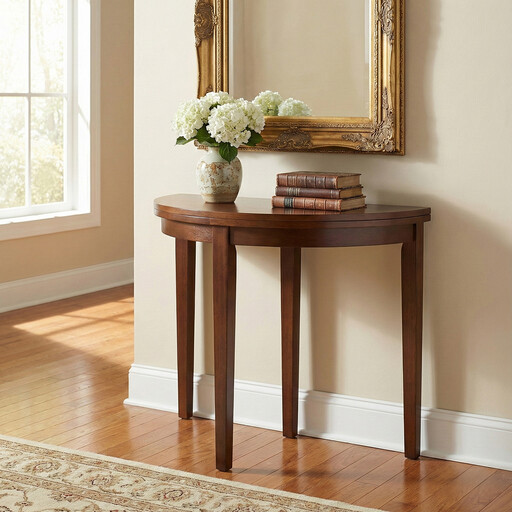
- Why It Stands Out: The Hanover table is a masterclass in multi-functional design. It starts as a slim, half-moon console table that sits flush against a wall, making it perfect for hallways or tight corners. When needed, it unfolds into a full round extendable dining table.
- Pros:
- Extremely compact design ideal for very small spaces.
- Dual-purpose use as a console and dining table.
- Crafted from solid hardwood for durability.
- Who is it for? This is an excellent choice for individuals or couples in studio flats or homes where a permanent dining table isn't feasible. It’s the ultimate compact dining table for those who need furniture to adapt on demand.
URBAN MEUBLE Black Wood Effect Extendable Dining Table
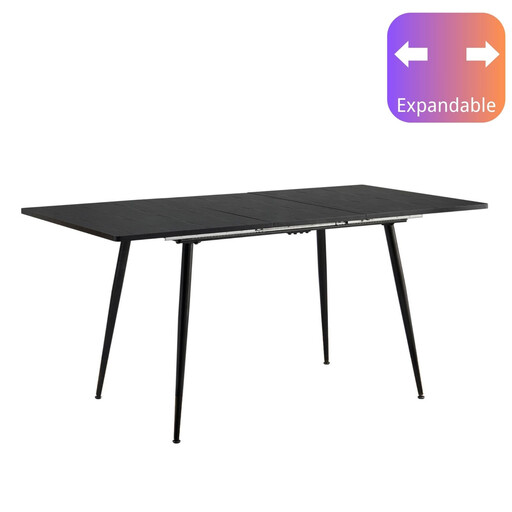
- Why It Stands Out: This table combines a sleek, contemporary aesthetic with practical function. The black wood-effect surface and slim metal legs create a modern profile, while the simple extension mechanism takes it from a four-seater to a comfortable six-seater.
- Pros:
- Easily extends from 120cm to 160cm.
- Durable and easy-to-clean MDF top.
- Modern industrial style suits contemporary interiors.
- Who is it for? Ideal for growing families or those who enjoy hosting but have a dedicated dining area of a modest size. It’s a versatile 4 to 6 seater dining table that balances everyday use with entertaining needs.
Dining Table Roseville Extendable Round/Oval
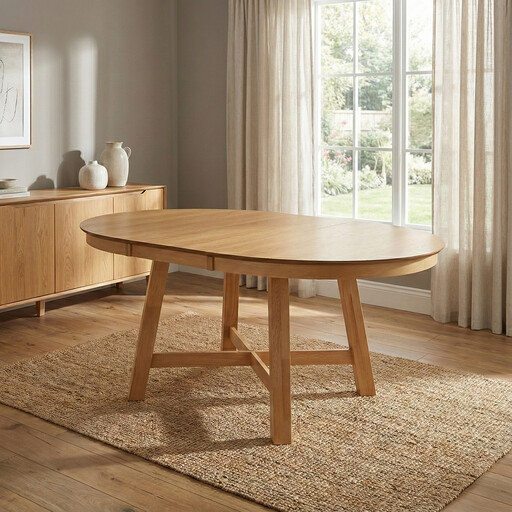
- Why It Stands Out: The Roseville table offers classic charm and clever engineering. It features an integrated butterfly extension leaf, which is stored discreetly within the table. It transforms smoothly from a 115cm round table to a 154cm oval, perfect for larger gatherings.
- Pros:
- Solid hardwood construction with a warm oak finish.
- Convenient internal storage for the extension leaf.
- Stable pedestal base maximises legroom.
- Who is it for? This table is for those who appreciate traditional craftsmanship and need a flexible solution for family meals and dinner parties. It’s a substantial piece that works beautifully as both a small extendable dining table for daily use and a larger table for hosting.
Looking for Other Styles?
If these recommendations aren't quite what you're looking for, there are many other designs to explore. For more circular and space-efficient options, browse our full collection.
? Discover more in our range of extending circular tables.
Frequently Asked Questions
1. Are extendable dining tables sturdy when extended? Yes, a well-designed extendable table is built to be stable in both its compact and extended forms. Look for models with robust leg structures, secure locking mechanisms for the leaves and a central support leg if it's a particularly long table. Tables made from solid wood or with strong metal frames tend to offer excellent stability.
2. How much space should I leave around my dining table? For comfortable use, aim to have at least 90cm of clear space between the edge of the table and any walls or other furniture. This allows people to sit down and get up easily and provides enough room for others to walk behind seated guests without disruption. Remember to account for this clearance when the table is fully extended.
3. Can one person extend a dining table alone? This depends on the mechanism. Tables with a butterfly leaf or a synchronised opening system (where pulling one end of the table also moves the other) are often designed for one-person operation. Heavier tables with separate, manual leaves might require two people to pull the top apart and position the extension panels safely.


