Studio archive manager
If completed interviews accumulate at one workstation, you need room for the catalogue and a repeatable process for making a separate backup.


Choose a powered desktop hard drive if recordings normally stay at one studio workstation; choose a portable SSD if the same drive regularly travels between recording locations and editors. Whichever route fits, check the computers and file format before setting it up, control access to identifiable interviews, and keep an independent copy that can be disconnected.
If completed interviews accumulate at one workstation, you need room for the catalogue and a repeatable process for making a separate backup.
If recordings move between a location kit and editing computers, you need a drive that is practical to carry and works with the connections used at each hand-off.
If recordings contain personal information, you need to decide who can access the drive, how any password is managed and how the files can be recovered.
Decide whether the working drive will stay at a desk or travel with current recordings, then check how every studio computer will use it. Access control and an independent backup matter with either choice.
Choose when: One workstation is the usual home for a growing catalogue of completed interviews.
Accept: A desk-based, externally powered workflow rather than a drive for regular hand-offs.
Choose when: Current recordings regularly move between a recording kit, editors and locations.
Accept: Advertised transfer speeds depend on compatible equipment; ruggedness claims have test conditions and limits.
| Concern | What to check | Who this matters to |
|---|---|---|
| Archive capacity | Check the capacity of the exact variant and whether a fixed drive needs mains power. | If completed interviews build up at one desk, I want enough local space without carrying the archive between sessions. Around 25% of consumers put this fixed-archive need first. |
| Portable transfers | Check the host port and cable required for any stated speed, plus the conditions behind durability claims. | When I hand recordings to an editor or take a current project on location, carrying the drive easily is my priority. For around 19% of consumers, portable transfer is the primary need. |
| Computer compatibility | List the systems that must read and write the drive; choose a file format for that workflow before copying recordings. | If colleagues use different computers, I need hand-offs that do not end in an unexpected reformat. Predictable cross-system use comes first for around 25% of consumers. |
| Protection and recovery | Check access and password-recovery arrangements, and plan an independent copy that can be disconnected. | Where interviews are identifiable or difficult to recreate, I need to control access without losing the ability to restore them. Around 31% of consumers prioritise protection and recovery. |
The National Cyber Security Centre describes ransomware incidents affecting both original files and connected USB or network backups.
Keep another independent copy of the interviews and disconnect at least one backup when it is not needed.
Samsung’s T7 Shield water, dust and drop claims reflect controlled tests. Samsung says resistance can vary with conditions and excludes liquid, dust and drop damage from its warranty.
Handle the drive carefully during travel and keep another copy before taking recordings off-site.
Apple lists ExFAT as Windows-compatible, but recommends APFS for external storage used with Final Cut Pro, Motion and Compressor. Reformatting erases existing files.
Identify which systems and applications must use the drive, then copy recordings elsewhere before changing its format.
For drives using WD Security, Western Digital says a forgotten password cannot be recovered; the drive must be erased before reuse.
Assign responsibility for credentials under the studio’s access policy and make sure recordings can be restored from an independent backup.
Seagate UK describes its One Touch Hub desktop line as a fixed-storage option with 4 TB–16 TB variants, front USB ports and backup tools.
Samsung UK positions its T7 Shield portable SSD line for transfers between compatible devices and describes password protection and tested resistance to dust, water and drops.
Western Digital lists My Book among the drives supported by its WD Security password-protection software.
These choices cover a fixed desktop archive and portable drives for moving current recordings. Match the drive to where files will live and how they will be handed off; keep a separate backup whichever you choose.
 No image available
For carrying current interview recordings between compatible studio and location equipment.
The listed interface is USB 3.2 Gen 2; check the studio computers and cable before relying on a particular transfer speed.
 No image available
For moving current recordings between devices that suit the studio’s hand-off workflow.
The title states USB 3.2 Gen 2 and speeds of up to 1,050 MB/s read and 1,000 MB/s write; check the connected devices and the intended file format before use.
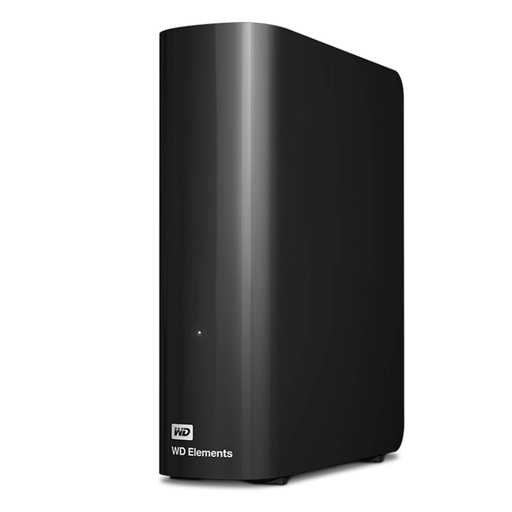 No image available
For a growing interview archive kept at a regular studio workstation.
This is a desktop drive; confirm its power requirements and the file format needed by the studio computers before setting up the archive.
 No image available
For storing and handing off recordings when a portable hard drive suits the team’s workflow.
Check read-and-write access on each studio computer and confirm how credentials would be recovered before choosing a password-protection setup.
 No image available
For moving a larger set of interview recordings when the team needs portable storage.
The title specifies USB 3.0; confirm that the chosen file format allows the required access on every studio computer.
Do not rely on one external drive as the only copy of interview recordings. The National Cyber Security Centre describes ransomware affecting connected USB and network backups; keep an independent copy that can be disconnected when it is not in use.
ExFAT is a Windows-compatible format listed by Apple for sharing files between Macs and Windows computers. If the drive instead holds a Mac-only Final Cut Pro, Motion or Compressor workflow, Apple recommends APFS; copy existing recordings elsewhere before reformatting.
Encryption is not automatically required for every recording. The Information Commissioner’s Office says UK GDPR does not specifically require encryption of all personal information, while identifying it as a possible appropriate security measure and saying it should be used for personal information on removable media. Assess whether the recordings contain personal information and how the studio will protect them.
On Windows, use Safely Remove Hardware or Eject Media before disconnecting the drive. Microsoft advises this to avoid data loss when writes may still be pending.
Limit access to people whose studio role requires it and review that access when roles change. The National Cyber Security Centre recommends regularly reviewing both who has physical access to backup media and the level of access they have.