
24/7 全天候客户支持

免费退货

当日/次日达

品质保障

开启新人专享福利: 全场免邮 | 低至 2 折 | 免费试用 30 天 JoyPlus 会员
下载 Joybuy
As a Joybuy Product Recommendation Officer, my role is to help you navigate the crowded fitness market. Many of us have experienced the frustration of flimsy rubber resistance bands that roll up, pinch or snap mid-squat. It can disrupt your workout and make it difficult to maintain proper form. This is where fabric resistance bands come in, offering a more stable and comfortable solution, especially for lower body exercises.
This guide is designed to provide practical advice on what to look for in a quality set of fabric resistance bands. We will highlight some key features to consider and present a few recommendations to help you find the right equipment for your home fitness goals, whether you're focused on Pilates, yoga or targeted strength training.
Finding the right bands can significantly enhance your workouts. Here are a few key factors to consider before making a purchase.
The primary advantage of fabric resistance bands over traditional latex versions is their material. Typically made from a blend of cotton and elastic, they are wider and have a texture that grips both your skin and clothing. Many feature inner latex or silicone strips that create non-slip exercise bands, ensuring they stay firmly in place during dynamic movements like lunges, glute bridges and squats. This stability allows you to focus on your form rather than constantly readjusting your equipment.
To see progress in your fitness journey, you need to challenge your muscles consistently. A set of glute bands that includes multiple resistance levels (commonly Light, Medium and Heavy) is an excellent investment. This allows you to start with a lower resistance to warm up or master a new exercise, then move to a heavier band as you get stronger. This versatility makes a single set suitable for various exercises and fitness levels, from beginners to seasoned athletes.
Comfort is crucial for a consistent workout routine. Look for wider hip bands, as they distribute pressure more evenly across your thighs and are less likely to dig in or cause discomfort. These are often referred to as booty bands because their design is optimised for lower body movements. Also, check for reinforced stitching along the seams. This is a good indicator of a well-made product that is built to withstand repeated stretching and provide long-term durability for your leg and glute workout bands.
Based on features that align with effective and comfortable home workouts, here are our recommendations.
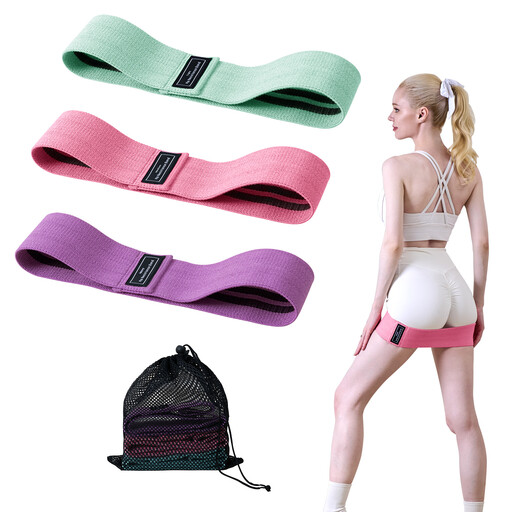
Why It Stands Out This set directly addresses the common issues of traditional bands. Crafted from a high-quality, skin-friendly cotton fabric, these resistance loop bands are designed to stay put. Their robust, non-slip construction means no more rolling or sliding during intense sets. The pack includes three distinct resistance levels, making it a versatile choice for anyone looking to progressively strengthen and tone their lower body.
Pros
Who is it for? This set is ideal for individuals focusing on lower body workouts, including glute activation, hip strengthening and leg toning. It's a great fit for home fitness enthusiasts, as well as those who practise Yoga and Pilates and want to add a new level of challenge to their routines.
While fabric loop bands are excellent for the lower body, some users may want a tool for upper body training as well. These tube-style resistance bands with handles offer a different kind of versatility.
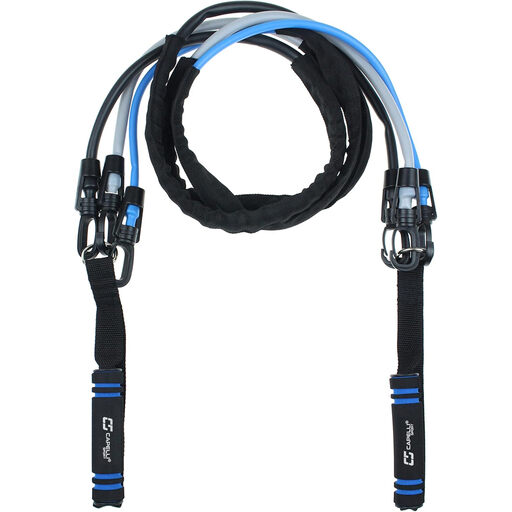
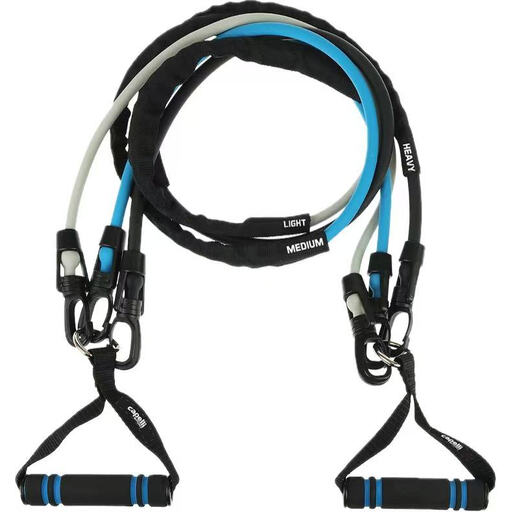
Why It Stands Out The Capelli Sport sets provide a complete solution for full-body resistance training. Unlike loop bands, these feature separate tubes and handles, making them well-suited for exercises like bicep curls, shoulder presses and rows. The easy-adjust clips allow you to stack the bands, customising the resistance level for each exercise. They are available in both TPE and Natural Latex materials to suit different preferences.
Pros
Who is it for? These sets are for individuals seeking a versatile piece of home fitness bands for a full-body workout. If your routine includes a mix of upper and lower body exercises and you value the functionality of handles, this is a practical choice.
Fitness equipment is a personal choice, and what works for one person may not be the right fit for another. Our recommendations cover some popular and effective options, but there are many other styles and resistance levels available.
If you'd like to see a wider variety of bands, including different materials, lengths and complete sets, we invite you to explore our full collection.
Discover more in our complete Resistance Fitness Band category.
Are fabric resistance bands better than latex ones? It depends on your workout goals. For lower body exercises like squats, hip thrusts and clamshells, fabric resistance bands are often preferred due to their non-slip grip, durability and comfort. They provide strong, consistent tension. Traditional latex bands, however, can offer a greater range of motion and stretch, which may be more suitable for physical therapy, mobility work or some upper-body exercises.
How do I choose the right resistance level for booty bands? If you are new to using them, it is advisable to purchase a set with multiple resistance levels. A good rule of thumb is to use the light band for warm-ups or learning new movements, the medium band for the bulk of your workout sets and the heavy band to challenge yourself on exercises where you have mastered the form, such as glute bridges. The right resistance should feel challenging by the last few repetitions of a set while still allowing you to maintain proper technique.
Can you wash fabric resistance bands? Yes, most fabric bands can be cleaned. It is generally recommended to hand-wash them in cool water with a mild detergent and then let them air-dry completely. Avoid using a washing machine or tumble dryer, as the high heat and agitation can damage the elastic fibres and reduce the band's lifespan. Always refer to the manufacturer's specific care instructions if available.