
24/7 全天候客户支持

免费退货

当日/次日达

品质保障

开启新人专享福利: 全场免邮 | 低至 2 折 | 免费试用 30 天 JoyPlus 会员
下载 Joybuy
Applying daily face sunscreen is one of the most effective steps you can take for your skin's long-term health and appearance. Yet, finding the right one can feel like a chore. The UK market is filled with options, and it's easy to fall for marketing claims that don't deliver, leaving you with a product that feels greasy, leaves a chalky residue or worse, causes breakouts.
As a Joybuy Product Recommendation Officer, my role is to help you navigate these choices. Many people find themselves disappointed by two common pitfalls:
This guide will break down the essential factors to consider, helping you select a daily facial sunscreen that you will genuinely enjoy wearing.
Before you add any product to your basket, understanding a few core parameters will ensure you get a formula that works for you, not against you.
The SPF (Sun Protection Factor) number primarily indicates protection against UVB rays, the main cause of sunburn. However, UVA rays penetrate deeper into the skin, contributing to premature ageing, wrinkles and pigmentation.
For comprehensive protection, you need a broad-spectrum sunscreen. In the UK and EU, look for the letters 'UVA' inside a circle on the packaging. This symbol guarantees that the UVA protection is at least one-third of the SPF value, meeting the official recommendation. You may also see a PA rating (e.g., PA++++) on products with Asian origins, which is another system for grading UVA protection.
Sunscreens use two types of filters to protect your skin, and each has its own characteristics:
Modern sunscreens are sophisticated skincare products. The right texture can enhance your routine and even replace other steps. Consider what finish you prefer:
Based on these criteria, we've matched several standout products to different user needs. Instead of a one-size-fits-all approach, this selection focuses on finding the right fit for your specific skin type and lifestyle.
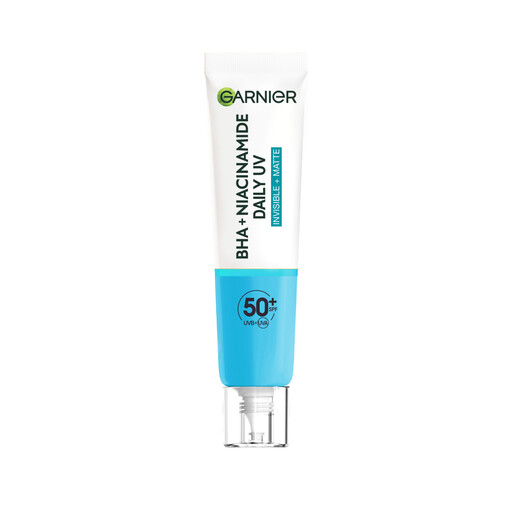
Why This Fits Their Persona: This is for the daily commuter who needs a reliable, shine-free base. Its ultra-light fluid texture absorbs instantly, creating a matte finish that controls oil throughout the day, making it an excellent primer for makeup.
It directly counters the "one-size-fits-all" fallacy by being specifically formulated for oily, imperfection-prone skin, rather than being a generic heavy cream.
Combines high SPF 50+ protection with skincare actives like BHA (Salicylic Acid) and Niacinamide to actively help reduce the appearance of blemishes and pores.
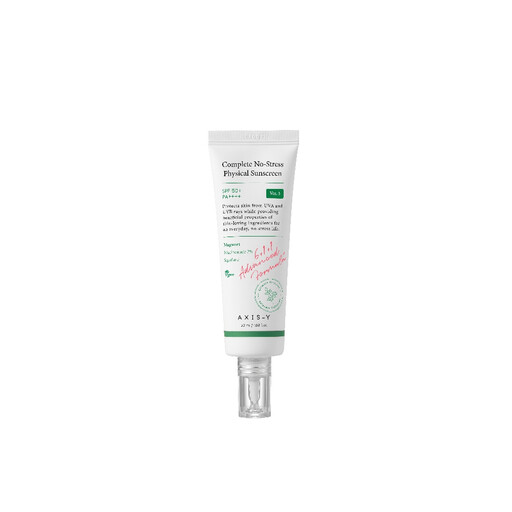
Why This Fits Their Persona: This is an ideal choice for those whose skin is easily irritated by chemical filters, fragrance or alcohol. It provides high, reliable protection using only a physical filter in a formula designed to be calming.
It debunks the myth that all mineral sunscreens are thick and chalky. This modern essence-gel texture blends smoothly without leaving a heavy white residue.
Features a Zinc Oxide base with soothing ingredients like Mugwort and Niacinamide to calm redness and support the skin barrier, making it more than just a sunblock.
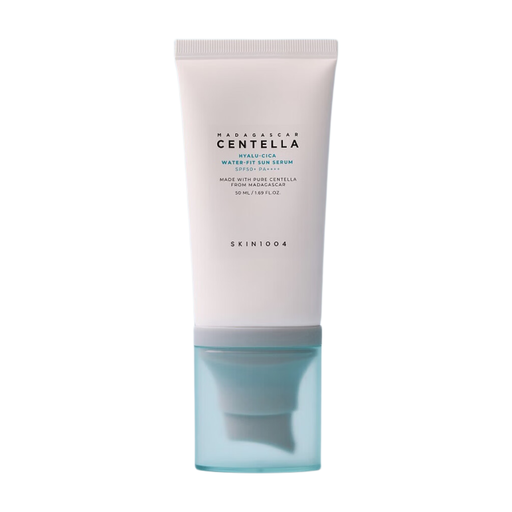
Why This Fits Their Persona: Perfect for those who dislike the feeling of heavy layers. This product's texture is so light and watery it feels like a hydrating serum, allowing many with normal to oily skin to skip their morning moisturiser entirely.
It delivers on the "invisible finish" promise by providing a dewy, plumped look with zero white cast, feeling more like a luxury skincare step than a necessary chore.
The "Hyalu-Cica" formula combines Hyaluronic Acid for hydration and Centella Asiatica for soothing, offering tangible skincare benefits alongside SPF 50+ protection.
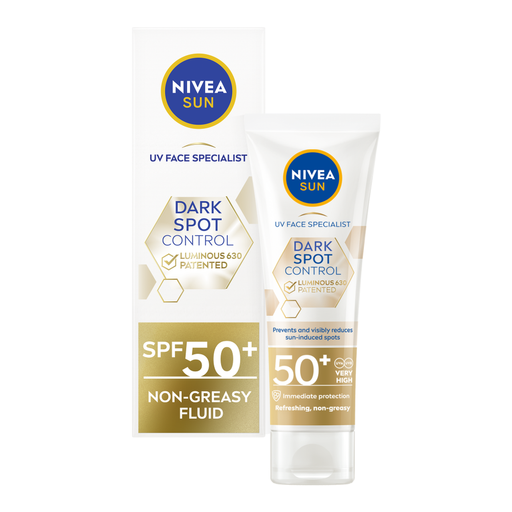
Why This Fits Their Persona: This is for the savvy user who wants their sunscreen to work harder. It provides high-level sun protection while actively working to reduce the appearance of existing sun-induced dark spots and prevent new ones from forming.
This formula goes beyond just protection. It's an active anti-pigmentation sun cream that addresses a specific concern, moving past the simple "high SPF" claim to offer a targeted solution.
Contains the patented Luminous630 ingredient. According to Nivea's own studies, it can visibly reduce sun-induced spots with consistent use, promoting a more even complexion.
We have compiled a complete, real-time list of products that fully satisfy these strict selection criteria and UK safety regulations.
To achieve the SPF level stated on the bottle, you need to apply a sufficient amount. A commonly cited guideline for the face and neck is the "two-finger rule": squeeze a line of sunscreen onto your index and middle fingers from base to tip. This is a practical way to estimate the correct quantity, which is roughly a quarter-teaspoon.
This depends on your skin type and the specific product. For those with oily or combination skin, a modern hydrating sun serum or lightweight fluid can often provide enough moisture for the daytime, allowing you to streamline your routine. However, if you have dry or dehydrated skin, you will likely benefit from applying your sunscreen on top of your usual moisturiser for an extra layer of hydration.
In the UK and EU, a sunscreen cannot be labelled as 'waterproof' or 'sunblock' because no product is 100% impervious to water or completely blocks the sun. The term 'water-resistant' is regulated and means the sunscreen has been tested to maintain its stated SPF level for a specific duration while in water (typically 40 or 80 minutes). It is still crucial to reapply your sunscreen immediately after swimming, towel drying or heavy sweating to maintain protection.