
24/7 Customer Support

Free returns

Same-day & Next-day Delivery

Quality Guaranteed

Unlock Your Welcome Offers: FREE Delivery | Up to 80% OFF | Free 30-day JoyPlus trial
Download the APP
As the British weather keeps us on our toes, finding a quick and cost-effective way to warm up a chilly room is a common challenge. Whether it's a draughty home office, a cold corner in the living room or a bedroom that needs a boost of warmth before sleep, a fan heater can be an ideal solution. They offer instant, targeted heat without the expense of firing up the entire central heating system.
Navigating the options can be tricky, with various features, power ratings and designs to consider. This guide is designed to help you understand the key factors and highlight some practical choices, making it easier to find an electric heater for your room that suits your needs and budget.
Before looking at specific models, it's helpful to understand what makes a good fan heater. Focusing on a few key areas will ensure you select a device that performs well and operates efficiently.
The power of a fan heater, measured in watts (W) or kilowatts (kW), determines its heat output. A 2kW fan heater is generally powerful enough to warm up a small to medium-sized room, while a lower-wattage small electric heater (around 500W) is better suited for personal spaces like under a desk.
For an energy efficient fan heater, look for a model with an adjustable thermostat. A fan heater with a thermostat will automatically switch off when the room reaches your desired temperature and turn back on if it drops, preventing it from running constantly and wasting electricity. Timers are another excellent feature for managing energy use.
Modern fan heaters have evolved beyond basic designs. A ceramic fan heater uses a ceramic plate heating element, which heats up very quickly and provides a more consistent, even warmth compared to traditional coil elements. They are often considered a more efficient and durable option.
Safety should always be a priority. Look for models with built-in overheat protection, which automatically shuts the unit off if it gets too hot and a tip-over switch that does the same if the heater is accidentally knocked over. For bedrooms and offices, a quiet fan heater can make a significant difference to your comfort and concentration.
The compact nature of most fan heaters makes them inherently portable. A lightweight portable fan heater with a carry handle allows you to move warmth from room to room with ease. If you need a heater for a damp environment, such as a utility room or a well-ventilated bathroom, it is crucial to choose a bathroom fan heater with an appropriate IP (Ingress Protection) rating, like IP21, which signifies it is protected against dripping water.
Here are a few recommendations that cater to different needs, from personal heating to warming up an entire room.
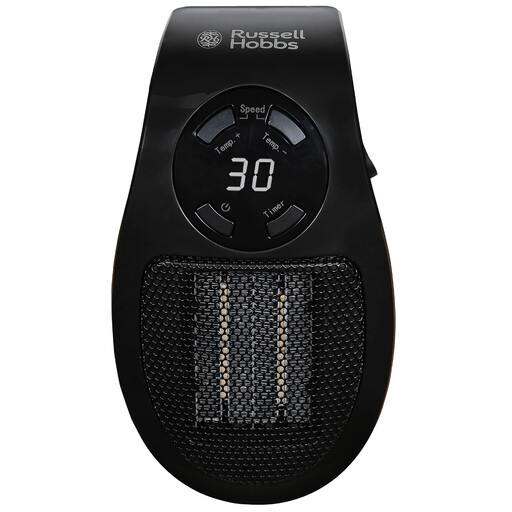
Why It Stands Out: This heater’s main advantage is its ultra-compact, plug-in design. It connects directly to a wall socket, requiring no floor or desk space, making it an exceptionally tidy solution for targeted warmth.
Pros:
Who is it for? Ideal for individuals in a home office who want to keep their feet warm, students in small dorm rooms or anyone needing a discreet heat source in a caravan or workshop.
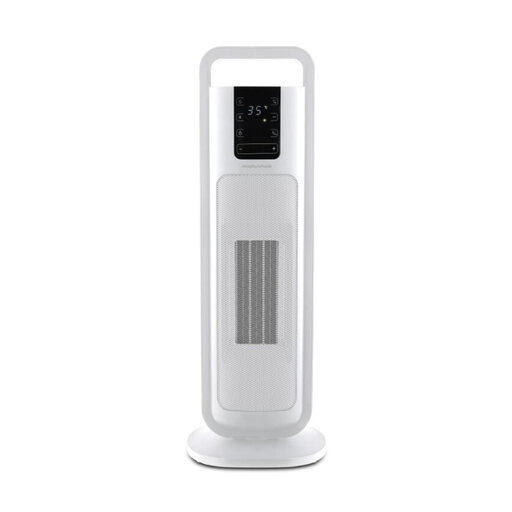
Why It Stands Out: This tower heater combines powerful room heating with modern convenience. Its oscillation feature ensures warm air is distributed evenly across a wider area, while the remote control allows you to adjust settings from your sofa or bed.
Pros:
Who is it for? A great choice for those looking to heat a living room, conservatory or bedroom. It suits users who value convenience and want to heat the entire space rather than just a personal area.
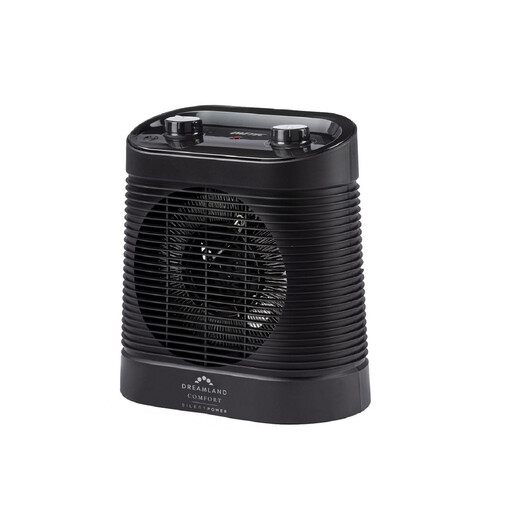
Why It Stands Out: This model's key feature is its exceptionally quiet operation, thanks to its "Silence System" which has earned it Quiet Mark certification. It delivers powerful heat without the disruptive noise common to many fan heaters and its IP21 rating adds versatility.
Pros:
Who is it for? Anyone who needs a quiet fan heater for their bedroom, nursery or office. It's also an excellent choice for those needing a safe and effective heating solution for a bathroom.
While these models cover a range of common needs, your perfect heating solution might be different. If you're looking for other styles, power levels or features, there are many more choices available.
Explore our full collection of portable air heaters to find the perfect match for your home.
The running cost of a fan heater depends on its power rating (wattage) and your electricity tariff. A 2kW (2000W) heater will use 2 kilowatt-hours (kWh) of electricity for every hour it runs on full power. To keep costs down, choose an energy efficient fan heater with a thermostat and timer and use it for supplemental, targeted heating rather than as a primary heat source for your entire home.
It is strongly advised not to leave any portable fan heater running unattended, especially overnight while you are sleeping. Although many models include safety features like overheat protection, they are not a substitute for caution. For warming a bedroom, it is safer to use the heater's timer to warm the room up before you go to bed and ensure it switches off automatically.
A ceramic fan heater uses a Positive Temperature Coefficient (PTC) ceramic heating element instead of traditional metal coils. This material heats up very quickly and is self-regulating, meaning it doesn't get as dangerously hot as older designs. This results in faster, more even heat distribution, improved energy efficiency and enhanced safety.