
24/7 全天候客户支持

免费退货

当日/次日达

品质保障

开启新人专享福利: 全场免邮 | 低至 2 折 | 免费试用 30 天 JoyPlus 会员
下载 Joybuy
Shooting in 4K resolution produces stunning, detail-rich footage, but it places significant demands on your equipment. A common frustration for videographers and photographers is a memory card that can't keep up, leading to dropped frames, corrupted files or a frustratingly slow workflow. Choosing the right storage is just as critical as selecting the right lens.
This guide is designed to help you navigate the technical specifications and find a fast SD card for 4K video that reliably meets the needs of your professional or enthusiast camera. We will break down the essential features to look for and present some carefully selected options to consider for your next project.
Selecting a high-performance memory card involves looking beyond just the storage capacity. For demanding tasks like 4K videography and high-speed burst photography, a few key technical details make all the difference.
When you see markings like U3 or V30 on a card, they refer to the minimum sustained write speed. This is the most important factor for recording video without interruption. A UHS-I V30 SD card guarantees a minimum write speed of 30MB/s. This is the widely recommended baseline for recording smooth, high-bitrate 4K footage on most modern DSLR and mirrorless cameras. Cards with a lower rating, like V10, may struggle and cause your camera's buffer to overflow, stopping the recording unexpectedly.
While related, these two speeds serve different purposes.
A good high-speed memory card for photography and videography will offer strong performance in both areas.
4K video files are large, so a high-capacity card is a practical necessity. SDXC (Secure Digital eXtended Capacity) cards, which range from 64GB to 2TB, are the standard for this purpose. For professional use, a durable SD card is also a wise investment. Look for cards rated to be waterproof, shockproof and temperature-proof to ensure your data is protected, even when shooting in challenging environments.
Here are a few recommendations that balance speed, reliability and features suitable for demanding creative work.
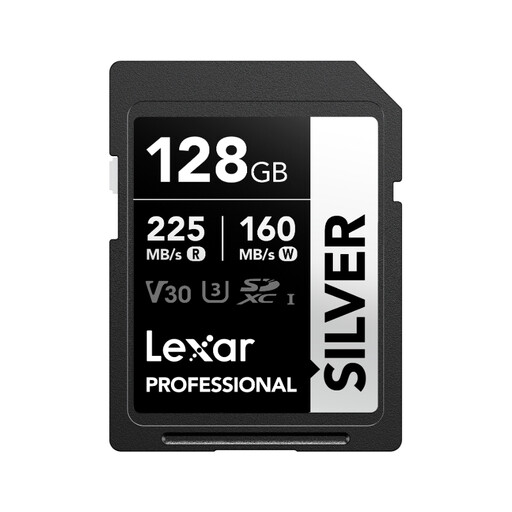
Why It Stands Out: This Lexar card is built with resilience in mind. It boasts an impressive list of durability features, making it a reliable companion for creators who often work on location. With a 140MB/s maximum write speed and a V30 rating, it is well-equipped to handle 4K video at up to 60fps and rapid-fire photo sequences.
Pros:
Who is it for? This is an excellent choice for photographers and videographers who prioritise durability and reliability in the field. Its 128GB capacity is suitable for single-day shoots or as a dependable primary card for mixed media projects.
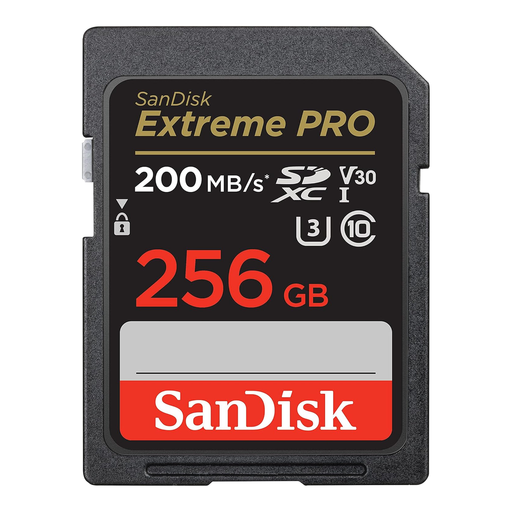
Why It Stands Out: The SanDisk Extreme PRO is a popular professional camera memory card known for its high-end performance. It combines a fast 140MB/s write speed with a very high read speed of up to 200MB/s (when used with a compatible reader). This makes it highly efficient for both capturing content and transferring it for editing. The generous 256GB capacity provides ample room for long video recordings or extensive RAW photo sessions.
Pros:
Who is it for? Content creators, event videographers and professional photographers who require a combination of high speed, large capacity and an efficient workflow will find this card meets their needs. It is ideal for those who frequently work with large volumes of high-resolution files.
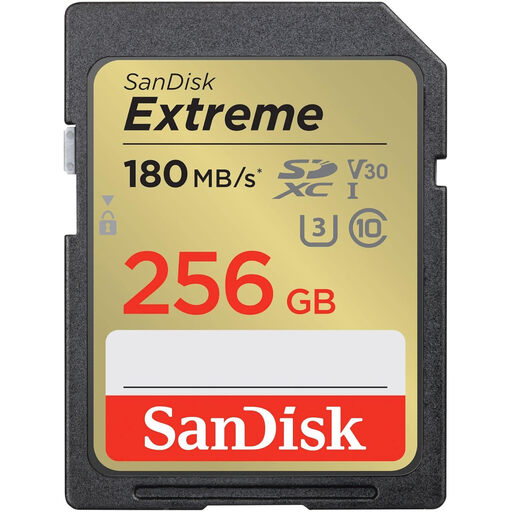
Why It Stands Out: Offering a great balance of performance and value, the SanDisk Extreme model provides much of the capability of its PRO counterpart at a more accessible price point. With write speeds up to 130MB/s and read speeds up to 180MB/s, it remains a powerful option for 4K video and burst photography. It carries the same crucial U3 and V30 ratings, ensuring reliable video performance.
Pros:
Who is it for? This card is a strong contender for enthusiast photographers and videographers, as well as professionals looking for a capable backup or secondary card. It delivers the performance needed for most 4K applications without the premium price of the top-tier PRO model.
If the capacities or specific features of these cards don't perfectly align with your needs, there are many other models available. To see a wider variety of speeds and storage sizes, you can explore our full range of high-performance media.
Explore our complete collection of SDXC memory cards here.
Yes. The V30 speed class guarantees a minimum sustained write speed of 30MB/s, which is the recommended standard for recording high-quality 4K video on the majority of consumer and prosumer cameras without encountering performance issues like dropped frames.
Both U3 (UHS Speed Class 3) and V30 (Video Speed Class 30) signify the same minimum sustained write speed of 30MB/s. The 'V' class is a newer classification developed specifically to provide clearer guidance for video recording resolutions. For practical purposes in modern cameras, they are functionally equivalent for ensuring reliable 4K capture.
The amount of footage a 256GB card can store depends heavily on the camera's bitrate (the amount of data used to encode one second of video). As a rough guide, you can expect a 256GB card to hold approximately 6 to 8 hours of 4K video recorded at a standard bitrate of around 100 Mbps. This can vary significantly with different camera settings.