
24/7 Customer Support

Free returns

Same-day & Next-day Delivery

Quality Guaranteed

Unlock Your Welcome Offers: FREE Delivery | Up to 80% OFF | Free 30-day JoyPlus trial
Download the APP
There's a simple satisfaction in a well-brewed cup of filter coffee. It’s a morning ritual and a comforting break in the day. Yet, finding the right machine to deliver that perfect cup can be surprisingly difficult. The market is flooded with models that promise café-quality results but often fall short, leaving you with a disappointing brew and a lighter wallet.
As a Joybuy Product Recommendation Officer, my role is to help you navigate the marketing jargon. Before you invest in a new filter coffee machine, it's crucial to understand the common design flaws that lead to buyer's remorse.
To avoid these issues, focus on the core mechanics of coffee brewing rather than flashy, unnecessary features. Here are the three parameters that truly define the quality of a drip coffee maker.
The single most important factor for flavour extraction is water temperature. The European Coffee Brewing Centre (ECBC) stipulates a golden window for brewing: the water temperature must be between 92°C and 96°C as it hits the coffee grounds. Temperatures below this range lead to sourness; above it, you risk a bitter, harsh taste. A machine that can consistently achieve and maintain this temperature is fundamental. Look for models that specify their heating element material, such as copper, which is known for its excellent thermal conductivity and stability.
How your coffee is kept warm is just as important as how it's brewed.
A well-built machine is an investment. Consider models constructed from durable materials with a reputation for longevity. Machines that are designed to be repairable, with available spare parts, offer far better long-term value than sealed units. Furthermore, the quality of your water significantly impacts the final taste. If you live in a hard water area, using a coffee machine water filter or a machine with a built-in filtration system can prevent limescale build-up, protect the appliance and result in a cleaner-tasting cup.
Based on these practical criteria, we've matched a few standout options to different user needs.
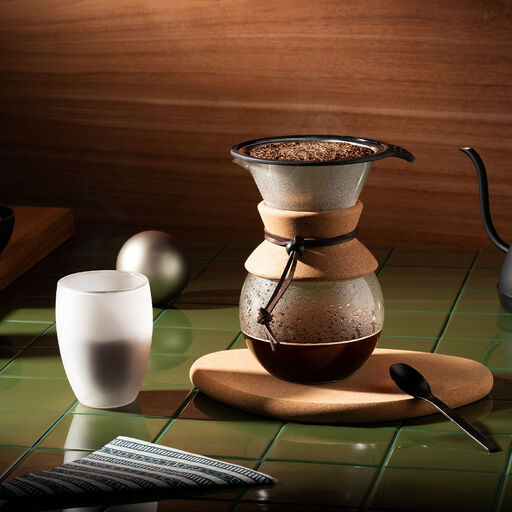
Why This Fits Their Persona: This is for the coffee enthusiast who enjoys the ritual and control of manual brewing. It's a simple, elegant solution that puts you in charge of every variable, from water temperature to pour speed.
As a manual pour over coffee maker, it completely bypasses the pitfalls of faulty electronics and poor temperature control. You heat the water yourself, ensuring it's at the perfect temperature every time.
Features a permanent stainless steel filter, eliminating the waste and recurring cost of paper filters. The borosilicate glass carafe is non-porous and won't absorb odours or flavours.
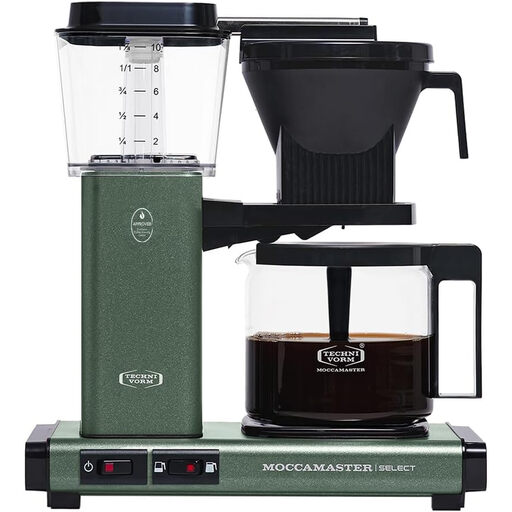
Why This Fits Their Persona: For those who value performance and aesthetics equally. The iconic retro coffee machine design makes a statement, while the Dutch-made engineering delivers a consistently excellent brew.
This Moccamaster coffee machine is ECBC-certified, guaranteeing its copper heating element maintains the precise 92-96°C temperature. The hotplate is engineered to keep coffee at 80-85°C, avoiding the burnt taste trap.
Handmade in the Netherlands with high-quality, repairable parts for longevity. It brews a full 10 cup coffee maker pot in about 6 minutes and includes a selector switch for brewing a half pot with the same quality.
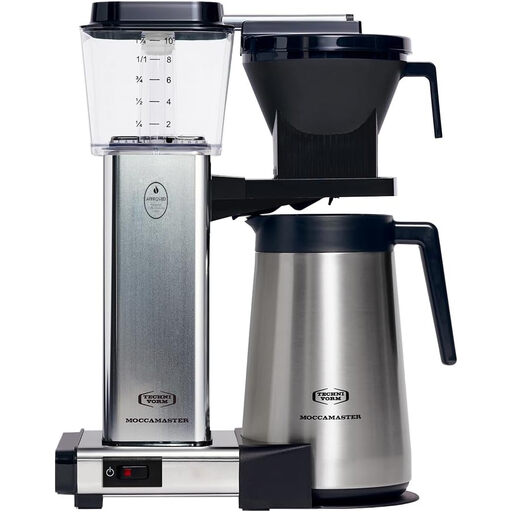
Why This Fits Their Persona: Perfect for families or individuals who need a large batch of coffee to stay hot and fresh throughout the morning rush, without any decline in taste.
The high-quality stainless steel thermal jug completely sidesteps the "stewed coffee" pitfall. It keeps coffee hot for hours using insulation, preserving the delicate flavours without a hotplate.
Combines the same ECBC-certified brewing precision as other Moccamaster models with the practicality of a thermal carafe. It's a robust, efficient workhorse for any home.
We have compiled a complete, real-time list of products that fully satisfy these strict selection criteria and UK safety regulations.
A drip coffee maker is an automated machine. You add water and ground coffee, and the machine heats the water and drips it over the grounds into a carafe. A pour-over coffee maker is a manual method where you pour hot water over the coffee grounds yourself. Drip machines offer convenience, while pour-over provides complete control over the brewing process.
For daily cleaning, you should wash the carafe, filter basket and any removable parts after each use. Descaling is crucial for removing mineral build-up from hard water, which can affect temperature and performance. A good rule of thumb is to descale your machine every 1-3 months, depending on your water hardness and frequency of use. Using a compatible coffee machine water filter can significantly extend the time between descaling.
This almost always comes down to extraction, which is controlled by temperature, time and grind size.