
24/7 Customer Support

Free returns

Same-day & Next-day Delivery

Quality Guaranteed

Unlock Your Welcome Offers: FREE Delivery | Up to 80% OFF | Free 30-day JoyPlus trial
Download the APP
An induction hob can deliver fast, controllable heat, but not every wok is designed to work well with it. A round-bottom Chinese wok may need a separate wok ring, while a lightweight pan can lose contact with the hob and cook unevenly. The right flat-bottom wok should combine a magnetic base, stable construction and a size that suits your household.
Marketing descriptions can also make comparison difficult. “Non-stick”, “low smoke” and “all stovetops” do not always explain the care requirements, base dimensions or cooking limitations. This guide highlights the main buying traps, explains the specifications that matter and presents practical options for different UK kitchens.
A pan may technically work on induction but still perform poorly if its magnetic base is too small, thin or uneven. Induction heats the section directly above the hob’s magnetic zone, so a wok with a stable, properly bonded base is preferable.
Look for a flat-bottom wok with stated compatibility for induction, rather than relying only on a generic “all hobs” label. A wide base can also improve stability when stirring or moving food around the pan.
A non-stick wok can be convenient for eggs, vegetables and lower-oil cooking, but coatings may require gentler utensils and cleaning. Honeycomb textures do not automatically make a pan immune to damage, and “Teflon-free” does not describe every aspect of the coating’s composition.
Check whether the product is dishwasher-safe, which utensils are suitable and whether high heat is recommended. If you prefer a coating-free wok, carbon steel or uncoated stainless steel avoids coating-care concerns but requires more attention during cooking.
A carbon steel wok can develop a naturally seasoned cooking surface, but it is not ready-and-forget cookware. It normally needs initial seasoning, thorough drying and a light layer of oil after cleaning. Leaving it damp can lead to rust, while strongly acidic foods may affect the seasoned surface.
If you want simpler cleaning, a stainless steel wok may be more suitable. However, uncoated stainless steel can still stick if used cold or with insufficient oil. The hot-pan-cold-oil method helps reduce sticking.
For an induction hob, confirm that the wok has a flat magnetic base and is also suitable for your other appliances, such as gas, electric or ceramic hobs. A wok for gas and induction hobs should sit securely on both surfaces without wobbling.
A flat base also makes the pan more practical for UK kitchens where space, hob-ring compatibility and cupboard storage may be limited. Round-bottom designs can offer traditional wok handling but are less straightforward on induction.
Each material has a different care profile:
Do not interpret “coating-free” as “care-free”. It means the cooking surface does not rely on a separate chemical non-stick layer; technique remains important.
A 30cm wok is a practical size for many households, but the stated diameter does not equal usable cooking space. A deep 28cm model may suit one or two people, while a 32cm wok can be more useful for family portions but may be heavier and require more storage room.
A wok with lid adds flexibility for simmering, steaming and keeping food warm. Check the handle design, weight and whether the lid is included rather than sold separately.
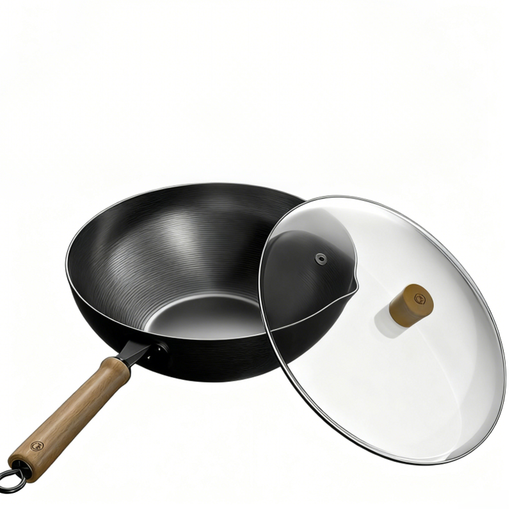
Why This Fits Their Persona: The 32cm format gives new cooks room for family-style stir-fries, while compatibility with induction and gas suits mixed UK kitchens.
Its listed induction and gas compatibility avoids choosing a round wok that needs a separate support ring. Check the care instructions for the non-stick surface before purchase.
32cm cooking area; includes a lid; listed as suitable for induction and gas hobs.
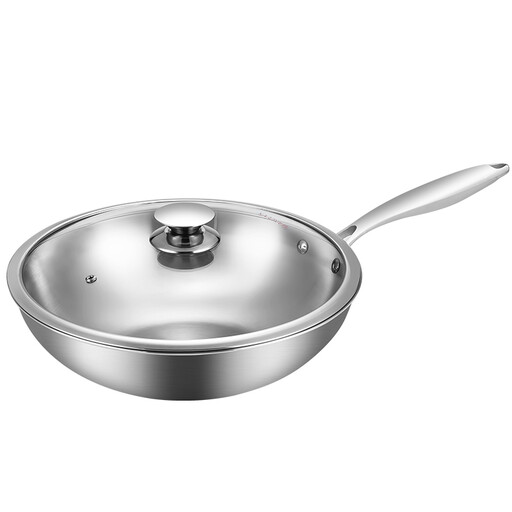
Why This Fits Their Persona: Suitable for shoppers who favour an uncoated stainless steel pan and want one wok for induction, gas, electric and ceramic cooking.
The product description specifies a composite base and no non-stick coating, making the material and hob compatibility clearer than a vague “multi-purpose” label.
304 stainless steel construction; 28cm size; glass lid; dishwasher-safe listing with hand washing recommended.
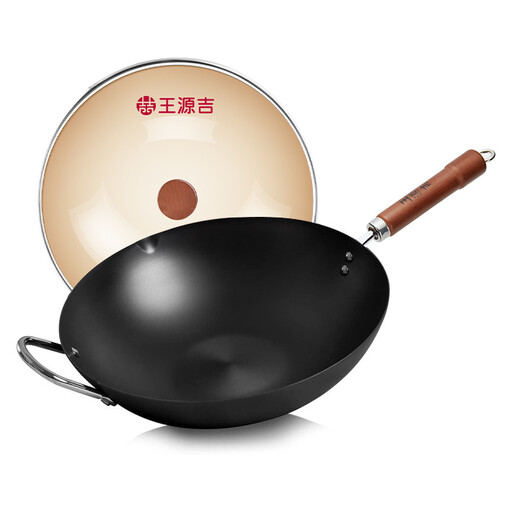
Why This Fits Their Persona: Designed for frequent high-heat stir-frying and 2–4 servings, making it suitable for households that cook Chinese dishes regularly.
Its flat base is listed for induction, gas, electric coil and ceramic hobs. The coating-free surface avoids dependence on a separate non-stick layer, but seasoning remains essential.
12.6-inch flat-bottom design; nitrided carbon steel; helper handle; tempered glass lid.
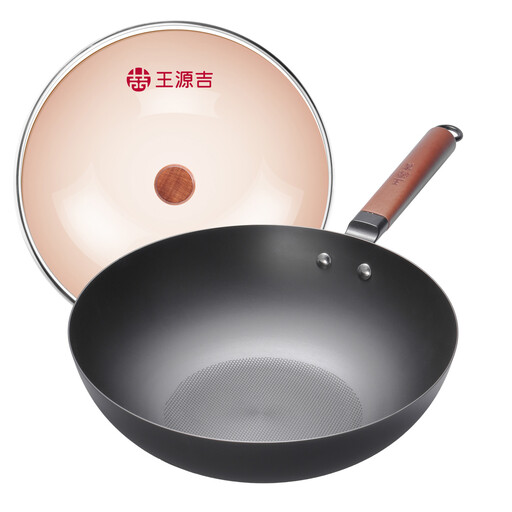
Why This Fits Their Persona: The listed 1.1kg weight may be easier to lift, stir and store than a heavier family wok, especially in a compact kitchen.
The stated weight helps address the common mistake of buying a wok that is awkward to manoeuvre. It remains coating-free, so users should still season and dry it correctly.
1.1kg listed weight; honeycomb-textured flat base; compatible with induction, gas, electric and ceramic hobs.
We have compiled a complete, real-time list of products that fully satisfy these strict selection criteria and UK safety regulations.
Usually, induction hobs work more reliably with a flat-bottom wok that has a magnetic base. A round-bottom Chinese wok may not make sufficient contact with the hob and may require a compatible wok ring, if the hob manufacturer permits one.
Carbon steel is suited to high-temperature cooking and can develop a seasoned surface, but it needs drying and oil maintenance. Stainless steel is less prone to rust and can be simpler for general use, although correct preheating is important to reduce sticking. The practical choice depends on whether you prioritise seasoning performance or easier routine care.
A lid can help retain heat and moisture during simmering, steaming or covered cooking, potentially reducing the time the hob needs to remain on. Actual energy use depends on the recipe, pan size, starting temperature and hob settings. For stir-frying, the lid is normally removed so moisture can escape.