
24/7 Customer Support

Free returns

Same-day & Next-day Delivery

Quality Guaranteed

Unlock Your Welcome Offers: FREE Delivery | Up to 80% OFF | Free 30-day JoyPlus trial
Download the APP
For any tradesperson or dedicated DIY enthusiast, a reliable cutting tool isn't just a convenience—it's a necessity. Whether you're fitting carpets, scoring plasterboard, or simply breaking down packaging, a flimsy or dull blade can slow you down and compromise safety. The market is filled with options, but finding a durable, practical and safe folding utility knife that stands up to daily demands requires a closer look at the features that truly matter.
This guide is designed to help you identify the key characteristics of a high-performing utility knife. We will explore what to look for in a modern tradesman knife and present a few carefully selected recommendations to help you make an informed choice for your toolkit.
Before choosing a knife, consider these three practical features that separate a dependable tool from a disposable one.
On a busy job site, time is valuable. Fumbling with screws or small parts to swap a blade is inefficient and can be a safety hazard. A quick change blade knife system allows for tool-free replacement in seconds. Look for models with a simple, secure button or lever release. This feature not only speeds up your workflow but also reduces the time you spend handling a loose, sharp blade.
A quality folding utility knife must have a robust locking mechanism to prevent the blade from accidentally closing during use. The lock back knife design is a common and reliable system where a locking arm engages with the back of the blade to hold it firmly in place. This provides the stability needed for tasks requiring more force, giving you the confidence to make clean, controlled cuts without the risk of the tool failing.
The handle of a heavy duty utility knife should be as tough as its blade. Materials like stainless steel or aluminium offer excellent durability, while ergonomic grips reduce hand fatigue during prolonged use. A particularly useful feature is a utility knife with blade storage built directly into the handle. This ensures you always have sharp SK5 replacement blades on hand, so you're never caught out with a dull edge.
Here are our recommendations for tools that deliver on performance, safety and convenience.
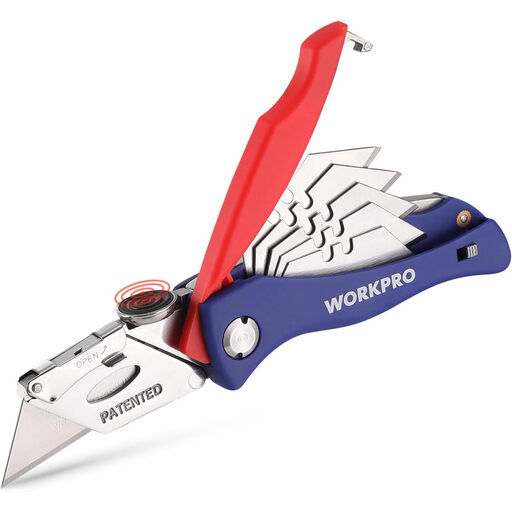
Why It Stands Out: This WORKPRO model is a practical workhorse designed for efficiency. Its patented quick-release mechanism makes blade changes straightforward and tool-free. The handle combines a sturdy stainless steel frame with a lightweight ABS component that cleverly houses five spare blades, so a fresh edge is always within reach.
Pros:
Who is it for? This is an excellent all-rounder for general builders, carpet fitters and warehouse operatives who need a reliable carpet knife and box cutter that is both durable and easy to maintain on the go.
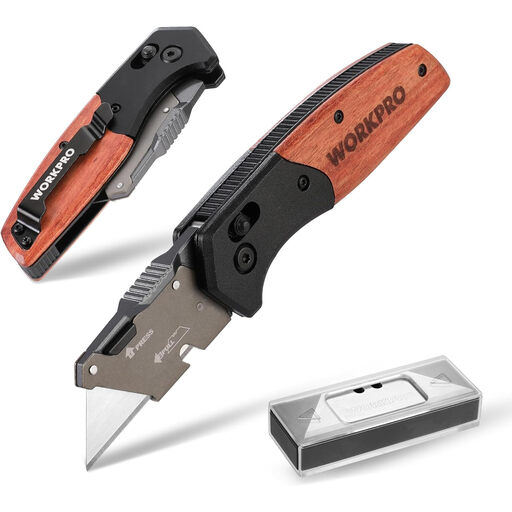
Why It Stands Out: This knife combines modern functionality with a classic aesthetic. Its key feature is the external sliding lock, which allows for secure blade positioning and smooth one-handed opening and closing. The handle, a hybrid of durable aluminium and natural wood, provides a comfortable and secure grip. It also comes with a generous supply of 10 replacement blades.
Pros:
Who is it for? Ideal for tradespeople and DIYers who appreciate fine tools and prioritise one-handed operation. Its blend of style and function makes it suitable for a range of cutting tasks, from detailed work to opening materials.
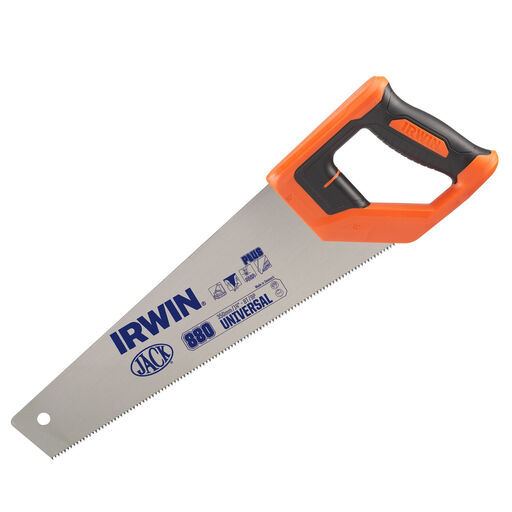
Why It Stands Out: While a utility knife is essential for precision, some jobs require more power. The IRWIN Jack 880UN Toolbox Saw offers the performance of a full-size handsaw in a compact 14-inch format. Its Triple Ground tooth design is engineered to cut up to 25% faster than traditional saws, making it highly efficient for timber, laminates and other sheet materials.
Pros:
Who is it for? This saw is a valuable addition for any professional or DIY user who needs reliable cutting power for wood and other materials but has limited space in their toolbox. It perfectly complements a primary cutting tool like a utility knife.
A tradesperson's toolkit is a personal and evolving collection. If these recommendations aren't quite what you're looking for, or if you're hoping to add more specialised equipment to your kit, there are many other options available.
Explore our full range of cutting tools and other essentials in our Hand tool box category to find the perfect gear for your next project.
The terms are often used interchangeably. However, "box cutter" typically refers to a simpler, often retractable knife designed for light tasks like opening cardboard boxes. A "utility knife," especially a folding or heavy duty utility knife, is a more robust and versatile tool built for a wider range of materials and demanding professional use in trades like construction and flooring.
For both safety and efficiency, you should change the blade as soon as you feel it becoming dull or starting to drag. A dull blade requires more force to cut, which increases the risk of slipping and injury. A sharp blade provides a cleaner cut with less effort. Models with utility knife with blade storage make it easy to swap in a fresh blade on the spot.
When used correctly, a well-made folding utility knife is a safe and essential tool. The most critical safety feature is a reliable locking mechanism, such as a lock back knife design, which prevents the blade from closing on your hand during use. Always ensure the blade is securely locked open before cutting and fully retracted or folded when not in use.