Dinner-party batch preparers
You are chopping apricots alongside other ingredients and want enough working capacity to keep the wider prep session manageable.


For chopped dried apricots, choose a food processor with a chopping blade and manual pulse control so you can stop and check the texture. A compact model makes sense for a modest batch and limited storage; a larger bowl is more useful if the apricots are one part of a wider dinner-party prep session. Compare working or usable capacity, not just the headline bowl size, and check which parts you will need to wash.
You are chopping apricots alongside other ingredients and want enough working capacity to keep the wider prep session manageable.
You want pieces rather than an over-processed mixture, so a chopping blade and a control that lets you pause and inspect the result matter to you.
You need to chop a modest dry batch but do not want a full-size appliance taking up cupboard or worktop space between gatherings.
Decide whether the processor is mainly for the apricots or for the whole menu. Then compare texture control, working capacity and the space and cleaning that come with the machine.
Choose when: You have a modest apricot batch and storage space matters more than completing every prep task in one go.
Allow for: More batches if the rest of the menu also needs processing. Kenwood lists a 0.75 L dry working capacity for its MultiPro Go, despite its 1.3 L bowl size.
Choose when: The apricots are one of several ingredients you plan to chop, slice, grate or mix for the same meal.
Allow for: More appliance and accessory storage. Capacity figures need care: Bosch lists a 3.9 L bowl but a 2.4 L usable volume for its MC812S734G.
| Concern | What to check | Who this matters to |
|---|---|---|
| Chopped texture | Check that the exact model has a chopping blade and manual pulse or moment control. | If I need distinct apricot pieces, I want to stop the machine and inspect them between bursts. Around 31% of consumers put texture control first. |
| Menu-sized batches | Compare working or usable capacity with the stated bowl size, then consider your other prep tasks. | When several dishes need preparation, I would rather plan around the amount the bowl can actually process. Batch capacity is the main concern for around 31% of consumers. |
| Guest-aware cleaning | Check apricot labels for sulphites and confirm which food-contact parts of the exact model are dishwasher-safe. | If a guest has a relevant sensitivity, I need to check the ingredients and clean food-contact parts between dishes. Around 23% of consumers primarily focus on this preparation and cleaning need. |
| Storage space | Measure the available space and compare appliance dimensions with dry working capacity. | For occasional hosting, I want a machine I can put away without giving up the capacity my usual batch needs. Keeping it storable comes first for around 15% of consumers. |
The amount a processor can handle may be smaller than its headline bowl capacity. Bosch lists a 3.9 L bowl and 2.4 L usable volume for the MC812S734G; Kenwood lists a 1.3 L bowl and 0.75 L dry working capacity for the MultiPro Go.
Compare the capacity definition relevant to your batch, particularly dry working capacity for chopped fruit.
Motor wattage alone does not tell you what texture a processor will produce with dried apricots. Good Housekeeping UK assesses chopping results and consistency as part of its food-processor testing.
Look for a chopping blade and manual control, and follow the model's instructions for loads and operation rather than choosing on wattage alone.
The Food Standards Agency notes that sulphur dioxide and sulphites are often used in dried fruit, including dried apricots. This matters when preparing food for someone with a relevant allergy or sensitivity.
Read the apricot packaging, ask guests about relevant dietary needs where appropriate, and clean food-contact parts between preparations.
The included tools and available replacement parts depend on the exact model. A processor is less useful for this task if the chopping accessory you expect is not part of the configuration you buy.
Check the full model number, supplied accessories and manufacturer's parts information before ordering.
If a blade, lid or other component is later lost or damaged, replacing it may involve obtaining a model-specific part separately.
These ranges offer different approaches to size and functions; compare the exact model rather than treating a brand name as a capacity or chopping-performance specification.
Magimix offers multifunction processors in several sizes. It positions the 3200XL for up to four people, the 4200XL for up to six and the 5200XL for up to eight; those household descriptions are not dried-apricot batch limits.
Kenwood's range includes the compact MultiPro Go and larger MultiPro processors with additional preparation functions.
Bosch MultiTalent processors include smaller and larger bowl formats. The MCM3501MGB has an 800 W motor and moment function; the MC812S734G has a 3.9 L headline bowl capacity and 2.4 L usable volume.
Ninja offers systems combining food processing and blending. The BN800UK listing describes a 1.8 L processor bowl, manual settings and automated programmes.
These processors cover larger-bowl food preparation and models that also include blending functions. For a dinner-party menu, compare the stated bowl sizes and controls with the tasks you will actually do; a headline capacity is not a dried-apricot load limit.
 Image unavailable
Consider this model if the apricots are part of a wider preparation session and integrated weighing would be useful. Its listed configuration has a 3 L bowl, 1000 W motor and eight accessories; check the working capacity and supplied tools against your menu.
 Image unavailable
For a menu with more than one chopping task, this model lists pulse control and a 3 L bowl. Its 1000 W configuration includes six accessories and dishwasher-safe attachments; check the working capacity and component-specific cleaning instructions.
 Image unavailable
This processor-and-blender configuration is relevant if the menu also calls for blended dishes. It lists a 3 L processor bowl, variable speed and pulse control, integrated weighing and 13 accessories; consider whether you have space for the additional components.
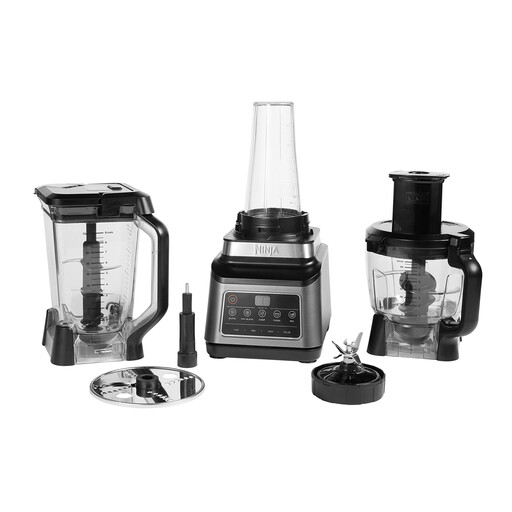 Image unavailable
Consider the extra blending components if you are making drinks or sauces as well as chopping ingredients. The listed configuration has a 1.8 L processor bowl, 2.1 L jug and 700 ml cup, with manual settings alongside five automatic programmes; check the manual for suitable loads and use of the chopping blade.
 Image unavailable
This processor-and-blender option is worth considering if you need both functions for the meal. The listed configuration has a 2 L processor bowl, 750 W motor and pulse control; check the manual for working capacity and how its detachable parts should be cleaned.
A compact processor can suit a modest apricot batch if you are willing to work in batches. Kenwood lists a 0.75 L dry working capacity, chopping blade and pulse control for its MultiPro Go; if the rest of the menu also needs processing, compare that working capacity with larger models before choosing.
Use a chopping blade with manual pulse or moment control so you can stop and inspect the pieces between short bursts. Follow the exact appliance manual for safe operation and load limits rather than assuming a particular processing time or quantity.
Yes, particularly if a guest has a relevant allergy or sensitivity. The Food Standards Agency says sulphur dioxide and sulphites are often used in dried fruit, including dried apricots; read the particular pack's label and clean food-contact parts between preparations.
Check the exact model's instructions for which bowl, lid, blade and other parts are dishwasher-safe. If long-term parts support matters, use the complete model number to check the manufacturer's replacement-parts range; Bosch, for example, lists model-specific food-processor parts.