
24/7 Customer Support

Free returns

Same-day & Next-day Delivery

Quality Guaranteed

Unlock Your Welcome Offers: FREE Delivery | Up to 80% OFF | Free 30-day JoyPlus trial
Download the APP
A food processor promises to be the ultimate kitchen shortcut, saving you precious time and effort on chopping, slicing and mixing. Yet, the reality for many UK households is a bulky appliance that gathers dust after a few uses. The market is filled with models that look impressive on the box but fail to deliver on their promises, leading to buyer's remorse.
As a Product Recommendation Officer, I see shoppers fall into the same traps time and again. Before you invest, it is crucial to understand the common pitfalls. By learning to spot them, you can choose a machine that genuinely makes your life easier, rather than one that ends up as a cupboard-filler.
vegetable chopper for soups and salads, that power is excessive. You end up paying more for the appliance and for the electricity to run it, without any real benefit for your day-to-day needs.To find the right appliance, focus on the core features that matter. Analysing these three parameters will help you match a machine to your actual kitchen habits.
The power of the motor, measured in watts (W), dictates what the machine can handle.
mini food processor or a dedicated kitchen chopper. It is perfectly adequate for dicing onions, making pesto or preparing small batches of baby food.ice crushing blender for occasional smoothies.dough mixer and large food processor.The size of the main bowl determines how much you can process at once.
baby food maker.large food processor is suited for batch cooking, entertaining or large families.Pay attention to the material. Look for durable, BPA-free plastic as a minimum. Some models offer glass or stainless steel bowls, which are non-porous, stain-resistant and can offer peace of mind when preparing food for young children.
Instead of being swayed by a high number of accessories, focus on the quality of the essentials. The non-negotiable tools are:
A food processor with blender attachment can be a practical, space-saving option if you also need a blender for drinks and soups. A dedicated dough blade is only necessary if you are a frequent baker.
To help you navigate the options, we have matched a few products from our selection to common user profiles. These recommendations are based on how their objective features solve the real-world needs of UK home cooks.
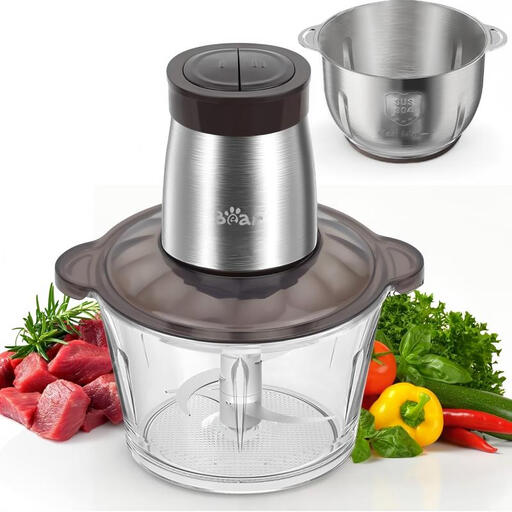
Why This Fits Their Persona: This is an excellent choice for everyday meal prep. It is compact and focuses on being a highly effective kitchen chopper for tasks like dicing vegetables, mincing meat or making fresh baby food, without taking over your counter space.
It sidesteps the "do-it-all" trap by excelling at its core function. The 300W motor is perfectly matched to its chopping tasks, avoiding the trap of paying for unnecessary power.
Includes both a 2L plastic bowl and a 1.8L stainless steel container for hygienic, versatile prep; Simple two-speed control for straightforward operation.
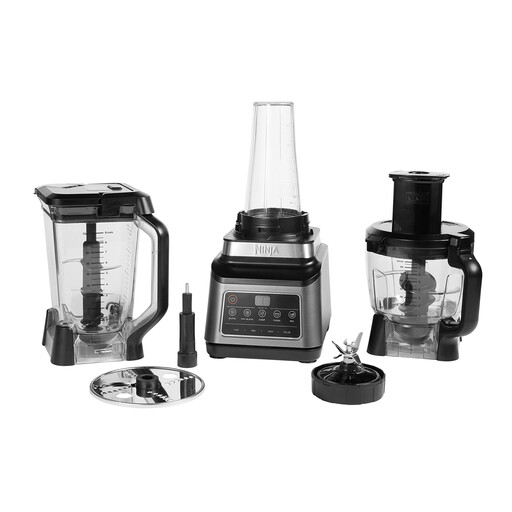
Why This Fits Their Persona: This system is for the busy family kitchen that needs true versatility. It combines a food processor, multi-serve blender and personal smoothie maker into one powerful base, handling everything from doughs and dips to morning smoothies.
While it is an "all-in-one", its components are robust and purpose-built. The Auto-iQ programmes manage the powerful motor intelligently, preventing guesswork and delivering consistent results, avoiding the pitfalls of less sophisticated multi-function machines.
Genuine 3-in-1 functionality with separate, high-quality attachments; Powerful 1200W motor and durable blades handle tough ingredients like ice and nuts with ease.

Why This Fits Their Persona: This large food processor is built for precision and volume. The integrated digital scale is a significant advantage for baking, and its powerful 1000W motor is capable of acting as a dough mixer for bread and pastries.
It avoids the cleaning nightmare with dishwasher-safe parts. Its power is justified by its capacity and ability to handle heavy dough, making it a purposeful investment rather than just an overpowered gadget.
Features integrated digital weighing scales for precise, mess-free baking; The large 3L capacity and powerful 1000W motor are ideal for heavy tasks and batch cooking.
We have compiled a complete, real-time list of products that fully satisfy these strict selection criteria and UK safety regulations.
While there is some overlap, they are designed for different jobs. A food processor uses a wide bowl and S-shaped blade, which is ideal for chopping solids, mixing pastry and creating textured foods like salsa. A blender typically has a tall, narrow jug and blades designed to create a vortex, which is far more effective for creating smooth liquids like soups and smoothies. A food processor with blender attachment can offer a good compromise for kitchens with limited space.
The pulse function is essential for control. It gives you short bursts of power, allowing you to chop ingredients without turning them into a purée. This is crucial for achieving the right texture for things like breadcrumbs, chopped nuts or chunky vegetable mixes. Continuous running is better for smooth sauces and purées, but for most chopping tasks, the pulse button is your most important tool.
When preparing food for anyone, especially children, safety is paramount. Always look for food processors where the plastic components that come into contact with food are explicitly labelled as BPA-free. This ensures no harmful chemicals can leach into the food. For extra assurance, consider a model that includes a glass or stainless steel bowl, as these materials are inert and non-porous.