
24/7 Customer Support

Free returns

Same-day & Next-day Delivery

Quality Guaranteed

Unlock Your Welcome Offers: FREE Delivery | Up to 80% OFF | Free 30-day JoyPlus trial
Download the APP
A good food processor can be a game-changer in the kitchen, saving you countless hours of chopping, slicing and mixing. Yet, many of us have a story about a promising kitchen gadget that ended up gathering dust in a cupboard. Often, this isn't because the idea was flawed, but because the product itself was let down by clever marketing that hid crucial design weaknesses.
Before you invest in a new kitchen assistant, it's important to see past the advertising and understand the common pitfalls. Many UK households end up with appliances that are either underpowered, a nightmare to clean or simply not suited for the job, making daily meal prep more of a chore than a pleasure.
To make a smart purchase, focus on the specifications that directly impact performance and usability in a real-world kitchen.
While a high wattage (W) number looks impressive, it doesn't tell the whole story. The crucial metric to check is the maximum continuous operating time. A robust 750W motor that can run for several minutes is far more useful than a 1200W motor that overheats after 60 seconds. For tasks like making dough or pureeing thick soups, a motor that can sustain its power is non-negotiable. A simple electric food chopper might only need short bursts of power, but a true food processor needs endurance.
The size of the bowl determines how much you can process at once.
The bowl material also matters. While BPA-free plastic is standard, a food processor with a glass bowl offers better resistance to stains and odours, which is particularly useful when working with colourful or pungent ingredients like turmeric or garlic.
The term "food processor" is used broadly. Understanding the differences is key to avoiding disappointment.
Instead of a one-size-fits-all approach, we've matched specific models to different household needs, helping you find a machine that genuinely fits your lifestyle.
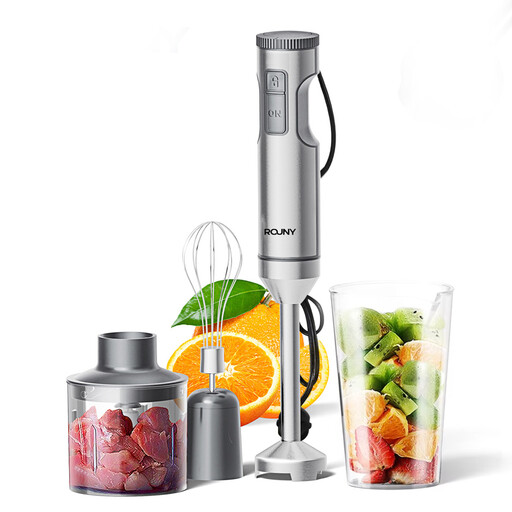
Why This Fits Their Persona: For those in a smaller UK flat or with limited counter space, this 4-in-1 set provides a stick blender, whisk and a 500ml chopper bowl. It handles daily tasks like making soups, sauces and chopping onions without the footprint of a full-sized machine.
It avoids the "do-it-all" disappointment by being a powerful hand blender first, with genuinely useful attachments rather than trying to be a full processor. The 1200W max motor provides enough power for the included chopper to be effective.
Its main advantage is its space-saving versatility. The stainless steel shaft is durable and the accessories are dishwasher-safe (under 60°C), addressing the cleaning headache.

Why This Fits Their Persona: For the home cook who regularly batch cooks or prepares large family meals, this machine is a workhorse. The 3L capacity and 1000W motor can handle large volumes and tough ingredients, from bread dough to root vegetables.
This is a true food processor, not a compromised hybrid. Its powerful motor is built for sustained work, avoiding the burnout trap of less durable models. The dishwasher-safe parts also prevent it from becoming a cleaning burden.
The integrated digital scale is a standout feature, allowing you to weigh ingredients directly into the bowl. This saves time, reduces washing up and improves recipe accuracy.
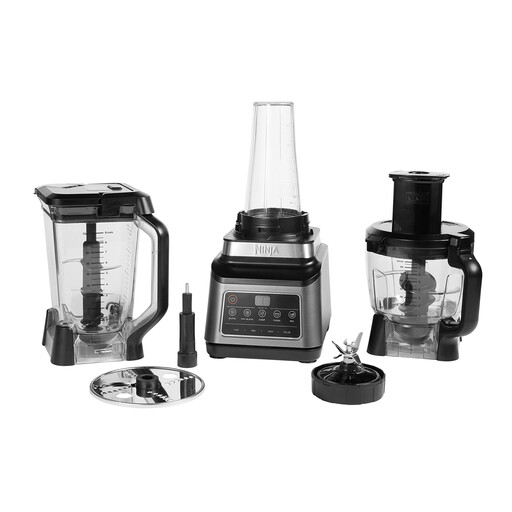
Why This Fits Their Persona: For someone who wants a single, high-performance base for making smoothies, doughs and chopped salads. This system provides dedicated containers for each task: a food processor bowl, a large blending jug and a personal smoothie cup.
It solves the "do-it-all" problem by using purpose-built attachments and blades for each function, rather than a single compromised tool. The 1200W motor and Auto-iQ programs provide the power and intelligence to perform each task well.
The Auto-iQ technology offers one-touch programs that automatically use unique pulsing and pausing patterns for different recipes, taking the guesswork out of food prep. All parts are dishwasher-safe.
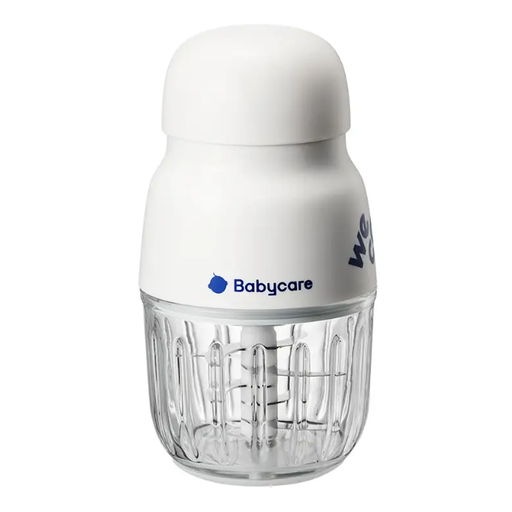
Why This Fits Their Persona: This compact unit is specifically designed for making fresh, nutritious baby food. Its small 10oz (approx. 300ml) capacity is perfect for preparing single portions and its simple one-button operation is ideal for busy parents.
It avoids being overly complex. As a dedicated baby food maker, it focuses on one task: creating smooth purees. The high-borosilicate glass bowl and simple design make it easy to clean and ensure food safety.
Its high-speed motor (26,000 RPM) and 6-layer blade system are engineered to produce very fine purees suitable for early weaning. The auto-stop safety feature adds peace of mind.
We have compiled a complete, real-time list of products that fully satisfy these strict selection criteria and UK safety regulations.
No, they are designed for different tasks. A blender is ideal for liquids and creating smooth textures like smoothies, soups and sauces. Its tall, vortex-creating jug is perfect for liquefying ingredients. A food processor has a wide, flat bowl and is designed for more labour-intensive prep work like chopping, shredding, slicing and mixing doughs. While some can overlap, using the wrong tool will lead to poor results.
The lifespan of a food processor depends on the build quality, motor and frequency of use. A well-maintained machine from a reputable brand can last for many years. Cheaper, less robust models may only last a year or two with regular use, especially if the motor is frequently pushed to its limits. Look for models with longer warranty periods as an indicator of the manufacturer's confidence in their product's durability.
It is generally not recommended to put hot liquids in a standard food processor. The steam can build up pressure inside the sealed bowl, which could cause the lid to burst off and spray hot liquid, creating a serious safety hazard. Some specialised appliances, like certain hand blenders, are designed to be used directly in hot pots. Always check the manufacturer's instructions before processing hot ingredients.