
24/7 Customer Support

Free returns

Same-day & Next-day Delivery

Quality Guaranteed

Unlock Your Welcome Offers: FREE Delivery | Up to 80% OFF | Free 30-day JoyPlus trial
Download the APP
A well-stocked freezer is the secret weapon of many a British household. It’s the key to thrifty meal prepping, saving leftovers and making the most of supermarket deals. But this system relies entirely on one simple item: the freezer bag. Choosing the wrong one can lead to split seams, leaky sauces and the dreaded freezer burn that turns a delicious meal into an icy, flavourless block.
Before you buy another roll, it’s worth understanding the common pitfalls. Many shoppers find themselves disappointed by bags that are too flimsy to hold their contents, seals that fail after a single use or confusing environmental claims that don't quite add up. Let's cut through the clutter and focus on what truly matters for keeping your food fresh and your kitchen organised.
To avoid disappointment, it pays to look past the packaging and scrutinise a few core features. These three parameters are crucial for selecting reliable bags for freezing food.
The single most common complaint is a bag that splits or tears, especially when retrieving it from a packed freezer drawer. The solution is to look for heavy duty freezer bags. These are typically made from a thicker gauge of polythene, which makes them more resistant to punctures from sharp corners of frozen food and less likely to become brittle at low temperatures. While a standard sandwich bag is fine for a packed lunch, it lacks the resilience needed for long-term freezing. A durable material is your first line of defence to prevent freezer burn and protect your food.
How a bag closes is just as important as the material it's made from. There are two main types:
meal prep bags.For maximum freshness and leak prevention, a secure zip seal is usually the more dependable choice.
Finally, consider what you plan to store. Using a bag that's too large for a small portion wastes space and plastic, while trying to overfill a small bag is a recipe for split seams. Look for a range of sizes to suit different needs. Large freezer bags (4L and above) are ideal for batch-cooked stews, whole loaves of bread or large cuts of meat. Smaller bags (1-2L) are perfect for individual portions, chopped fruit for smoothies or leftover vegetables.
To help you choose, we've matched some dependable options to common household needs.
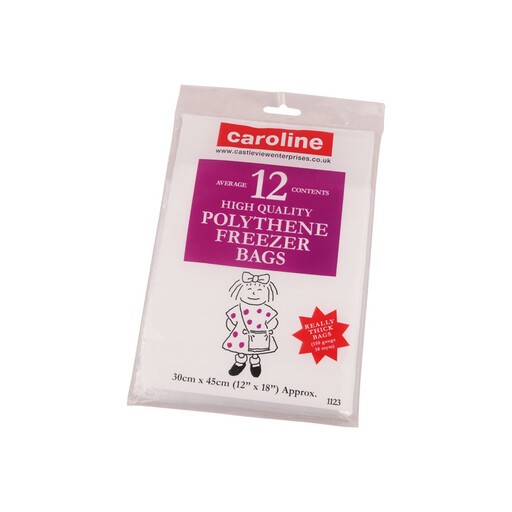
Why This Fits Their Persona: If you're batch cooking for the week or freezing large joints of meat, you need space and strength. These large bags are built for exactly that, providing ample room for family-sized portions without the risk of over-stuffing.
This bag directly counters the "flimsy material" pitfall. Its heavyweight plastic construction is designed to resist tears and punctures from bulky or sharp-edged frozen foods.
The generous 30x45cm dimensions accommodate larger items with ease. The thick material provides a reliable barrier against moisture loss and frost.
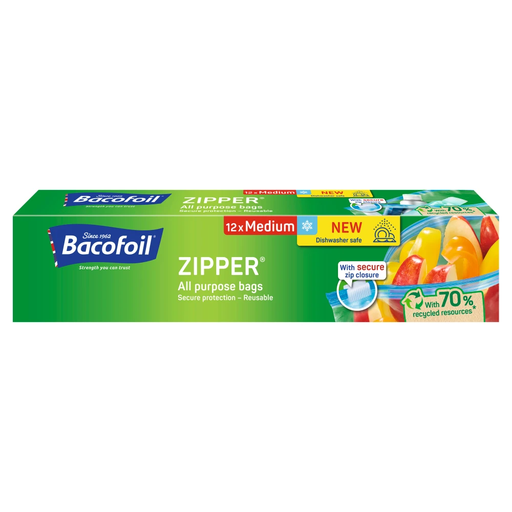
Why This Fits Their Persona: For those aiming to reduce single-use plastics in the kitchen, these bags offer a practical middle ground. They provide the convenience of a disposable bag but are durable enough to be washed and reused multiple times.
It avoids the "failed seal" issue with a secure zip-tight closure. Its reusability claim is specific (up to 10 times, dishwasher safe), cutting through vague "eco-friendly" marketing.
These are proper reusable freezer bags. The tear-resistant material and stand-alone base for easy filling make them highly practical for repeated use with liquids and solids.
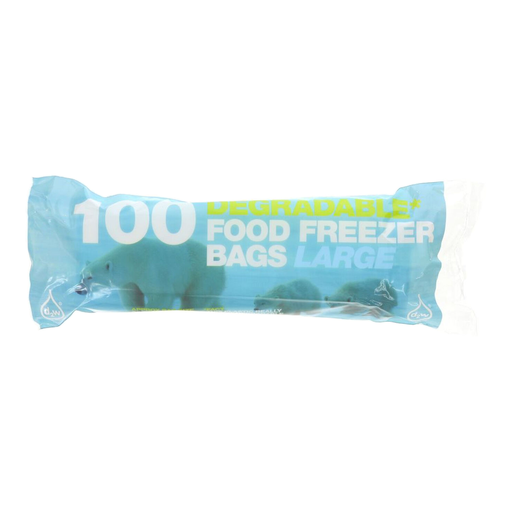
Why This Fits Their Persona: This option is for the household that wants high-performance food storage without contributing to long-term plastic pollution. It combines a large capacity with technology designed to reduce its environmental footprint after use.
It addresses the "confusing green claims" pitfall by using a specific, named technology (d2w). The product description clarifies that it is designed to degrade in specific disposal environments.
It doesn't compromise on function. You get a large 10L capacity, a secure zipper seal to lock in freshness and a writable label area for easy organisation.
We have compiled a complete, real-time list of products that fully satisfy these strict selection criteria and UK safety regulations.
The main difference is the material. Food freezer bags are made from thicker, more durable plastic that is specifically designed to withstand freezing temperatures without becoming brittle and splitting. Standard sandwich or food bags are thinner and intended for short-term, ambient or refrigerated storage. Using them in the freezer often leads to tears and rapid freezer burn because they are not as effective at blocking air and moisture.
Freezer burn occurs when air comes into contact with the surface of your food, causing it to dehydrate and oxidise. To prevent it, the most important step is to remove as much air as possible from the bag before sealing it. For liquids, this is easier. For solids, press the bag flat around the food to push out the air. A high-quality zip seal freezer bag is essential for creating and maintaining an airtight seal. Also, avoid leaving too much empty space in the bag.
It depends on the bag and what was stored in it. Some bags, like the Bacofoil ones mentioned, are explicitly designed to be reusable freezer bags. For standard single-use bags, it is generally not recommended to reuse them, especially if they held raw meat, fish or eggs, due to the risk of cross-contamination. If you do reuse a bag that held something low-risk like bread or vegetables, ensure it is washed thoroughly with hot, soapy water and completely dry before its next use. Check for any signs of wear or tiny punctures.