Regular family batch cook
If you make dough repeatedly for family meals, you need room to separate and retrieve labelled portions without losing track of older batches. Drawer layout may matter as much as total capacity.


Choose an upright freezer if you regularly retrieve labelled dough portions alongside other family food; consider a chest freezer if larger batches matter more than quick access. A compact upright can suit a smaller kitchen, but whichever format you choose, check the space it needs, its usable storage layout and whether the exact model is suitable for its installation location.
If you make dough repeatedly for family meals, you need room to separate and retrieve labelled portions without losing track of older batches. Drawer layout may matter as much as total capacity.
If floor space is limited, compare external dimensions, door clearance and the difference between freestanding and integrated installation before deciding how much storage you can accommodate.
If you prepare larger batches and have space outside the main kitchen, a chest freezer may suit bulk storage. Check access to stacked portions, defrost requirements and the exact model’s permitted ambient-temperature range.
For family pizza dough, choose the storage format before comparing features: how often you retrieve portions, how much else you freeze and where the appliance will stand all affect that decision.
Consider it when: Dough is an occasional addition to family meals and kitchen floor space is limited.
Trade-off: Its smaller storage space may restrict the number of batches you can keep alongside other food.
Consider it when: You freeze dough regularly and want to separate labelled portions from other family food.
Trade-off: It needs vertical space, and drawer sizes determine which trays or containers will actually fit.
Consider it when: You prepare larger batches and can group bagged portions for bulk storage.
Trade-off: Portions below other food take more effort to retrieve, and a manual-defrost model needs periodic upkeep.
| Concern | What to check | Who this matters to |
|---|---|---|
| Capacity and organisation | Compare frozen-storage volume in litres with drawer or basket shapes; check that your dough containers fit and remain accessible. | When I freeze portions for several family meals, I want to find the right batch without unpacking everything. Around 36% of consumers put accessible capacity and organisation first. |
| Fit and installation | Measure the space and check door or lid clearance, ventilation instructions and, for integrated models, cabinet and hinge compatibility. | In a small kitchen, I need the freezer to fit and open properly before extra features matter. For around 29% of consumers, installation fit is the primary concern. |
| Upkeep and freezing features | Check the exact model for frost-free operation, a fast-freeze function and temperature-control instructions. | If I add fresh batches regularly, I would rather limit defrosting work and understand how the freezer handles newly added food. Around 21% of consumers prioritise upkeep and freezing features. |
| Outbuilding use | Match the model’s documented ambient-temperature range to the intended location; assess basket access if choosing a chest freezer. | For bulk preparation outside the main kitchen, I need a freezer documented for the temperatures where it will stand. Outbuilding suitability comes first for around 14% of consumers. |
Total volume cannot tell you whether labelled dough portions will be easy to separate and reach.
Compare the internal drawers, shelves or baskets with the containers and flat bags you intend to use.
A claim about one freezer’s outbuilding operation does not apply to every model in the same range.
Check the exact model’s permitted ambient-temperature range against the location where you plan to install it.
A manual-defrost chest freezer can store bulk batches, but ice build-up and stacked food add work when managing its contents.
If you choose one, group and label portions in baskets and plan for stock rotation and defrosting.
An energy class alone does not show how two freezers of different sizes and formats compare for your storage needs.
Compare the energy labels and product information for models with a similar usable capacity and format, using the documentation applicable to your delivery region.
Relevant if you are comparing freezer formats or considering an installation location that gets cold.
Relevant if drawer organisation and model-specific upright-freezer features matter to your family’s routine.
Relevant if you are assessing an upright freezer with flexible storage for larger items.
These Joybuy choices cover tall upright freezers for organising regular family batches and chest freezers for bulk storage. Check each model’s installation requirements and storage layout against the portions you plan to freeze.
 No image available
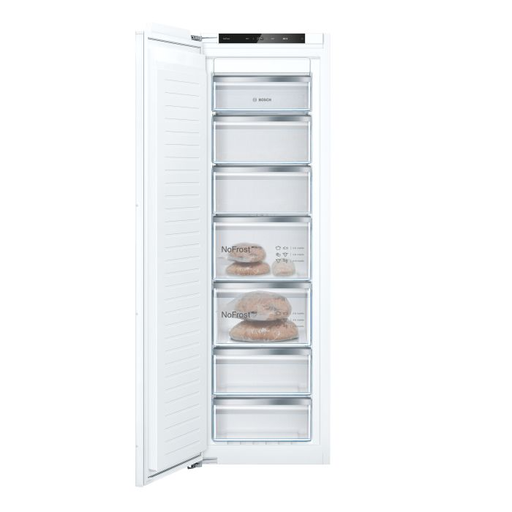
Consider this tall upright format for regular dough batches if you have compatible integrated housing. The product name specifies NoFrost, a fixed hinge and an E energy rating; check the cabinet fit and installation clearances before choosing it.
 No image available
Consider this freestanding chest format when you have room for bulk batches and can organise portions for retrieval. Check its lid clearance, defrost requirements and documented ambient-temperature range if it will stand in an outbuilding.
 No image available
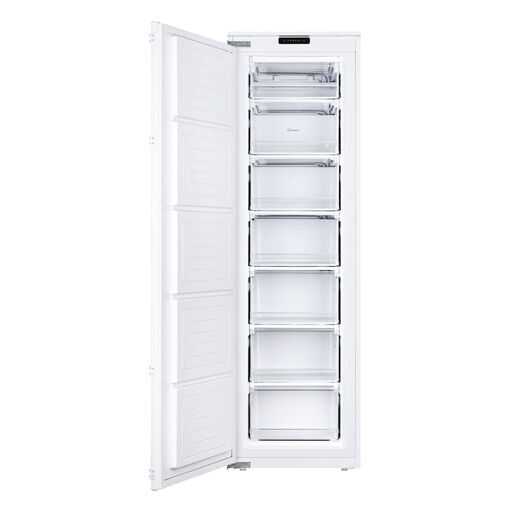
Consider this upright format for separated family food and dough storage if an integrated installation suits your kitchen. The product name states an E energy class; confirm cabinet and hinge compatibility, as well as frost-free status if lower upkeep matters.
 No image available
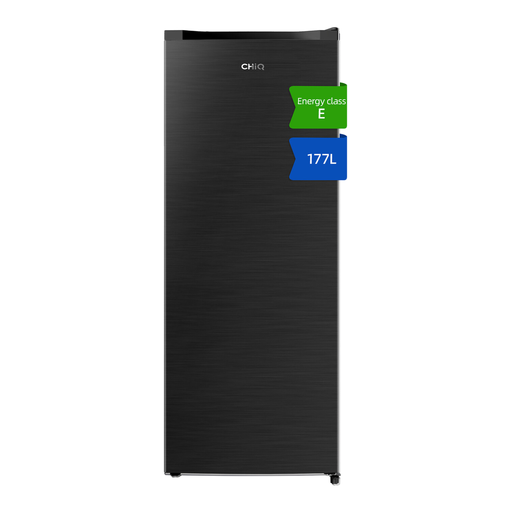
Consider this upright format if you want to separate portions but need to plan around limited floor space. Its name specifies a width of 54 cm and height of 144 cm; also check depth, ventilation space, door opening and usable storage before deciding whether it fits.
 No image available
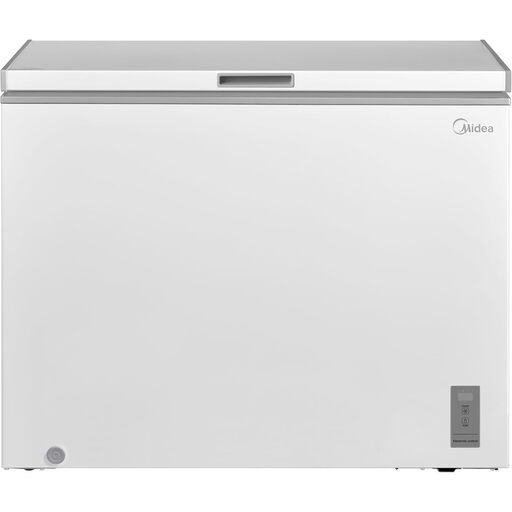
Consider this chest format for larger dough batches if you can keep stacked portions organised. The product name states an E energy rating; check its complete dimensions, defrost requirements and permitted ambient-temperature range for your chosen location.
Follow your freezer’s instructions; Bosch UK recommends -18°C as a freezer temperature. Check the appliance’s controls rather than assuming a numbered dial position represents a particular temperature.
An upright suits frequent retrieval of separated, labelled portions, while a chest freezer suits bulk batches if you can organise the contents. Check the storage layout in either case, and allow for defrosting if the chest model requires it.
Only choose a model documented for the ambient temperatures your garage can reach. Beko states that selected freestanding Freezer Guard models operate down to -15°C, but that claim cannot be applied to a different model without checking its own documentation.
Compare the energy labels and product information for freezers of a similar usable capacity and format, rather than relying on energy class alone. Check the documentation presented for your delivery region, as GOV.UK notes that energy-labelling requirements differ between Great Britain and Northern Ireland.