Regular sauce batch-cookers
If you freeze several portions at a time, compare freezer litres and drawer space against the containers or bags you use. A layout label cannot tell you whether those portions will fit.


If you regularly freeze portions of cooled tomato sauce, start by comparing actual freezer capacity and drawer space; a 50/50 layout gives fridge and freezer doors of similar height, but the split alone does not tell you how much sauce will fit. If fresh groceries take more space, consider a 60/40 or 70/30 layout, then check the freezer volume, kitchen fit and energy information for the exact model.
If you freeze several portions at a time, compare freezer litres and drawer space against the containers or bags you use. A layout label cannot tell you whether those portions will fit.
If sauce portions share the appliance with everyday chilled groceries, weigh the fridge/freezer split against each compartment’s stated capacity rather than choosing by overall size alone.
If you freeze sauce regularly and want to avoid manual freezer defrosting, consider a frost-free model while still checking its capacity, energy information and dimensions.
Work out how much room your usual sauce portions need, then check food-storage controls and whether the appliance fits its intended location.
| Concern | What to check | Who this matters to |
|---|---|---|
| Freezer space and organisation | Compare frozen-compartment litres and drawer dimensions with your usual containers; check the fridge/freezer split separately. | I freeze several labelled sauce portions together and want to find one without rearranging everything. Around 36% of consumers put usable freezer space and organisation first. |
| Freezing conditions and food handling | Check the model’s temperature controls and any alerts. The Food Standards Agency advises keeping a freezer around −18°C; cooling and portioning sauce promptly remain important. | When I make a batch, I need to cool it safely and keep the frozen portions at the right temperature. For around 36% of consumers, those handling and temperature needs come first. |
| Fit, energy and upkeep | Measure the installation space, check freestanding or integrated fit, and compare the exact models’ energy labels. Consider frost-free operation if avoiding manual defrosting matters to you. | My appliance has to fit its space, and I want to weigh electricity information and defrosting work before choosing. These are the primary concerns for around 28% of consumers. |
Freezing does not undo unsafe handling beforehand. Food Standards Scotland advises against leaving food at room temperature for longer than 1–2 hours.
Divide the sauce into smaller containers or freezer bags so it cools more quickly, then freeze it promptly once cooled.
A 50/50, 60/40 or 70/30 label describes the general layout, not the freezer’s exact litre capacity or whether your containers fit its drawers.
Compare frozen-compartment capacity and drawer space, and measure both your containers and the intended installation area.
Frost-free operation addresses ice build-up and defrosting work; it does not establish how much sauce a model holds or how it performs when a batch is added.
Check capacity and temperature controls separately. If batch-freezing performance is a deciding factor, look for comparable independent testing of the exact models.
Ambient-temperature guidance is model-specific. Beko and Hotpoint describe selected models whose freezer compartments can operate down to −15°C, while cautioning against fridge-compartment use in low ambient temperatures.
Check the exact model’s installation instructions against the temperatures expected where you plan to put it.
Bosch Home UK lists freestanding and integrated fridge-freezers in 50/50, 60/40 and 70/30 layouts, including Total No Frost models.
Beko UK offers frost-free fridge-freezers and selected FreezerGuard models intended for certain outbuilding conditions.
Hotpoint UK lists several fridge/freezer splits and frost-free models, with features that vary by model.
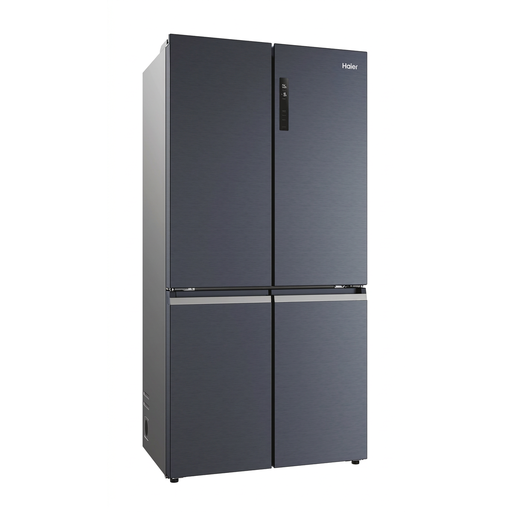
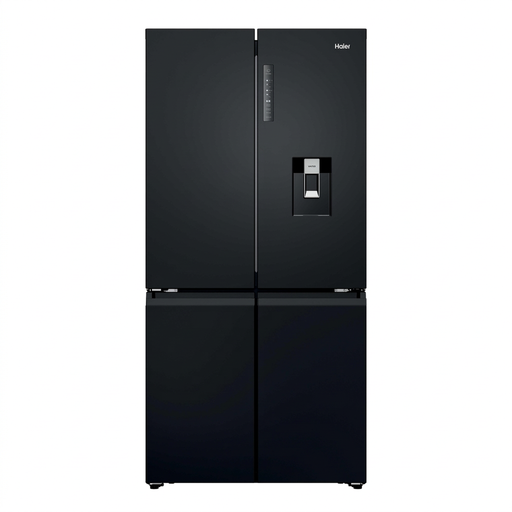
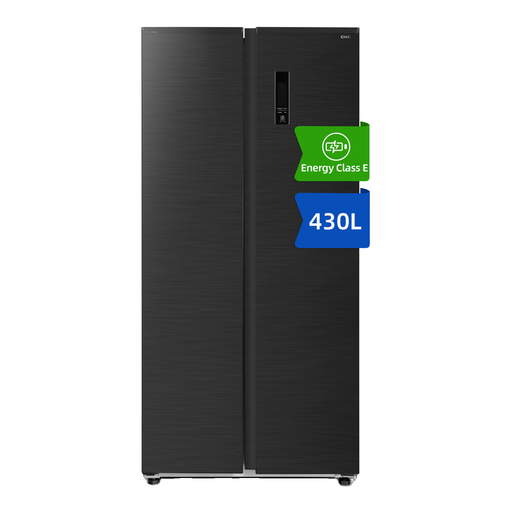
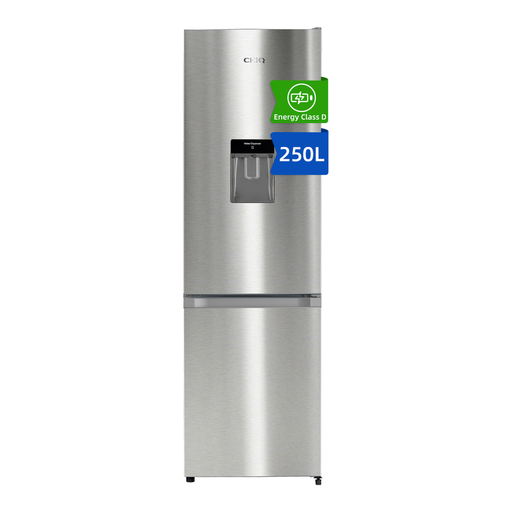
These freestanding and side-by-side fridge-freezers offer different overall sizes, widths and layouts to consider for storing sauce portions. Compare each model’s freezer compartment and installation requirements before deciding how well it fits your batch size.
 No image available
Consider this freestanding model if you need to compare a larger appliance with the space available for sauce portions and chilled food.
Its stated overall capacity is 528 L. Check the freezer compartment’s capacity, drawer space and operating-temperature guidance for your intended use.
 No image available
The four-door layout may be worth examining if you want to organise sauce portions alongside other frozen food.
This freestanding model has a stated overall capacity of 649 L. Measure the installation space and check freezer litres, compartment layout and temperature guidance before choosing it for regular batches.
 No image available
Consider its side-by-side arrangement if that layout works for both your chilled groceries and frozen sauce containers.
The title specifies an 84 cm width, No Frost operation and an E energy rating. Check the freezer’s own capacity, internal arrangement and the full installation dimensions.
 No image available
This model is worth a closer look if appliance width is a constraint but you still need freezer room for portions.
Its stated width is 54 cm and height is 181 cm; the title also specifies a D energy rating. Check freezer litres and drawer dimensions against the amount of sauce you normally freeze.
 No image available
The freezer drawers may help you separate sauce portions from other food if their dimensions suit your containers.
The title specifies a 54 cm width and an E energy rating. Compare the freezer’s own capacity and the appliance’s full dimensions before choosing it for batch cooking.
The Food Standards Agency advises keeping a fridge between 0°C and 5°C and a freezer around −18°C. Check the actual temperature with a thermometer rather than treating a numbered dial setting as a temperature reading.
Yes, once it has cooled promptly. Divide a batch into smaller containers or freezer bags to help it cool, and follow Food Standards Scotland’s advice not to leave food at room temperature for longer than 1–2 hours.
Defrost tomato sauce in the fridge and heat it all the way through when reheating. Food Standards Scotland advises reheating food only once.
Compare the energy labels for the exact fridge-freezers you are considering, rather than assuming models with similar layouts use the same amount of electricity. GOV.UK guidance says an energy label must be displayed at the point of sale, including on a website, for products within its scope.
Only choose a model whose installation guidance suits the temperatures expected in that garage. Beko and Hotpoint describe selected models with freezer operation down to −15°C, but caution against using the fridge compartment in low ambient temperatures; check the exact model rather than extending that claim to every fridge-freezer.