
24/7 Customer Support

Free returns

Same-day & Next-day Delivery

Quality Guaranteed

Unlock Your Welcome Offers: FREE Delivery | Up to 80% OFF | Free 30-day JoyPlus trial
Download the APP
A frozen pizza promises a quick, satisfying meal for a movie night, a busy weeknight or when you simply can't be bothered to cook. Yet, the reality can often be a letdown. We've all been there: a base that’s either tough as cardboard or disappointingly soggy, toppings that look generous on the box but are sparse in reality and a flavour that just doesn't deliver.
As a Joybuy Product Recommendation Officer, my role is to help you see past the enticing packaging and marketing claims. Before you add another disappointing pizza to your basket, let's look at the common pitfalls and what to check for instead.
Navigating the freezer aisle can be tricky. Many products use clever marketing to imply a quality that isn't always there. Here are two major traps to watch out for:
To make a more informed choice, focus on these three practical specifications.
The base determines the entire texture of the pizza. The description on the box is your first clue to the eating experience.
Instead of being swayed by marketing adjectives, turn the box over and look at the ingredients list. UK regulations require manufacturers to list the percentage of key ingredients.
For a pepperoni pizza, a higher percentage (e.g., 10% or more) suggests a more generous topping. For a classic margherita pizza, check the percentage and type of cheese. A pizza using whole milk mozzarella or featuring additions like buffalo mozzarella pearls is often a sign of higher quality than one using a vague "cheese blend."
Don't just compare the shelf price. Two pizzas might cost the same, but one could be significantly heavier. To find the best value, look for the price-per-100g on the shelf label or calculate it yourself. This simple check helps you sidestep "shrinkflation" and ensures you're getting a fair amount of pizza for your money.
Based on these practical criteria, here are a few options from our catalogue that align with different needs and preferences.
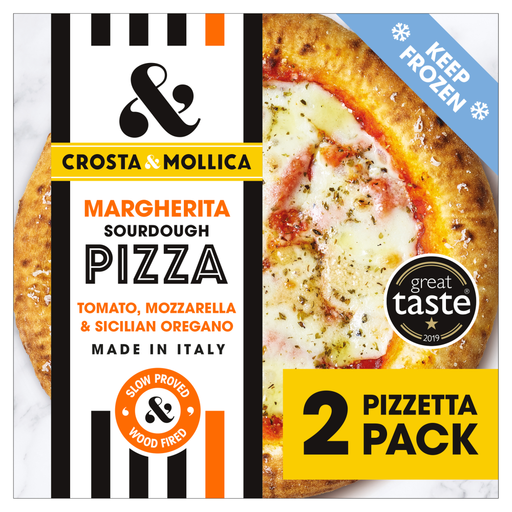
Why This Fits Their Persona: For those who prioritise authentic flavour and texture above all else. This pizza is for someone who would rather have a simple Margherita made with excellent ingredients than a pizza loaded with mediocre ones.
It sidesteps the "premium ingredient illusion" by focusing on process. The 24-hour slow-proved sourdough and wood-fired base are tangible features that directly contribute to a superior flavour and texture, not just marketing fluff.
The sourdough base provides a distinct, tangy flavour and a satisfying chew that you won't find in standard frozen pizzas. The toppings are simple but high-quality, including Parmigiano Reggiano PDO cheese.
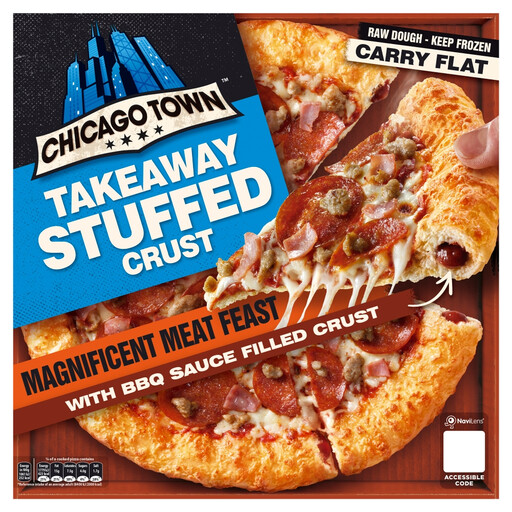
Why This Fits Their Persona: Perfect for families or anyone seeking a substantial, flavour-packed meal that genuinely mimics the indulgent experience of a takeaway. It's designed for sharing and satisfies big appetites.
It overcomes the "takeaway style" letdown with its unique rising dough that is frozen fresh and bakes for the first time in your oven. This results in a soft, risen crust rather than a reheated, dry one. The stuffed crust adds to the indulgent feel.
The generous size (640g) and loaded toppings (pepperoni, ham, fennel sausage) offer good value. The stuffed crust with tomato sauce is a key feature that makes it a standout choice for those who love a substantial pizza.
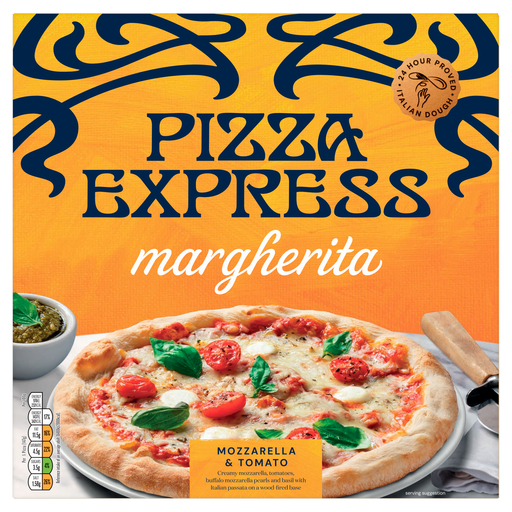
Why This Fits Their Persona: Ideal for fans of the Pizza Express restaurant chain who want to replicate that specific taste at home. It's a reliable choice for a classic, high-quality vegetarian pizza with a thin, crispy base.
This pizza relies on its brand reputation and specific, quality ingredients rather than vague claims. The inclusion of buffalo mozzarella pearls (3.1%) is a verifiable detail that elevates it beyond a standard Margherita.
The wood-fired base and 24-hour proved dough provide an authentic pizzeria-style crust. It offers a familiar and consistent quality for those who know and like the brand's signature flavour profile.
We have compiled a complete, real-time list of products that fully satisfy these strict selection criteria and UK safety regulations.
The single most effective method is to ignore the instruction to place the pizza on a baking tray. Instead, preheat your oven with a pizza stone or a heavy, overturned baking sheet inside. Place the frozen pizza directly onto the hot surface. This intense, direct heat helps to draw out moisture and cook the base quickly, resulting in a much crispier finish.
The difference usually comes down to the base and the quality of the toppings. More expensive pizzas often use more complex doughs (like sourdough), are cooked using methods like wood-firing for better texture and use higher-quality, higher-percentage toppings (e.g., whole milk mozzarella vs. an analogue, or prosciutto vs. basic ham). Cheaper options may use simpler doughs and lower-cost cheese and meat substitutes.
Not necessarily. While a vegetarian pizza avoids processed meats, it can still be high in calories, saturated fat and salt, especially if it's a deep-pan or four-cheese variety. A thin-crust margherita or a pizza loaded with vegetables will generally be a lighter option than a meat-feast or a cheese-stuffed crust pizza, but it's always wise to check the nutritional information per 100g to compare.