
24/7 Customer Support

Free returns

Same-day & Next-day Delivery

Quality Guaranteed

Unlock Your Welcome Offers: FREE Delivery | Up to 80% OFF | Free 30-day JoyPlus trial
Download the APP
It’s a familiar scene in many UK homes, especially during the warmer months. One minute your kitchen is spotless, the next a cloud of tiny fruit flies has appeared, hovering over the fruit bowl or a glass of wine. These nuisance pests multiply quickly and can be frustratingly difficult to get rid of.
While homemade solutions can offer temporary relief, a dedicated fruit fly trap is often a more effective and lasting approach. As the Joybuy Product Recommendation Officer, my role is to help you find practical solutions that work. This guide will walk you through what to look for in a fruit fly trap and highlight a few options that are popular with UK households for their effectiveness and ease of use.
Before you buy, consider a few key factors. Thinking about where and how you'll use the trap will help you select the right tool for the job.
Not all fly traps are created equal. An indoor fly trap is designed for discretion and safety within living spaces. These are typically compact, odourless and use non-toxic attractants, making them suitable for placement on a kitchen counter. A dedicated kitchen fly trap is essential for dealing with pests near food preparation areas.
Conversely, an outdoor fly trap is built to be more robust. These are often larger, with a more powerful lure designed to draw flies away from a wider area, such as a patio, bin area or garden, before they have a chance to enter your home.
For many families, safety is the top priority. If you have children or pets, searching for a non toxic fruit fly trap is crucial. Many modern traps use food-grade, vinegar-based or plant-based lures that are highly attractive to flies but pose no risk to your family. Always check the product description to confirm it is a pet safe fly trap before placing it in an accessible area.
Think about whether you need a short-term fix or a long-term solution. Some traps are single-use and can be disposed of once full. Others are designed as a reusable fly trap, where you can empty the contents and add a new bait refill. Reusable models can be more cost-effective over time, especially if you experience recurring fruit fly issues each year.
Based on popular features and user-focused design, here are some recommended options for tackling nuisance flies in and around your home.
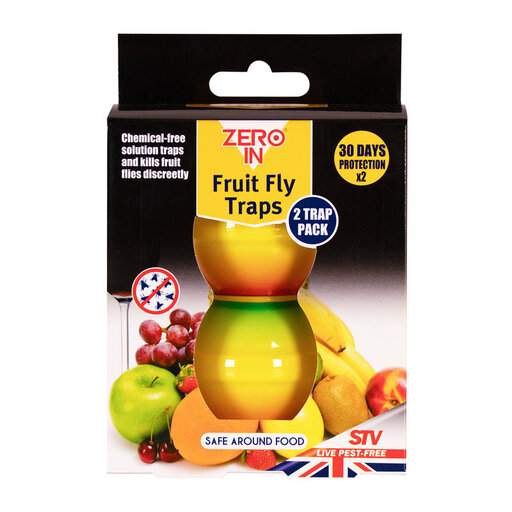
Why It Stands Out: This trap is designed specifically for the heart of the home: the kitchen. Its small, apple-shaped design is discreet enough to sit on a countertop or near a fruit bowl without being an eyesore. It comes ready-baited, so there is no messy setup involved.
Pros:
Who is it for? Anyone looking for a simple, effective and low-maintenance indoor fly trap to manage fruit flies in the kitchen or dining area.
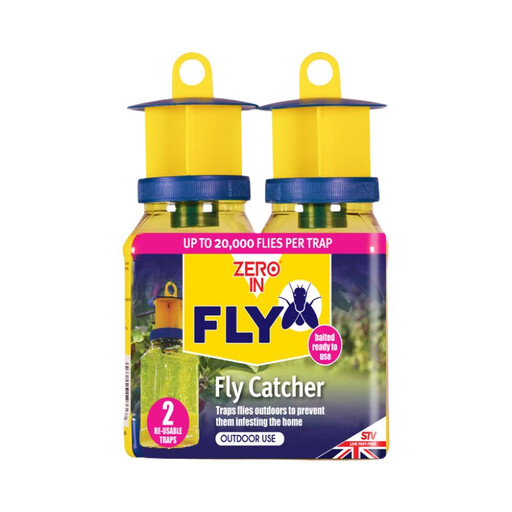
Why It Stands Out: When you need to control flies in your garden or near rubbish bins, a more powerful solution is required. This outdoor fly trap uses a highly effective attractant that lures flies from a radius of up to 10 metres. It’s a workhorse designed to intercept flies before they get inside.
Pros:
Who is it for? Homeowners with gardens, bin storage areas or other outdoor spaces who need a heavy-duty fly catcher to reduce the overall fly population around their property.
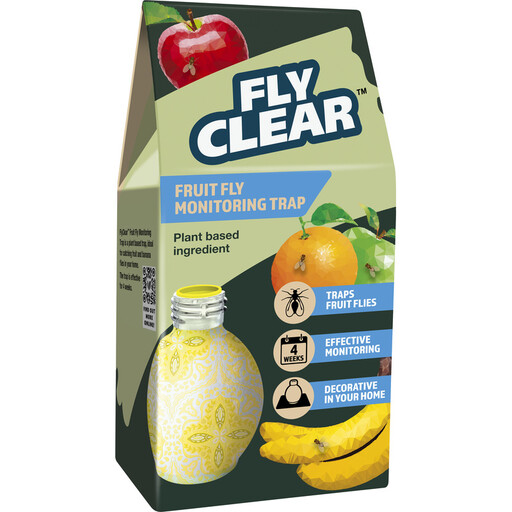
Why It Stands Out: This trap proves that pest control doesn't have to be unsightly. With its decorative bottle design, it blends into your home decor while discreetly managing fruit flies. It uses a plant-based active ingredient, making it a great chemical-free option.
Pros:
Who is it for? Individuals and families who prioritise aesthetics and want an effective, chemical-free solution that doesn't disrupt their home's interior design.
The products above are excellent starting points for dealing with fruit flies. However, if you're facing different types of flying insects or simply want to explore a wider variety of solutions, from UV light traps to traditional sticky paper, there are many other options available.
? Explore our full range of Flying Insect Trap solutions here.
Getting rid of fruit flies involves a two-step approach: trapping the existing adults and eliminating their breeding grounds.
Fruit flies are attracted to fermenting organic matter. A sudden infestation usually means they have found a suitable food source and breeding ground. This could be an overripe banana on the counter, a small spill of juice under an appliance or residue in your recycling bin or sink drain. They have a very rapid life cycle, so a few flies can become a swarm in just a few days.
Many modern fruit fly traps are specifically designed for safe use in kitchens. Products like the Zero In and CLEAR traps mentioned above use non-toxic, food-based or plant-based attractants. They are poison-free and intended for placement near food areas. However, it is always good practice to read the label and place any trap where it won't be accidentally knocked over.