
24/7 Customer Support

Free returns

Same-day & Next-day Delivery

Quality Guaranteed

Unlock Your Welcome Offers: FREE Delivery | Up to 80% OFF | Free 30-day JoyPlus trial
Download the APP
Choosing the best fryer for chips depends less on flashy presets and more on how you cook, how many people you feed and how much cleaning you are prepared to do. UK households can choose between a traditional deep fat fryer, an air fryer for chips or a hob-friendly frying pot. Each method produces a different texture, uses oil differently and has its own storage and safety considerations.
Before buying, watch for these common traps.
A fryer advertised as 3 or 3.5 litres usually refers to the oil capacity, not the amount of food it can cook. Overfilling a basket can lower the oil temperature, create unevenly cooked chips and increase the risk of splashing. Always check the stated food capacity as well as the oil volume.
For example, a 3.5 litre model may handle up to 1kg of fresh chips, while frozen chips may have a lower recommended capacity. A compact fryer may be perfectly suitable for one or two people but inconvenient for a family meal.
Power affects how quickly a fryer heats and recovers temperature, but it is not the only factor. A 2300W deep fat fryer may heat quickly, yet poor temperature control or an overcrowded basket can still produce greasy or pale chips. Look for an adjustable thermostat, clear operating guidance and a basket size that matches your portions.
A dishwasher-safe basket does not necessarily mean every part can go in the dishwasher. Heating elements, control panels and electrical housings generally require separate care. Removable bowls, oil tanks and baskets make maintenance easier, but check exactly which parts are dishwasher safe before purchasing.
An air fryer for chips circulates hot air around food with little or no added oil. It is useful for frozen chips, reheating and cooking several foods without filling the kitchen with hot oil. However, results depend on basket space, shaking and not overcrowding the food.
A deep fat fryer immerses food in hot oil. This can provide the familiar crisp coating associated with chips, battered fish, chicken and doughnuts, but it requires oil storage or disposal and careful handling.
A hob-top pot, such as a stainless steel deep fry pot, offers flexibility for frying and other cooking tasks. It does not provide the built-in thermostat, timer or enclosed heating system of an electric fryer, so temperature monitoring and safe handling are your responsibility.
For smaller households, a 3 litre deep fat fryer may offer a practical balance between footprint and batch size. A 3.5 litre deep fat fryer gives more room for family portions, although it will need more oil and cupboard space.
If you want to cook two foods at once, an 8 litre air fryer with two 4-litre baskets can be more useful than one large compartment. Separate baskets allow chips and another food to cook simultaneously, but the appliance still needs adequate ventilation around its air outlets.
An adjustable temperature fryer is preferable when you cook different foods. Chips, fish and doughnuts do not necessarily require identical settings, so a variable thermostat is more useful than a single preset.
Helpful features include:
Look for appliances supplied with appropriate UK product information and safety markings, such as UKCA or CE compliance where applicable. These markings do not replace safe operation: never leave hot oil unattended, avoid overfilling and allow oil to cool before moving or cleaning the appliance.
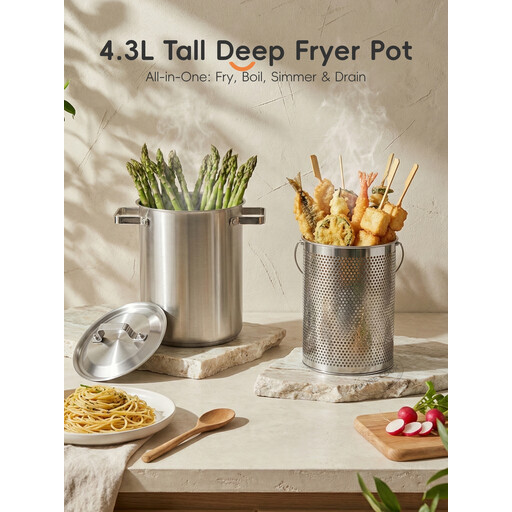
Why This Fits Their Persona: A useful choice for shoppers wanting one hob-compatible pan for chips, boiling, blanching and everyday cooking rather than a dedicated electrical appliance.
Its stated 4.3L capacity is the pot size, while the included perforated basket supports draining. Users still need to control heat and avoid overfilling.
304 stainless steel, three-layer composite base, induction compatibility and dishwasher-safe cleaning according to the product information.
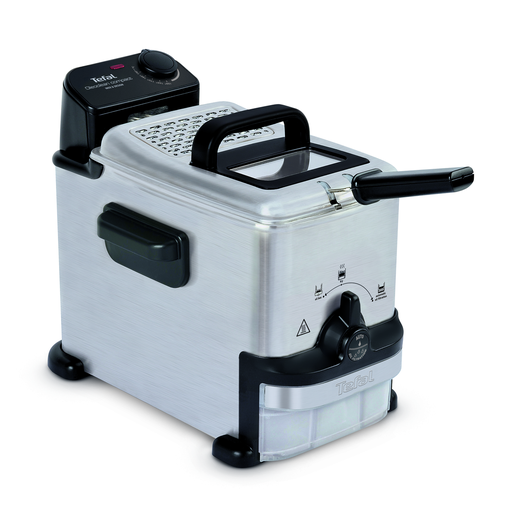
Why This Fits Their Persona: Suits regular home cooks who want traditional deep-fried texture with a more organised approach to oil filtering and cleaning.
The 2L oil capacity and stated 0.8kg food capacity help set realistic expectations. Its filtration system does not remove the need to handle hot oil carefully.
Adjustable 150–190°C thermostat, viewing window, cool zone and removable dishwasher-safe parts excluding the heating element.
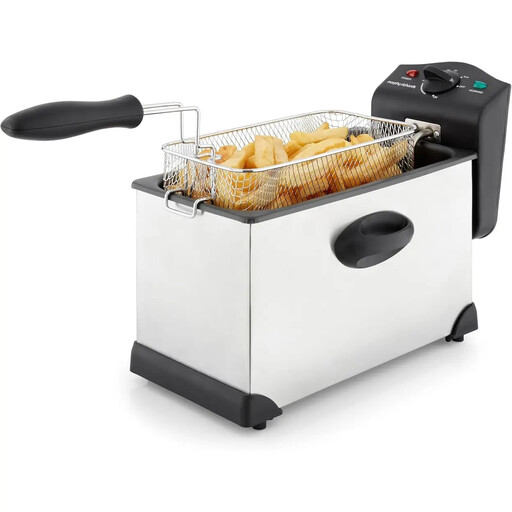
Why This Fits Their Persona: Designed around larger batches, making it suitable for family portions of chips, chicken, fish or entertaining guests.
The listed food limits distinguish fresh chips, frozen chips, chicken and fish, rather than presenting 3.5L as an unlimited portion size.
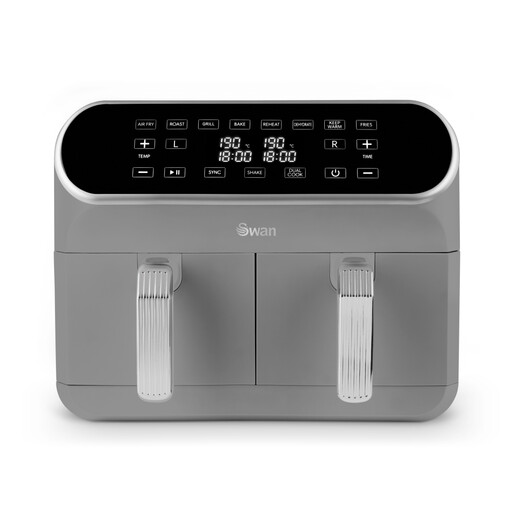
Why This Fits Their Persona: A practical match for busy households cooking chips alongside another dish, without running a full-size oven for every meal.
Its 8L capacity is divided into two 4L baskets, so it offers flexibility rather than one uninterrupted 8L cooking chamber.
Two non-stick baskets, eight cooking programmes, adjustable temperature up to 200°C, shake reminder and basket detection.
We have compiled a complete, real-time list of products that fully satisfy these strict selection criteria and UK safety regulations.
For frozen chips, follow the packet instructions and avoid filling the basket beyond its stated limit. For fresh chips, dry the cut potatoes thoroughly before frying, as excess water can cause hot oil to spit. Whichever appliance you choose, leave space around the unit for ventilation and keep children away from hot baskets, oil and escaping steam.
An air fryer may suit frequent weekday cooking, while a deep fat fryer is more appropriate when traditional fried texture is the priority. A fryer with a viewing window can make monitoring easier, but it does not remove the need to check food and follow the manual.
They use different cooking methods. A deep fat fryer immerses chips in oil, while an air fryer circulates hot air with minimal added oil. Choose based on the texture you prefer, your cleaning routine and whether you also want to cook foods such as fish, doughnuts or roast vegetables.
Running cost depends on the appliance’s wattage, cooking time and electricity tariff. A 1700W air fryer generally uses less power per hour than a 2300W deep fryer, but actual cost depends on how long each appliance operates and the quantity being cooked. Compare the wattage and expected cooking time rather than relying on capacity claims alone.
Lifespan depends on frequency of use, oil maintenance and cleaning. Removable components, replaceable filters or accessible spare parts can make continued use more practical. Always inspect cables, plugs, seals and baskets, and stop using the appliance if it shows damage or develops an electrical fault.