
24/7 Customer Support

Free returns

Same-day & Next-day Delivery

Quality Guaranteed

Unlock Your Welcome Offers: FREE Delivery | Up to 80% OFF | Free 30-day JoyPlus trial
Download the APP
A reliable frying pan is the cornerstone of any kitchen, but finding one that performs well and stands the test of time can be a challenge. A pan that warps, scratches easily, or loses its non-stick properties can make daily cooking a chore. As the Joybuy Product Recommendation Officer, my role is to help you navigate the options and find a frying pan that suits your cooking style, hob type and household needs.
This guide offers practical advice on what to look for and presents a selection of pans that stand out for their materials, performance and user-focused design.
Before you decide, consider a few key factors that will determine how well a new pan serves you.
The material of your frying pan is the most significant factor influencing its performance, durability and maintenance.
Stainless Steel Frying Pan: Prized by professional chefs and keen home cooks, a stainless steel frying pan is a kitchen workhorse. It excels at searing meats, developing a flavourful crust (or 'fond') for pan sauces and can withstand very high temperatures. These pans are exceptionally durable, resist warping and are often oven safe. While they require a little more oil and technique to prevent food from sticking, their longevity is unmatched. A multi-ply construction (layers of stainless steel with an aluminium core) is a key feature to look for, as it ensures even heat distribution.
Non-Stick Frying Pan: For everyday convenience, nothing beats a non-stick frying pan. Ideal for delicate foods like eggs and fish, they require less oil, making them a popular choice for healthier cooking. Modern non-stick pans have evolved significantly. You can now find advanced coatings designed to be a scratch resistant pan, even when used with metal utensils. A ceramic pan offers a non-stick surface that is free from materials like PFAS, PFOA, lead and cadmium, addressing the concerns of many health-conscious cooks.
With induction hobs becoming increasingly common in UK homes, checking for compatibility is essential. An induction frying pan must have a magnetic base to work. Most manufacturers state this clearly on the packaging or in the product description. Pans made from stainless steel or cast iron are typically induction-ready, while those made from aluminium or copper require a bonded magnetic steel plate on the base.
Frying pans come in various sizes, but a 28cm frying pan or a slightly smaller 24-25cm skillet is often the most versatile for a small family or couple. This size provides enough surface area to cook a few chicken breasts or a family-sized omelette without being too cumbersome to handle or store.
Based on their construction, features and suitability for modern kitchens, here are our recommendations.
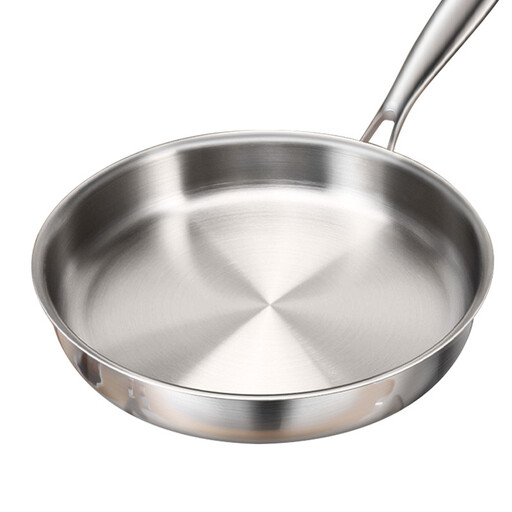
Why It Stands Out: This pan is built for durability and superior cooking performance. Its triple-ply construction, featuring an aluminium core sandwiched between layers of 304 stainless steel, provides excellent heat distribution, eliminating hot spots that cause food to burn.
Pros:
Who is it for? This is an ideal choice for the home cook who values longevity and performance over non-stick convenience. If you enjoy searing steaks, creating pan sauces and want a pan that will last for years, this is a solid investment.
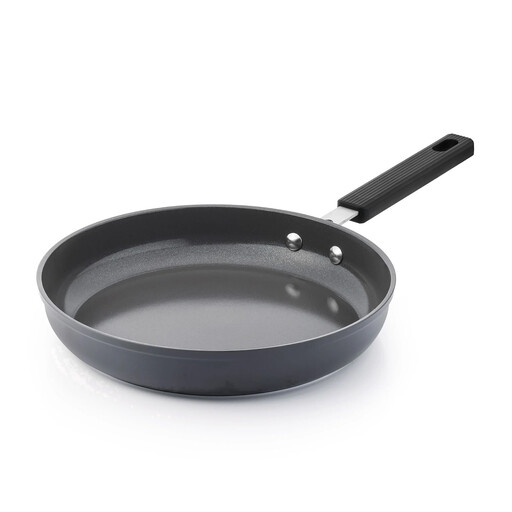
Why It Stands Out: This SENSARTE pan offers the best of both worlds: non-stick ease and peace of mind. Its PFAS-free ceramic coating makes it a great healthy frying pan option, while its performance makes everyday cooking effortless.
Pros:
Who is it for? Perfect for anyone seeking a convenient, easy-to-clean pan for daily tasks like frying eggs, making pancakes or sautéing vegetables. It is particularly suited to those who prioritise using cookware made without certain chemicals.
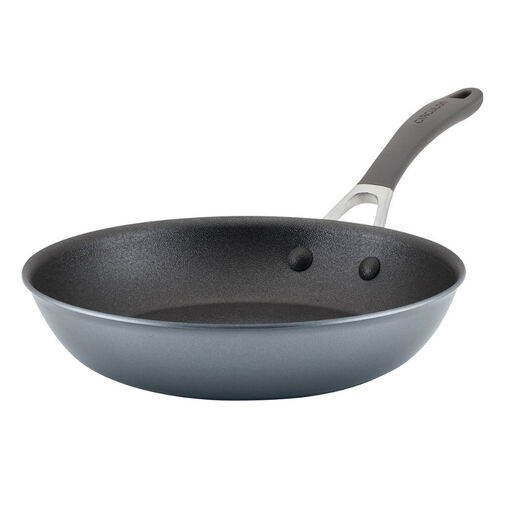
Why It Stands Out: This pan addresses the primary concern with non-stick cookware: durability. It features a reinforced surface designed to resist scratches and abrasion. According to Circulon, its ScratchDefense technology is engineered to eliminate scratching and flaking.
Pros:
Who is it for? This pan is for the user who loves the convenience of non-stick but is frustrated with pans that scratch and wear out quickly. It offers a practical solution for those who want a long-lasting, high-performance non-stick frying pan.
If our recommendations don't quite match what you're looking for, or if you'd like to browse a wider selection of sizes and materials, we invite you to explore our full range.
? Explore our complete collection of flat pans here
What is the most durable type of frying pan? Traditionally, a high-quality stainless steel frying pan is considered one of the most durable options due to its resistance to warping, chipping and high heat. However, modern non-stick technology has advanced considerably. Pans like the Circulon ScratchDefense are now designed as a scratch resistant pan to offer impressive longevity for non-stick cookware.
Are non-stick frying pans safe to use? Modern non-stick pans from reputable brands are safe for normal home cooking. Concerns have historically been linked to PFOA, a chemical once used in the manufacturing of some non-stick coatings. Today, most coatings are PFOA-free. For those seeking extra assurance, a ceramic pan is an excellent healthy frying pan alternative, as these coatings are typically made without any PFAS, lead or cadmium.
How can I tell if a frying pan is oven safe? Always check the manufacturer's instructions. The main limiting factor is usually the handle. Pans with all-metal or silicone-wrapped handles are often oven safe to a certain temperature (e.g., 200°C). Pans with standard plastic or wooden handles are generally not suitable for oven use.