
24/7 全天候客户支持

免费退货

当日/次日达

品质保障

开启新人专享福利: 全场免邮 | 低至 2 折 | 免费试用 30 天 JoyPlus 会员
下载 Joybuy
Selecting the right gaming mouse can significantly alter your daily computing and gaming experience, whether you are coordinating team skirmishes in fast-paced shooters or tackling precise creative tasks across a dual-monitor flat setup. A lightweight chassis has become standard among competitive players because reduced mass cuts down physical inertia, allowing swifter target acquisition and lower wrist fatigue during lengthy evening sessions. However, finding the balance between agile handling, tactile feedback, and stable connectivity requires understanding how different internal components work together on your mouse mat.
Modern gaming mice cater to a wide spectrum of setups, ranging from cable-free wireless peripherals that offer ultra-high tracking refresh rates to dependable wired units that provide continuous power without requiring battery recharges. Alongside connection stability, details such as micro-switch engineering, optical sensor calibration, and programmable macro layouts dictate how well a peripheral adapts to your chosen grip style. This guide breaks down the core technical considerations to help you select a mouse that complements your personal playstyle and everyday workspace.
The physical mass and contour of a mouse dictate how easily you can initiate micro-adjustments during rapid gameplay, making chassis design a primary factor for personal comfort.
A high reporting frequency ensures that pointer movements and button presses register with minimal latency on high-refresh-rate monitors.
The switches beneath your primary mouse buttons directly determine actuation speed, auditory feedback, and lifetime durability against wear.
Explore our top recommendations across high-speed wireless and dependable wired formats to discover the ideal peripheral for your desktop.
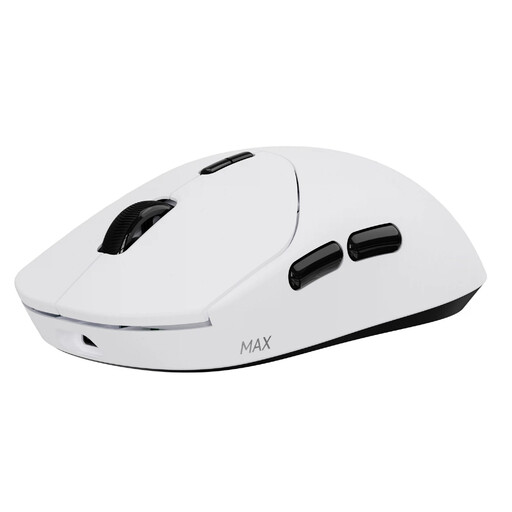
Why It Stands Out: The Rapoo VT2 MAX stands out with its remarkably agile 53g lightweight build and a clean white finish that brightens any contemporary desk setup. Powered by an advanced Nordic nRF54L15 MCU, it delivers a true 8K wireless polling rate for exceptionally fluid cursor tracking during high-intensity competitive gaming. Its 120-million optical switches ensure rapid actuation with prolonged hardware life, while the onboard battery supports up to 750 hours of use across prolonged sessions. Ten programmable buttons with full macro support provide substantial flexibility for complex key binds.
Pros:
Who is it for? Competitive players seeking an agile, ultra-responsive wireless mouse with marathon battery endurance and customisable controls in a sleek white colourway.
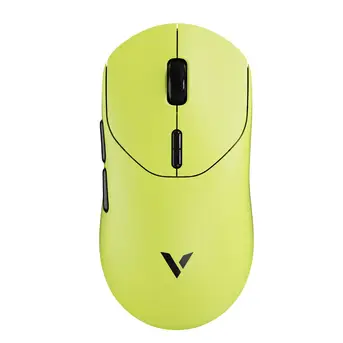
Why It Stands Out: Sporting a vibrant yellow chassis, the Rapoo VT2 combines an agile 53g lightweight profile with crisp, tactile click mechanics. It incorporates 100-million mechanical switches engineered for players who demand distinct physical feedback on every trigger pull. Driven by the Nordic nRF54L15 MCU, this peripheral achieves a true 8K wireless polling rate for swift competitive input transmission alongside up to 750 hours of extended battery life. Ten programmable buttons make assigning custom macros straightforward for both gaming loadouts and desktop shortcuts.
Pros:
Who is it for? Gamers who favour the distinct, tactile snap of mechanical switches alongside ultralight handling and high-speed wireless capability.
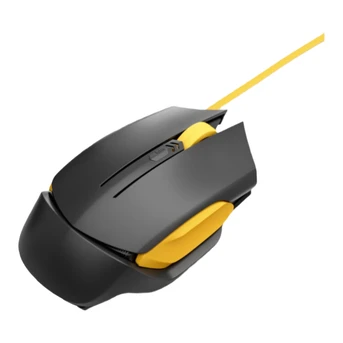
Why It Stands Out: The Ochama wired gaming mouse is designed for dependable daily performance without ever needing to monitor a battery gauge. Its ergonomic shape supports the natural posture of the hand, complemented by a sweat-resistant material that keeps fingers steady during extended use. The optical sensor delivers responsive tracking backed by a stable 1000Hz polling rate, while 4-level DPI settings let you shift sensitivity on the fly to match varying game genres. A durable tangle-free cable ensures smooth desk glide without unwanted snagging.
Pros:
Who is it for? Players and home-office users who want an ergonomic, plug-and-play wired optical mouse offering sweat-resistant comfort and dependable sensitivity control.
Looking for alternative grip shapes, dedicated left-handed profiles, or complementary desktop accessories? Browse our extensive collection of gaming peripherals to find the ideal match for your setup. View all gaming mice
An 8K polling rate transmits cursor position and click data to your computer eight thousand times per second, compared to one thousand times per second on standard models. This reduces reporting latency from one millisecond to an eighth of a millisecond, resulting in visibly smoother cursor travel when paired with high-refresh-rate gaming monitors.
Optical switches register clicks by breaking an infrared light beam inside the housing, which eliminates the need for physical metallic contact and avoids mechanical debounce delays. Mechanical switches rely on physical contact leaves to complete an electrical circuit, offering a classic tactile click sensation that many players appreciate for distinct feedback.
To preserve the matte, sweat-resistant coating of your mouse, gently wipe the exterior surfaces using a clean, slightly damp microfibre cloth. Avoid applying harsh chemical cleaners, alcohol rubs, or abrasive scrubbers, as these substances can wear down protective shell finishes over time.