
24/7 全天候客户支持

免费退货

当日/次日达

品质保障

开启新人专享福利: 全场免邮 | 低至 2 折 | 免费试用 30 天 JoyPlus 会员
下载 Joybuy
A garment steamer can make daily clothing care quicker, particularly when you need to refresh workwear, smooth a shirt before leaving home or handle delicate fabrics without setting up an ironing board. However, choosing between a handheld garment steamer, vertical clothes steamer and travel clothes steamer requires more than comparing wattage.
Some models are promoted as powerful garment steamers but provide little information about steam rate or tank size. Others are compact, yet their small reservoirs require frequent refilling. Before buying, check the specifications that affect real-world use rather than relying on broad claims such as “fast” or “professional”.
Wattage indicates electrical power consumption, not necessarily the amount of steam produced. A 2,000W clothes steamer may heat quickly, but steam output in grams per minute is a more useful comparison when you want to remove stubborn creases. Also check whether the product provides adjustable settings for different materials.
A compact water tank suits occasional touch-ups, but it may be inconvenient for a family laundry load. A handheld garment steamer with a 200–300ml tank is generally easier to carry, while a vertical model with a tank of around two litres is more appropriate for extended sessions. Always empty the tank after use to reduce the chance of mineral deposits and stale water.
A long list of accessories does not compensate for an awkward grip, a short cable or water dripping onto clothing. Look for practical features such as a ready light, automatic shut-off, anti-drip protection, locking steam trigger and an appropriate UK plug. For curtains and upholstery, confirm that the steamer can be used vertically and that the supplied brush is suitable for thicker fabrics.
Steam output is normally listed in g/min. Higher output can help with heavier cotton, linen and denim, although the correct setting also depends on the fabric. A model with a stated 30-second heat-up time may be convenient for last-minute use, while a ready light provides a clear indication that the appliance is ready.
A clothes iron steamer or handheld model with continuous steam can be easier to control than one that requires repeated button presses. A locking trigger is particularly useful when steaming several garments in succession.
Consider how you normally use the appliance:
A larger tank usually increases the overall size and weight, so check the balance between capacity and storage space.
A ceramic soleplate can glide smoothly over suitable fabrics, while a stainless-steel nozzle may offer a durable steam-distribution surface. These materials do not make every fabric suitable for direct contact. Check the garment care label, keep the steamer moving and test an inconspicuous area first.
For a fabric steamer for curtains and upholstery, a brush attachment can help lift fibres and loosen surface dust, but it should be used according to the manufacturer’s instructions. Steam is not a substitute for washing, stain removal or professional fabric care.
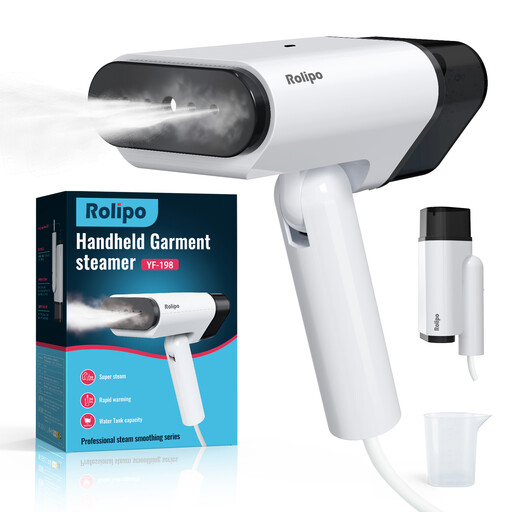
Why This Fits Their Persona: Its foldable handheld format is suited to occasional home use, office touch-ups and shoppers who need a travel clothes steamer without storing a full-size unit.
The foldable design addresses the storage problem, while the integrated anti-leak water tank is intended to reduce spills during use and transport.
Foldable portable construction; one-button operation; anti-leak tank design.
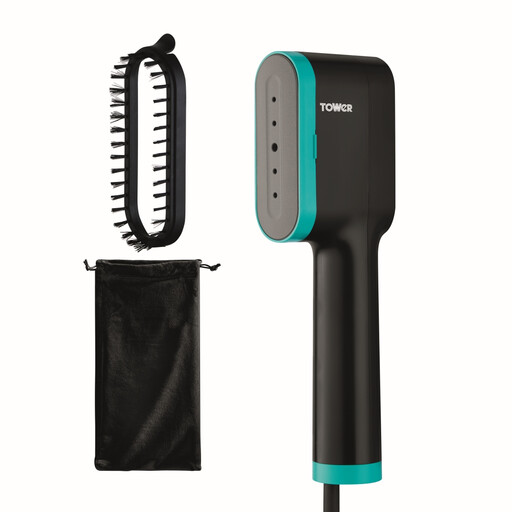
Why This Fits Their Persona: This option suits UK households wanting a feature-led handheld garment steamer for everyday clothing, curtains and upholstery.
Its listed 20g/min steam rate, 260ml tank and anti-drip system provide clearer information than relying on wattage alone.
1400W power; ceramic soleplate; brush attachment; automatic shut-off and overheat protection.
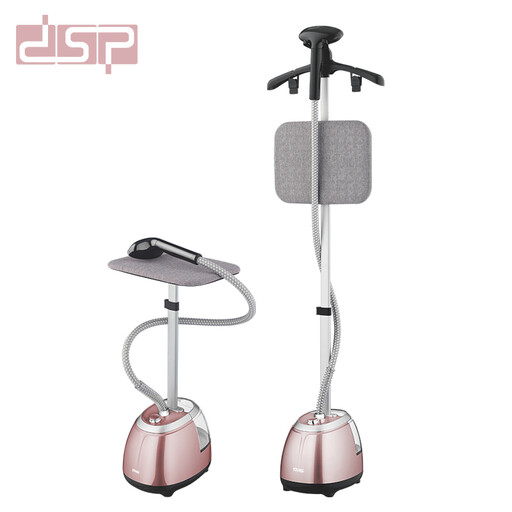
Why This Fits Their Persona: Its floor-standing format is designed for households steaming multiple garments, heavier fabrics or larger laundry loads in one session.
The specified 40g/min output and 2.1L tank make its intended heavy-use role clear, rather than presenting high wattage without supporting measurements.
2000W power; 10 steam settings; 30-second heat-up; trouser clip, brush and hanger system.
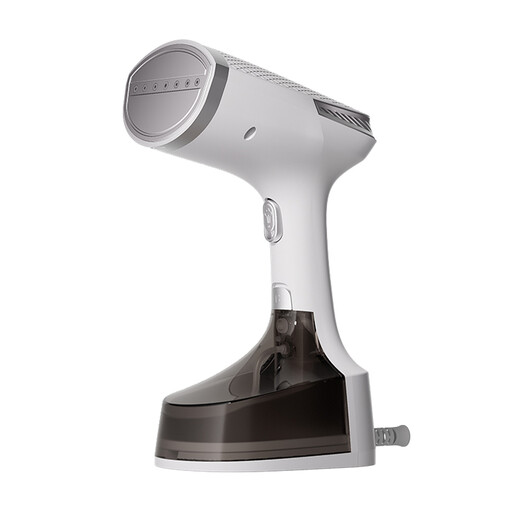
Why This Fits Their Persona: This compact handheld option is suited to users who want a straightforward appliance for regular outfit preparation and value a stated UK plug.
The 300ml tank gives a clearly stated capacity, helping buyers judge whether it matches short steaming sessions before purchasing.
1600W rated power; 300ml water tank; handheld design with UK plug.
We have compiled a complete, real-time list of products that fully satisfy these strict selection criteria and UK safety regulations.
Steam can cause burns, so keep hands and children away from the nozzle. Do not use an appliance with a damaged cable, and never immerse the unit in water.
Running cost depends on the appliance’s wattage, usage time and electricity tariff. A handheld garment steamer may use less energy during a short touch-up, while a higher-powered vertical model may consume more during extended sessions. Compare the wattage with the time you expect to use it rather than assuming one appliance will always cost less.
A steamer is useful for hanging garments, delicate fabrics and quick wrinkle removal. An iron generally provides a flatter finish on collars, cuffs, trouser creases and items that need firm pressure. Many homes use both, choosing the appliance according to the garment and finish required.
Lifespan varies according to construction, frequency of use, water quality and maintenance. Empty the tank after each session, follow the manufacturer’s cleaning instructions and store the appliance dry. If your local water is hard, check the manual for guidance on suitable water and descaling. These steps can help reduce mineral build-up and preserve steam performance.