
24/7 全天候客户支持

免费退货

当日/次日达

品质保障

开启新人专享福利: 全场免邮 | 低至 2 折 | 免费试用 30 天 JoyPlus 会员
下载 Joybuy
A good pen can transform the simple act of writing. Yet, finding the right one often feels like a gamble. Many of us have a drawer filled with disappointing purchases: gel pens that smudge at the slightest touch, skip across the page or feel uncomfortable after just a few minutes of note-taking. The marketing promises of "ultra-smooth" or "fast-drying" often fall flat, leaving you with messy work and wasted money.
As the Joybuy Product Recommendation Officer, my role is to help you navigate these common issues. Before you add another pen to your collection, let's look at the frequent pitfalls and the key features that truly matter. This guide will help you choose a reliable writing instrument for your studies, office work or creative projects.
quick dry pens, but their performance varies wildly depending on the paper, humidity and your writing speed. This is a particular frustration for pens for left-handers, whose hands often drag across freshly written text. A pen that isn't truly fast-drying can ruin important notes or journal entries.pens for journaling in notebooks with thinner paper.To avoid these traps, focus on a few core parameters. Understanding these will empower you to select a pen that fits your specific needs.
The tip is where the pen meets the paper, and its size dictates the final look of your writing.
fine point pen is ideal for those with small, neat handwriting or for tasks requiring high precision, such as annotating documents, technical drawing or detailed journaling. The finer line deposits less ink, which reduces the chance of bleeding and often contributes to faster drying times.The "gel" in a gel pen is a water-based pigment ink. Its quality determines everything from smoothness to permanence.
no bleed pens use ink that is absorbed quickly by the paper fibres without spreading.assorted colour gel pens are invaluable for organisational tasks, creative journaling and studying. You can find everything from standard vibrant hues to more subtle vintage and pastel palettes. For documents that need to last, consider pens with archival-quality, acid-free ink that resists fading over time.A pen is a tool you may hold for hours, so its design is crucial for comfort and usability.
Retractable pens offer the convenience of one-handed operation and eliminate the risk of losing a cap. This is a practical feature for fast-paced environments. For those who work in quiet spaces like libraries or open-plan offices, some models even offer silent click mechanisms.Instead of a generic list, we have matched specific pens to different user needs, helping you find the right tool for your lifestyle.
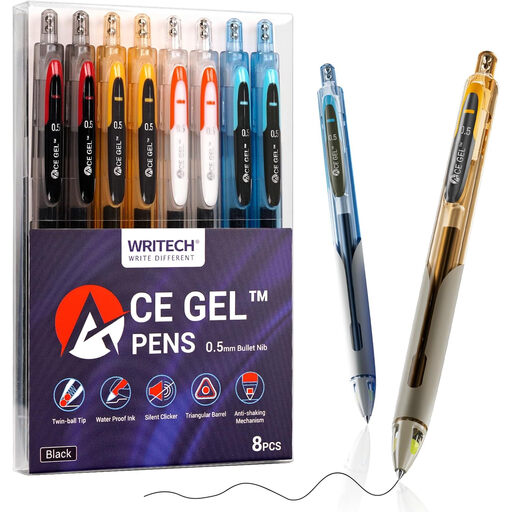
Why This Fits Their Persona: Perfect for students in lectures or libraries who need to write quickly and neatly. The fine tip is excellent for detailed notes and diagrams, while the silent clicker avoids disturbing others.
The quick-drying, waterproof ink directly counters the smudging issue, and the 0.5mm twin-ball tip is engineered for a consistent, skip-free flow, avoiding the common frustration of unreliable lines.
Features a silent click mechanism for quiet environments and an ergonomic triangular barrel with a soft grip for comfort during long study sessions.
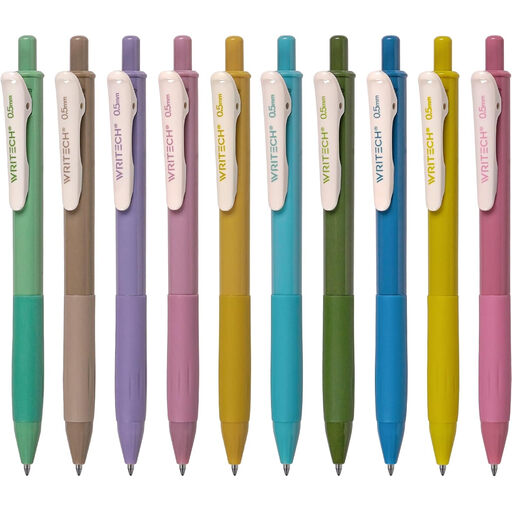
Why This Fits Their Persona: Ideal for anyone who uses their journal or planner for creative expression. The unique, muted colour palette offers a sophisticated alternative to standard bright inks, perfect for aesthetic layouts and doodling.
The 0.5mm fine point prevents bleeding on typical journal paper, while the quick-dry ink ensures that intricate designs and colour-coded entries remain crisp and smudge-free.
Offers a curated set of 10 unique vintage-inspired colours for creative projects. The ergonomic, non-slip grip provides comfort during long drawing or writing sessions.
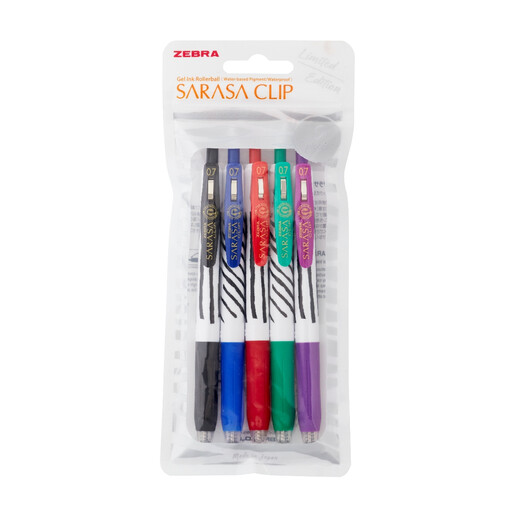
Why This Fits Their Persona: A reliable workhorse for a fast-paced office. The 0.7mm tip is bold enough for clear signatures and quick memos, and the sturdy clip attaches securely to thick notepads or jacket pockets.
Its rapid-dry ink technology is a significant advantage in an office setting, preventing smears when filing documents or passing notes. The consistent ink flow ensures no skipping during important meetings.
Features a durable, spring-loaded "alligator" binder clip that holds on tight. The soft cushioned grip provides superior comfort for all-day use.
We have compiled a complete, real-time list of products that fully satisfy these strict selection criteria and UK safety regulations.
1. How can I stop my gel pens from smudging? The most effective method is to choose a pen specifically advertised with quick-drying ink. Additionally, using a finer tip size (like 0.5mm) deposits less ink on the page, which naturally speeds up drying time. If you are left-handed, consciously try to lift your hand slightly as you write to avoid dragging it across the ink.
2. Are retractable gel pens better than capped ones? This comes down to personal preference and use case. Retractable pens are excellent for convenience, as they can be operated with one hand and you never have to worry about a lost cap. Capped pens, on the other hand, can sometimes provide a more airtight seal, which may help prevent the ink from drying out over very long periods of non-use.
3. Why do my gel pens stop working even when there is ink left? This common issue is usually caused by a tiny air bubble getting trapped in the ink cartridge, which interrupts the flow to the tip. It can also happen if the tip itself has dried out. To fix this, try scribbling in circles on a piece of scrap paper or a rubber surface to get the ball rolling again. Storing your pens horizontally or with the tip pointing down can also help prevent air bubbles from forming.