
24/7 Customer Support

Free returns

Same-day & Next-day Delivery

Quality Guaranteed
Download the APP
Categories
Bringing the delicious char and distinctive sear marks of outdoor grilling into your kitchen is easier than you might think. A quality griddle pan can transform your hob into a high-performance grill, perfect for everything from succulent steaks and charred vegetables to a full English breakfast. But with so many options available, choosing the right one can feel overwhelming.
As a Joybuy Product Recommendation Officer, my role is to help you navigate the market. This guide cuts through the clutter, focusing on the practical features that matter. We will explore the key considerations for selecting a griddle pan and highlight a few standout options to help you find the perfect fit for your cooking style.
Before you decide, it’s helpful to understand the main factors that differentiate one griddle pan from another. Considering these points will ensure you select a pan that meets your specific needs.
The material of your griddle pan is one of the most significant factors affecting its performance and maintenance.
Consider how you plan to use your griddle pan. Are you cooking for one or feeding a family?
Modern griddle pans often come with features that extend their use beyond the stovetop.
Based on features, materials and user versatility, here are a few griddle pans worth considering for your kitchen.
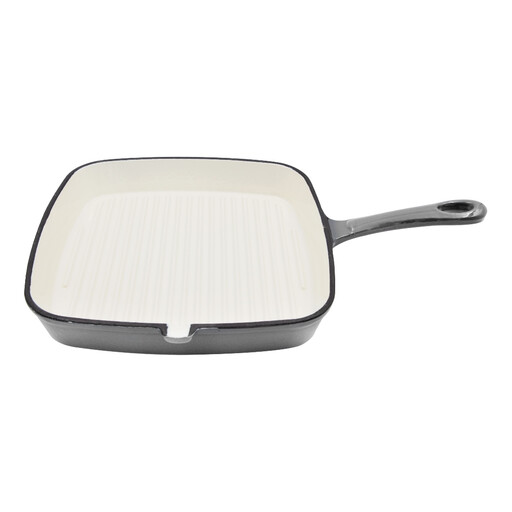
Why It Stands Out: This pan combines the superior cooking performance of traditional cast iron with a modern, stylish aesthetic. The grey enamel coating not only looks great but also adds a layer of durability and makes the pan easier to maintain than raw cast iron. Its compact size is perfect for smaller kitchens and everyday meals.
Pros:
Who is it for? This is an ideal choice for individuals, couples or anyone seeking the high-heat performance of cast iron in a manageable and stylish package.
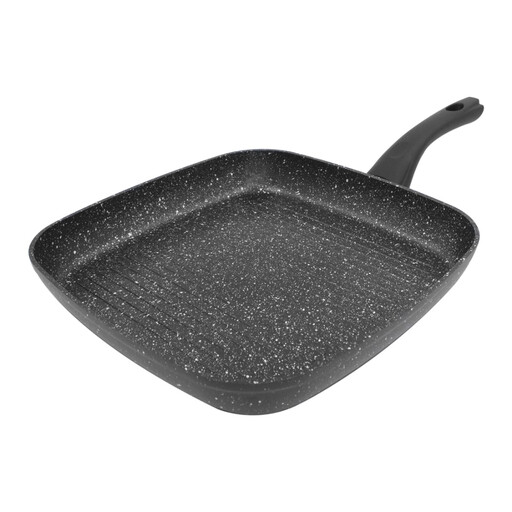
Why It Stands Out: Offering a generous cooking area and the convenience of a non-stick surface, this 28cm griddle pan is a practical workhorse for family kitchens. It is constructed from cast aluminium, which provides excellent heat conduction without the heavy weight of cast iron, and the ergonomic handle ensures comfortable use.
Pros:
Who is it for? This pan is well-suited for busy families or home cooks who value convenience, easy cleaning and a large cooking area for preparing multiple items at once.
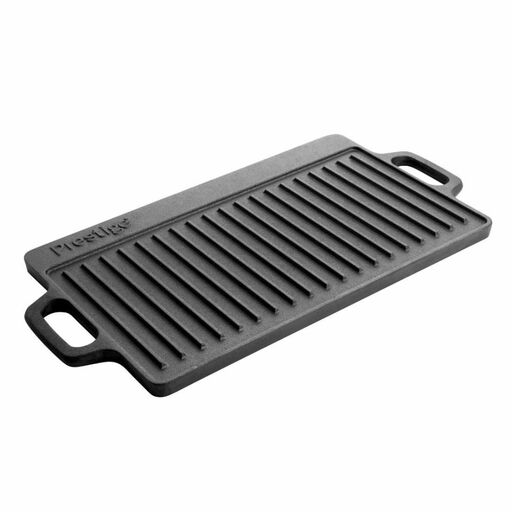
Why It Stands Out: This is a truly multifunctional piece of cookware. As a double griddle, it spans two hob rings to offer a massive cooking area. Its standout feature is the reversible griddle plate: one side is ridged for grilling, and the other is perfectly flat for pancakes or flatbreads. Made from heavy-duty, pre-seasoned cast iron, it’s built for serious cooking.
Pros:
Who is it for? This is the ultimate tool for avid home cooks, those who love to host, or anyone wanting a single piece of cookware that can handle almost any task on the hob, in the oven or on the barbecue.
While these recommendations cover a range of common needs, your perfect grilling companion might be something else entirely. For those planning an outdoor feast or exploring other grilling accessories, our broader collection offers even more choices.
Explore our full range of outdoor barbecue tools here.
To clean a cast iron pan, it's best to avoid soap, as it can strip away the seasoning (the layer of polymerised oil that creates a natural non-stick surface). After cooking, scrape out any food bits, rinse with hot water and use a stiff brush or scraper. For stubborn residue, you can scrub with coarse salt. Dry the pan thoroughly immediately after washing and apply a very thin layer of cooking oil before storing to prevent rust.
It depends on the material. Cast iron is naturally magnetic and therefore works perfectly on induction hobs. Many modern non-stick pans are also made with a magnetic steel base to ensure they are induction-compatible. Always check the product description for "induction suitable" or look for the induction symbol (a coil icon) on the packaging or base of the pan.
The ridges serve two main functions. First, they lift the food away from the base of the pan, allowing excess fat and oil to drain into the channels below for a healthier result. Second, the high heat concentrated on the ridges is what creates the characteristic dark, caramelised grill marks (or sear lines) on your food, adding both flavour and visual appeal.