
24/7 Customer Support

Free returns

Same-day & Next-day Delivery

Quality Guaranteed

Unlock Your Welcome Offers: FREE Delivery | Up to 80% OFF | Free 30-day JoyPlus trial
Download the APP
Struggling to see clearly on unlit country lanes? Tired of the dim, yellow glow from your car's standard halogen headlights? You're not alone. Many UK drivers are looking for a straightforward car headlight upgrade to improve visibility, safety and the overall look of their vehicle. An H4 LED headlight bulb conversion is a popular solution, offering a brighter, whiter light that can make a significant difference in night-time driving.
However, the market is filled with options, making it difficult to know which bulbs are right for your car. This guide is designed to cut through the clutter. As the Joybuy Product Recommendation Officer, my role is to provide clear, practical advice to help you find a reliable H4 bulb replacement that meets your needs. We will look at key features to consider and highlight a few standout options available today.
Before you buy, it's helpful to understand a few key specifications. This will ensure you select a kit that performs well and is compatible with your vehicle.
The most significant advantage of an LED upgrade is the increase in brightness. While many brands advertise high lumen counts, the most crucial factor is the beam pattern. A well-designed H4 high low beam LED bulb will mimic the filament position of a traditional halogen bulb. This creates a sharp, focused cut-off line on the low beam, illuminating the road ahead without dazzling oncoming drivers. Look for bulbs that specify a "perfect beam pattern" and a colour temperature around 6000K H4 bulb, which produces a crisp, modern white light that improves contrast and clarity.
LED chips generate heat, and managing it is vital for their lifespan and performance. H4 LED bulbs typically use one of two cooling methods:
For most DIY enthusiasts and everyday drivers, ease of installation is paramount. A true plug and play H4 LED kit is designed to be a direct replacement for your old halogen bulb. These bulbs feature a 1:1 design that matches the size and locking collar of the original, requiring no modifications to the headlight housing or dust cover. While most modern kits are compatible with the majority of vehicles, some cars with sensitive computer systems (often European models) may require an additional CAN bus decoder to prevent flickering or dashboard error messages.
Based on their features, design and user-friendliness, here are our recommendations for your next headlight upgrade.
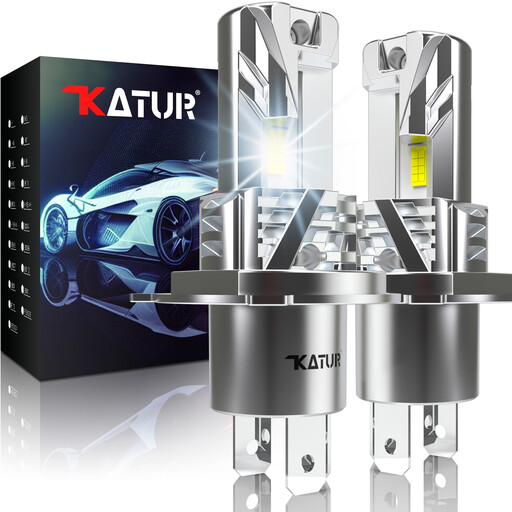
Why It Stands Out: The KATUR H4 bulb is an excellent choice for those seeking reliability and silent operation. Its standout feature is the fanless design, which uses a 6063 aircraft-grade aluminium body for passive heat dissipation. This eliminates any potential fan noise or failure points. Its 1:1 mini halogen design makes it a true plug and play H4 LED, fitting easily into tight headlight housings where larger, fan-cooled bulbs might not.
Pros:
Who is it for? This is ideal for drivers who prioritise a quiet, maintenance-free upgrade. It's particularly well-suited for vehicles with limited space behind the headlight assembly or for motorcycle owners looking for a dependable 9003 LED headlight solution.
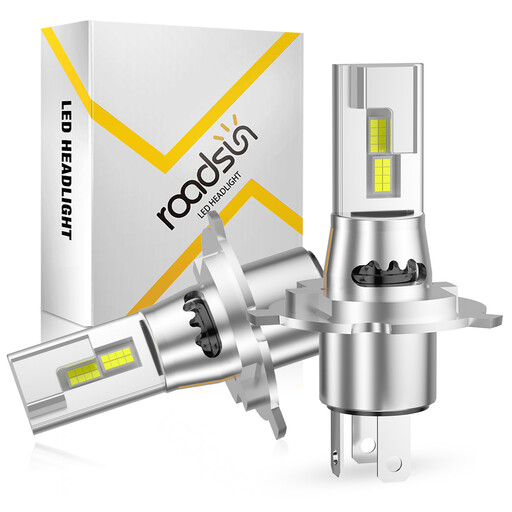
Why It Stands Out: For those who want maximum illumination, this Roadsun H4 bulb is a strong contender. According to the brand, it delivers a significant brightness increase over standard halogens. This is supported by an active cooling system featuring a 16,000 RPM fan that works to maintain stable performance during long periods of use. The 6500K cool white light provides excellent visibility and its IP68 waterproof rating ensures it can handle harsh British weather.
Pros:
Who is it for? This HB2 LED conversion kit is perfect for drivers who frequently travel on poorly lit roads and prioritise brightness above all else. It's a great fit for cars and SUVs where there is adequate space to accommodate the fan housing.
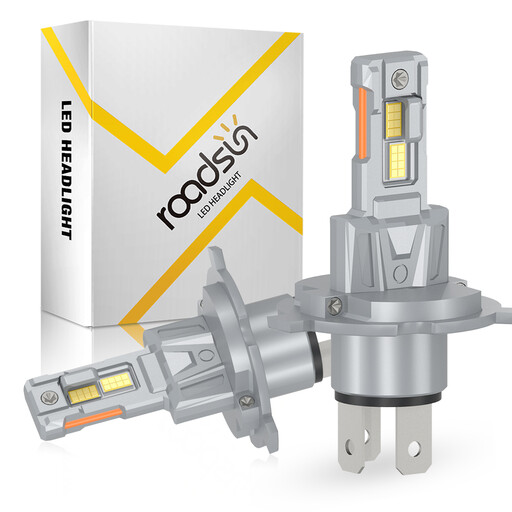
Why It Stands Out: This fanless bulb from Roadsun offers a compelling balance of durability and performance. It is specifically noted for its suitability for off-road use, thanks to a robust, shockproof build and an IP67 rating. The fanless inline design ensures a long operational life by removing the risk of fan failure, while still providing a crisp 6000K white light. Its simple plug-and-play nature makes it an accessible upgrade for any vehicle owner.
Pros:
Who is it for? This is an excellent all-rounder for owners of 4x4s, work vans or any vehicle that sees a mix of road conditions. If you need a tough, reliable and silent H4 bulb replacement that will last, this is a fantastic option.
Our recommendations cover some of the most common needs for a car headlight upgrade, but every vehicle and driver is different. If you're looking for a different specification or simply want to see more choices, you can browse our full collection of H4 LED bulbs.
Explore our complete range of LED H4 headlight bulbs here.
The regulations regarding aftermarket LED headlight bulbs can be complex. In the UK, fitting LED bulbs into a headlight unit designed for halogen bulbs is technically an MOT failure. However, the key factor for testers is often whether the beam pattern is correct and does not cause glare to other road users. High-quality bulbs that replicate the original halogen beam pattern are less likely to cause issues. We advise you to check the latest DVSA guidelines and, if in doubt, consider them for off-road use only.
Most modern vehicles use a CAN bus system to monitor the car's electronics. Because LED bulbs draw less power than halogens, the system can sometimes mistakenly think a bulb has failed, leading to a dashboard warning light or flickering. The majority of modern H4 LED headlight bulbs have built-in CAN bus compatibility that works for around 99% of vehicles. However, some sensitive cars, particularly from German brands like Audi, BMW or Volkswagen, may still require an external decoder for flawless operation.
These terms can be confusing, but they all refer to the same type of bulb. H4 is the standard ECE (European) designation, while 9003 and HB2 are the DOT (American) designations. They are all dual-filament bulbs that provide both high and low beams from a single unit and are functionally interchangeable.