Straining to see the road ahead with dim, yellowing halogen headlights can be a common frustration for many UK drivers, especially on dark country lanes or during a winter downpour. Upgrading to a modern set of H7 LED headlight bulbs is a popular and effective way to improve visibility, enhance safety and give your vehicle a more contemporary look.
However, the market is filled with options, making it difficult to know which bulbs are the right choice for your car. This guide is designed to cut through the clutter, offering practical advice and highlighting some solid options to help you make an informed decision.
How to Choose the Right H7 LED Bulb for Your Car
Before you buy, consider a few key factors to ensure you get a product that fits your vehicle and meets your expectations.
1. Brightness and Colour Temperature
The performance of a headlight bulb is primarily measured by its brightness (lumens) and its light colour (Kelvin).
- Brightness (Lumens): This indicates the total amount of light the bulb emits. A higher lumen count generally means a brighter light. Standard halogen H7 bulbs typically produce around 1,500 lumens, whereas many LED replacements offer significantly more, resulting in a much clearer view of the road.
- Colour Temperature (Kelvin): This defines the colour of the light. Halogen bulbs are usually around 3200K, giving them a warm, yellowish tint. A 6000K H7 bulb is a popular choice for LED upgrades as it produces a crisp, modern-looking cool white light, similar to that found on many new premium vehicles.
2. Installation and Vehicle Compatibility
One of the main attractions of an H7 LED conversion kit is the ease of installation.
- Plug and Play: Look for bulbs advertised as plug and play H7 LED. These are designed with a 1:1 size ratio to the original halogen bulb, meaning they should fit directly into your car's headlight housing and connect to the factory socket without any modification, cutting or complex wiring.
- CANbus System: Many modern cars, particularly European models, use a Controller Area Network (CANbus) to monitor the vehicle's electrical systems. Because LEDs use less power than halogens, the system can mistakenly think a bulb has failed, triggering a dashboard warning light. A CANbus H7 LED bulb has integrated circuitry to prevent this. However, some highly sensitive vehicle systems may still require an additional external decoder. Always check the product description for compatibility notes.
3. Cooling System and Lifespan
LEDs generate heat, and managing that heat is crucial for performance and longevity. There are two main cooling methods:
- Fan-Cooled: These bulbs have a small, high-RPM fan built into the base to actively dissipate heat. This is a very effective method, especially for high-output, bright H7 LED bulbs.
- Fanless (Passive Cooling): These bulbs use a metal heat sink, often made from aviation-grade aluminium, to draw heat away from the LED chips. The main advantage is silent operation and no moving parts that could potentially fail.
A well-designed cooling system is key to achieving the long operational lifespans often quoted by manufacturers, which can be tens of thousands of hours compared to just a few hundred for a typical halogen bulb.
Top H7 LED Headlight Bulbs
Here are a few H7 LED bulb options that offer a compelling combination of features, performance and value.
Bullvision H7 LED Light Bulbs, 6000K White
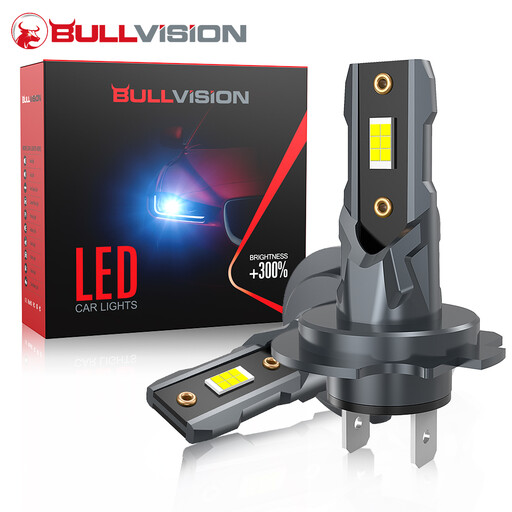
- Why It Stands Out: The Bullvision H7 bulbs are designed with a 1:1 size that closely mimics a standard halogen bulb. This makes them an excellent choice for a straightforward H7 headlight bulb replacement, as they are likely to fit into most headlight housings without any issues. The active cooling fan helps maintain stable performance.
- Pros:
- Plug & Play design for simple installation.
- Crisp 6000K Cool White light colour.
- Features a 10,000 RPM fan for active heat dissipation.
- IP68 waterproof rating for durability in all weather conditions.
- Who is it for: Car owners seeking a reliable and noticeable upgrade from standard halogens, who value an easy, direct-fit installation process.
- Important Note: The manufacturer states that for vehicles from brands like Volkswagen, Mercedes-Benz and BMW, an additional CANbus decoder may be required to prevent dashboard errors.
KATUR H7 LED Headlight Bulbs, 26000LM Fanless
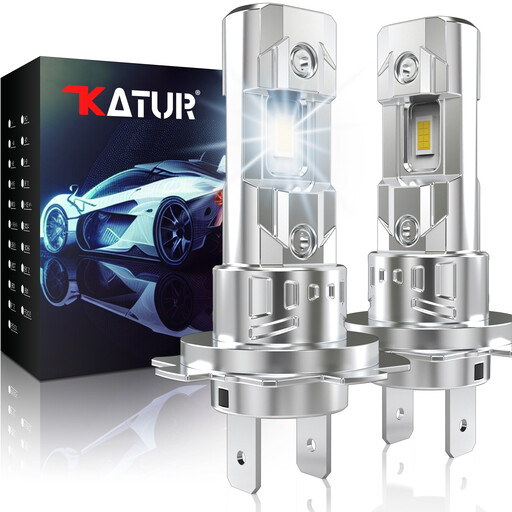
- Why It Stands Out: This KATUR model's key feature is its fanless design. It relies on a 6063 aviation aluminium body for passive heat dissipation, resulting in completely silent operation. Its compact, all-in-one mini size is another major benefit, making it suitable for vehicles with tight spaces behind the dust cover.
- Pros:
- Silent operation with no cooling fan.
- Miniature size for easier fitting in cramped headlight housings.
- 6000K white light for clear visibility.
- All-in-one design with no external drivers or extra wiring.
- Who is it for: Drivers who prefer a solid-state lighting solution with no moving parts, or those whose vehicles have limited clearance behind the headlight assembly.
KATUR H7 LED Headlight Bulb, 30000LM High Performance
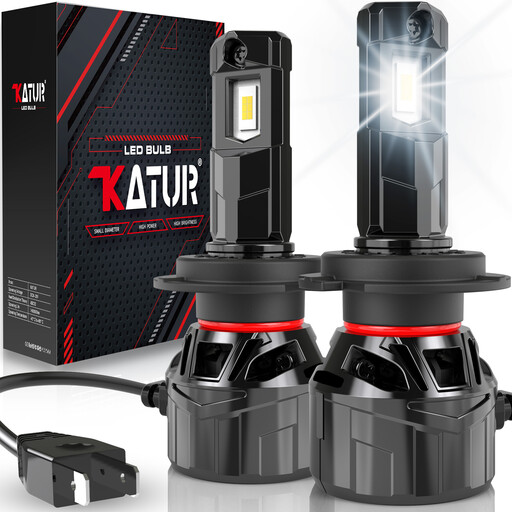
- Why It Stands Out: For those seeking high levels of illumination, this KATUR H7 bulb stands out with its high stated output figures. To manage the heat from this powerful performance, it incorporates a highly efficient cooling system, including a powerful 16,000 RPM turbo fan and a copper tube for rapid heat transfer.
- Pros:
- A very bright H7 LED bulb option for maximum road illumination.
- Advanced cooling system designed for high-output performance.
- Compact 1:1 mini size despite its power, simplifying installation.
- Produces a sharp 6000K Xenon White light.
- Who is it for: The DIY enthusiast or driver who prioritises maximum brightness and is looking for a high-performance H7 LED conversion kit to significantly enhance night-time driving visibility.
Looking for a Different Fitment or Accessory?
If these car headlight bulbs H7 aren't the right fit for your vehicle, or if you're searching for adapters and other components to complete your upgrade, there are many other options available.
Explore our wider selection of bulb connectors and accessories to find exactly what you need.
Frequently Asked Questions
1. Are H7 LED bulbs legal for road use in the UK? The regulations regarding aftermarket headlight bulbs can be complex. For a vehicle to pass its MOT test, the headlamp unit must be E-marked and paired with a bulb of the correct, approved type (halogen or xenon). As of 2026, fitting LED bulbs into a headlamp unit designed for halogens may be considered a modification. It is essential that any replacement bulb produces a correct beam pattern that does not cause glare or dazzle to other road users. We advise you to check the latest DVSA guidelines before purchasing and fitting.
2. Will I need a CANbus decoder for my car? It depends on your vehicle. Many modern cars, especially from European manufacturers like Audi, BMW and Volkswagen, use a CANbus system that can detect the lower power draw of an LED bulb and trigger a "bulb out" warning. Many H7 LED bulbs come "CANbus ready" with built-in resistors to solve this. However, some sensitive cars may still require an additional, external decoder to function without errors.
3. What is the main difference between an H7 halogen and an H7 LED bulb? The core difference is the technology. A halogen bulb works by heating a tungsten filament until it glows, producing a yellowish light and a lot of waste heat, with a relatively short lifespan. An H7 LED bulb uses light-emitting diodes (LEDs) to produce light. This process is far more energy-efficient, generates a much brighter, whiter light and allows the bulb to have a significantly longer operational lifespan.


