
24/7 Customer Support

Free returns

Same-day & Next-day Delivery

Quality Guaranteed

Unlock Your Welcome Offers: FREE Delivery | Up to 80% OFF | Free 30-day JoyPlus trial
Download the APP
Driving at night with standard halogen bulbs can often feel like a compromise. That dim, yellowish light may be adequate, but it rarely inspires confidence on unlit country roads or in poor weather. If you are looking for a significant improvement in visibility and a more modern, crisp look for your vehicle, upgrading to H7 LED headlight bulbs is a popular and effective solution.
This guide is designed to help you navigate the specifications and features of modern LED bulbs. We will break down the key factors to consider before you buy and share some of our top recommendations to help you make an informed choice for your car.
Selecting the right bulbs involves more than just picking the brightest option. To ensure safety, performance and a straightforward installation, consider these key points.
While high lumen ratings indicate a bright H7 LED bulb, the way that light is projected onto the road is far more critical. A well-designed LED bulb should mimic the filament position of a traditional H7 halogen bulb. This ensures the light works correctly with your car's existing headlight housing (reflector or projector), creating a focused beam pattern. A poor pattern can scatter light, creating dark spots and, more importantly, causing dangerous glare for oncoming drivers. Look for bulbs described as having a "1:1 design" or "perfect beam pattern" for better results.
Colour temperature, measured in Kelvin (K), determines the hue of the light. Standard halogens are typically around 3200K, producing a warm, yellow light. Most aftermarket H7 LED bulbs are rated between 6000K and 6500K. This produces a striking, cool white light that is very similar to natural daylight. This colour can improve contrast and make it easier to spot hazards, road signs and markings from a distance, reducing eye strain during long night-time drives.
The best upgrades are the ones that do not require complex modifications. Many modern plug and play H7 LED bulbs are designed to be a direct replacement for your old ones, with a compact body that fits inside the original housing without issue.
Additionally, most vehicles built since the mid-2000s use a CANbus (Controller Area Network) system to monitor the car's electronics. Because LEDs use less power than halogens, this system can sometimes mistakenly report a "bulb out" error. To prevent this, look for CANbus H7 headlight bulbs or those described as "CANbus ready" or "error-free," which have built-in resistors to communicate correctly with your car's computer.
Here are a few standout options that showcase the features you should look for when upgrading your vehicle's lighting.
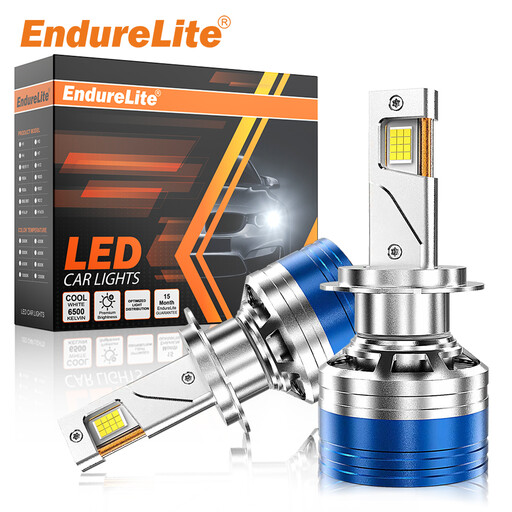
Why It Stands Out: While this particular model is designed for H8, H9 and H11 fitments, it exemplifies the robust construction and technology to look for in a quality LED bulb. Its aluminium alloy shell and IP68 waterproof rating demonstrate excellent durability. The built-in 10,000 RPM cooling fan is crucial for performance, actively dissipating heat to maintain consistent brightness and ensure a long operational life.
Pros:
Who is it for? This specific bulb is ideal for drivers looking to upgrade the H11 fog lights on their vehicle. It also serves as a great example of the build quality and cooling technology you should seek in an H7 bulb from a reputable brand.
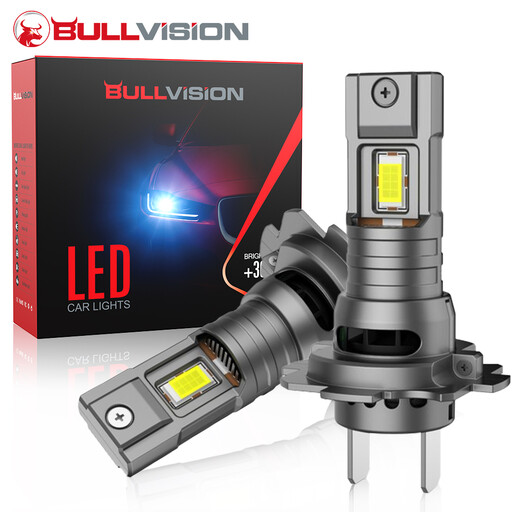
Why It Stands Out: The Bullvision H7 bulb's main advantage is its 1:1 mini size. This compact design directly mimics the dimensions of a standard halogen bulb, making it a true plug and play H7 LED option. This often eliminates the common issue of the bulb being too large to fit inside the headlight housing or preventing the dust cover from being re-secured. Its 6000K cool white light provides a significant upgrade in clarity over stock bulbs.
Pros:
Who is it for? This is a strong choice for DIY enthusiasts who want a straightforward upgrade without needing to make any modifications. Note the manufacturer's advice: owners of Volkswagen, Mercedes-Benz, BMW and similar vehicles may require an additional CANbus decoder.
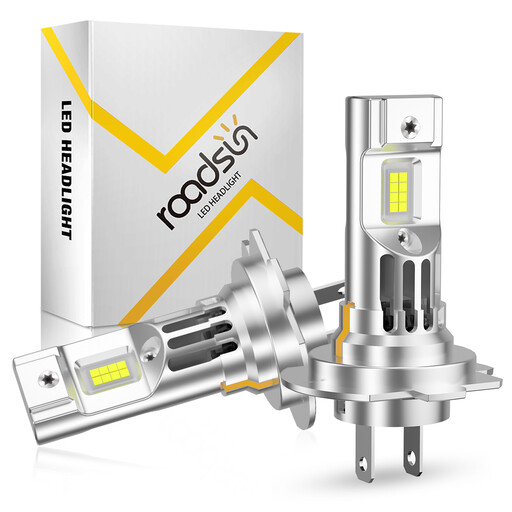
Why It Stands Out: For those seeking a substantial increase in illumination, this Roadsun H7 bulb is a compelling option. It is designed for maximum light output while maintaining a simple installation process. The "no adapter needed" feature is a key benefit, removing a common point of failure and complexity. Its 6500K colour temperature delivers a crisp, pure white light that enhances road visibility, and its versatile design makes it suitable for use as either main headlights or H7 fog light bulbs.
Pros:
Who is it for? Drivers whose top priority is achieving the brightest possible output with the simplest possible installation. Its robust, all-weather construction also makes it suitable for those who frequently drive in challenging conditions.
While upgrading your headlights transforms your night-time driving, enhancing in-car comfort is just as important for the journey. For those hot summer days or stuffy drives, a quality car ventilation fan can make all the difference. Explore our selection to improve your driving environment.
The regulations regarding aftermarket LED bulbs can be complex. For a bulb to be fully road legal for use as a headlight, it must be E-marked and fitted into a type-approved headlight unit designed for LED technology. However, for an MOT test, the primary requirements are that the beam pattern is correct, does not cause dazzle and the colour is predominantly white or yellow. Many high-quality aftermarket bulbs are designed to replicate the original halogen beam pattern to meet these criteria, but it remains the owner's responsibility to ensure their vehicle's lighting is compliant.
Many modern CANbus H7 headlight bulbs have integrated circuitry that works with the majority of vehicles without issue. However, some cars, particularly certain premium European marques (such as BMW, Audi and Mercedes-Benz), have highly sensitive monitoring systems. On these vehicles, an additional external CANbus decoder may still be needed to prevent dashboard error messages or flickering.
For most cars, the installation is quite simple. It typically involves opening the back of the headlight unit, removing the old bulb, inserting the new LED bulb and connecting the plug. The "plug and play" and "1:1 design" features on many bulbs mean no special tools or wiring are needed. The biggest variable is how easy it is to access the bulbs on your specific vehicle model; it is always a good idea to consult your car's owner manual first.