
24/7 Customer Support

Free returns

Same-day & Next-day Delivery

Quality Guaranteed

Unlock Your Welcome Offers: FREE Delivery | Up to 80% OFF | Free 30-day JoyPlus trial
Download the APP
A hair dryer can look impressive on a product page yet disappoint in everyday use. High motor-speed figures, “millions of negative ions” and multiple attachments may sound useful, but they do not automatically mean the appliance will suit your hair, bathroom storage or travel routine.
The right choice depends on practical details: airflow, controllable heat, weight, attachments, noise and UK electrical safety information. This guide explains what to check before buying and matches several hair dryers to different household needs.
A higher wattage figure does not always mean faster drying. Drying performance also depends on the motor design, airflow speed and how effectively the nozzle directs air. Some high-speed hair dryers quote motor RPM, while others focus on wattage, so these figures should not be compared as if they measure the same thing.
For daily use, look for a combination of stable airflow, adjustable speed and suitable heat control. Thick hair may benefit from stronger airflow, while fine or dry hair generally needs gentler temperature options.
An ionic hair dryer, also described as a negative ion hair dryer, is designed to reduce static. This may help hair feel smoother and less flyaway, particularly in dry indoor environments. However, ionic technology does not replace correct heat settings, sectioning or a suitable brush.
Curly and wavy hair may need a diffuser to preserve shape, while straight styling usually benefits more from a concentrator nozzle. Check what is actually included rather than assuming every ionic hair dryer comes with both attachments.
A powerful appliance that is tiring to hold can become inconvenient, especially when drying thick or long hair. A lightweight hair dryer around 330–360g may be easier to use for longer sessions, but check whether the quoted weight refers to the main unit only.
Foldability is also useful for a small bathroom or suitcase, but the handle should be folded only after the nozzle and attachments have cooled. Removable filters or end caps can make it easier to clear lint and hair, helping maintain airflow over time.
A fast-drying hair dryer should provide enough airflow for your hair density without forcing you to use maximum heat. Product listings may state airflow speed in metres per second, motor speed in RPM or rated power in watts. These are useful reference points, but they should be considered alongside controls and attachments.
For example, the Dreame Glory Combo lists a 110,000 RPM motor and 70m/s airflow, while the BABONIR FZ201 lists a 20,000 RPM motor and 22m/s airflow. The figures indicate different performance designs, but they are not directly equivalent measures.
A hair dryer with adjustable heat and speed settings gives you more control across different hair types and styling tasks. A useful minimum is two airflow speeds and at least three temperature choices. A cool-shot function can also help finish a style, although it should not be treated as a substitute for proper heat management.
The Dreame Glory Combo and Ochama model list two airflow speeds and four temperature settings. The BABONIR FZ201 provides three temperature settings and two power settings.
A hair dryer with diffuser is worth considering for loose waves, curls and volume. A hair dryer with concentrator is more suitable for directing air along a brush or smoothing a specific section.
For travel, check the folded dimensions, voltage information, plug type and cable length. UK buyers should also review the product listing for applicable electrical compliance information and follow the supplied instructions. Never use a hair dryer near water and unplug it after use in a bathroom.
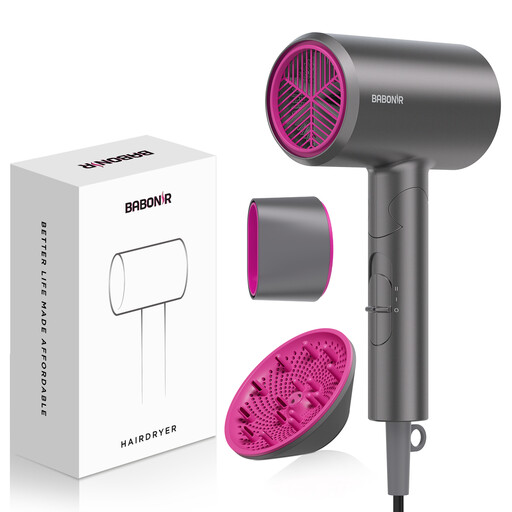
Why This Fits Their Persona: A practical option for everyday home drying and short UK trips, with a foldable handle and 330g body for easier storage and handling.
It does not rely on a single power claim: it combines 1800W output, two power settings and three temperature settings.
330g foldable design; includes both a diffuser and a concentrator; listed 22m/s airflow.
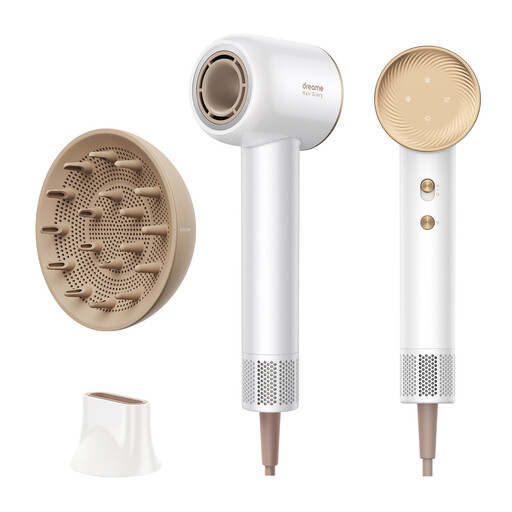
Why This Fits Their Persona: Suits shoppers who want a compact high-speed hair dryer with more temperature choices, low listed noise and attachments for daily styling.
Its listing provides specific airflow, noise, control and weight figures instead of only using broad “fast drying” wording.
110,000 RPM motor; 345g main unit; two speeds, four temperatures, diffuser and smoothing nozzle.
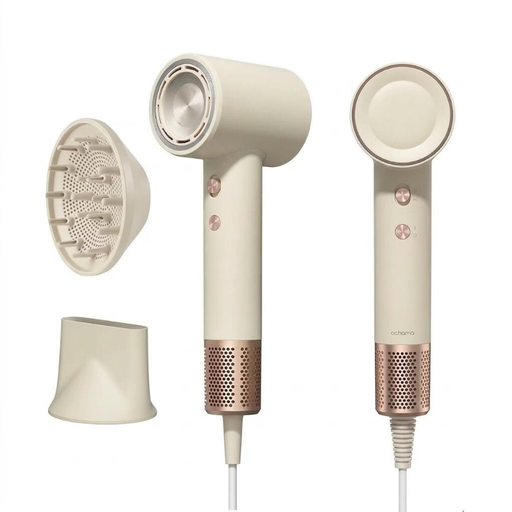
Why This Fits Their Persona: A useful match for people who dry frequently or have thicker hair and want high-speed airflow with a lightweight body and multiple controls.
The product information specifies 1600W power, 110,000 RPM, two speeds and four temperature settings for clearer comparison.
360g lightweight format; two nozzles; low-noise fast-drying design listed with negative-ion hair-care functionality.
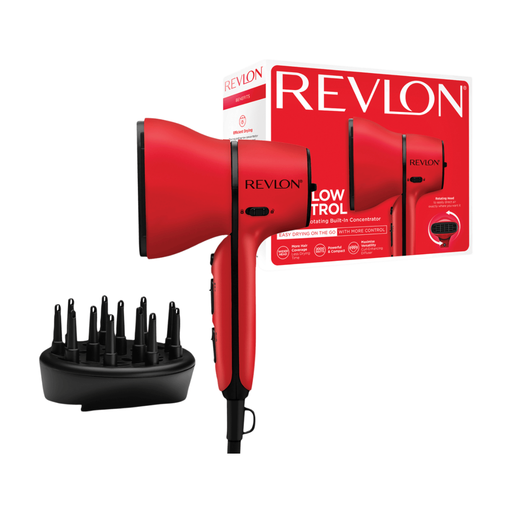
Why This Fits Their Persona: A compact styling option for wavy or curly hair, with a curl-enhancing diffuser and rotating concentrator for more directed airflow.
It offers a diffuser as part of the listed setup rather than requiring a separate purchase for curl-focused drying.
Three heat settings, two speeds and cool-shot button; 90-degree rotating concentrator and removable end cap.
We have compiled a complete, real-time list of products that fully satisfy these strict selection criteria and UK safety regulations.
Running cost depends mainly on the appliance’s wattage and how long it operates. A 1600W dryer uses 1.6 kilowatt-hours if operated continuously for one hour. In real use, drying takes much less time, so the practical cost depends on your electricity tariff and session length. Faster airflow may reduce operating time, but do not assume a particular model will always use less electricity.
Lifespan varies with construction, frequency of use and maintenance. Keep the air intake clear, clean the filter or removable end cap where provided, avoid wrapping the cable tightly around the body and allow hot attachments to cool before storage. Stop using the appliance if the cord, plug or casing becomes damaged.
A diffuser spreads airflow over a wider area, which can be more suitable for drying curls and waves with less concentrated air movement. Use a lower speed and moderate heat where appropriate, keep the diffuser close to the hair without rough handling and select a model whose diffuser is included and compatible with the dryer.