Time-pressed layered-hair stylers
If you need to get ready before work, controllable airflow can help you direct attention to damp roots and underneath layers without blowing the finished sections out of place.


For layered hair before work, choose adjustable heat and airflow with a concentrator if you need to dry roots while directing air through separate sections. If you regularly work close to your scalp, consider a model with a distance-responsive heat mode; if styling each layer takes longer, check how comfortable the dryer is to hold.
If you need to get ready before work, controllable airflow can help you direct attention to damp roots and underneath layers without blowing the finished sections out of place.
If face-framing layers, a fringe or crown volume take extra attention, a concentrator gives you a way to aim airflow at one section while you style it.
If you often dry near the roots and scalp, adjustable heat may matter more to you than using the highest setting throughout. Dyson also describes automatic temperature reduction near the head on its Supersonic Nural model.
For consumers drying layered hair before work, start with the part of the routine that matters most to you: getting hair dry, shaping individual sections, managing heat near the scalp or holding the dryer comfortably.
| Concern | What to check | Who this matters to |
|---|---|---|
| Morning drying time | Look for separate heat and airflow controls, and check whether the exact model includes a concentrator. Do not treat a wattage or airflow figure alone as a drying-time result. | If I have several damp layers to dry before leaving, I need to reach the roots without spending the whole routine on one setting. Around 46% of consumers put morning drying time first. |
| Control of individual layers | Check whether a concentrator is included and whether its shape suits the sections you want to dry with a brush. | When my fringe and face-framing pieces need shaping, I want to aim air at one section without disturbing the others. Around 27% of consumers prioritise that control. |
| Heat near roots and ends | Check the heat settings. If you want automatic adjustment, confirm that the exact model has a distance-responsive mode; Dyson describes one on the Supersonic Nural. | As I work close to my scalp, I want to reduce heat when shorter sections are nearly dry. Around 18% of consumers make heat management their main concern. |
| Handling comfort | Compare stated weights on the same basis and, if possible, assess how the dryer feels to hold; weight alone does not describe its balance. | Holding a dryer above my head while working through each layer can make comfort decisive. Around 9% of consumers put handling first. |
Wattage does not tell you how precisely a dryer directs air, which attachments come with it or how its heat controls work. Airflow figures from different models are not necessarily measured on a comparable basis.
Compare the exact model's settings, concentrator and handling information instead of treating a larger wattage number as a promise of a quicker layered-hair routine.
The Independent ranked the Shark SpeedStyle Pro Flex 4-in-1, while the Joybuy product below is the Shark SpeedStyle Pro HD731UK 3-in-1. A review of one does not establish the other model's attachment set or performance.
Match the full model name and included attachments before using a review to assess a product you plan to buy.
Electrical Safety First warns against using a hair dryer in a bathroom or near a sink full of water, and against continuing to use one that sparks, smells unusual or shows damage.
Use it in a dry area, keep the plug and cable dry, and stop using the appliance if you notice those warning signs. Follow its instructions for cooling and filter cleaning.
The Helios is a reference point if you want to direct airflow through roots, a fringe and individual layers.
The Supersonic Nural is relevant if you want assistance with heat adjustment while drying near the scalp.
The SpeedStyle Pro HD731UK offers an attachment-led option for directing airflow and finishing different layered sections.
These dryers offer options for directing air through separate layers or using styling attachments before work. Compare each model's stated controls and included tools with the sections you spend the most time drying.
 No image available
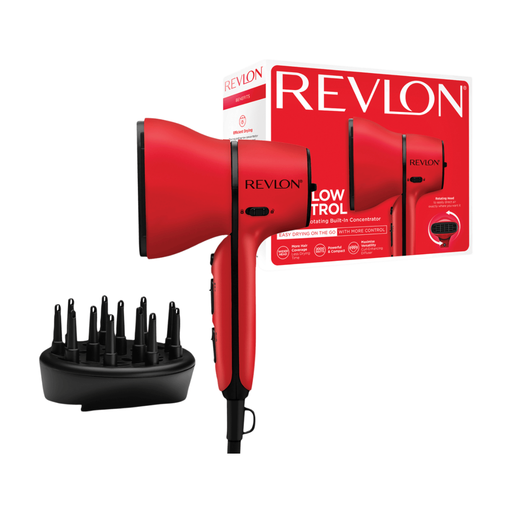
Consider this compact dryer if you want to change settings while working through separate layers.
Its product name specifies three heat settings, two speeds, 90° rotation, a removable end cap and a curl-enhancing diffuser. Check the plug type and handling comfort before choosing it for your routine.
 No image available
Consider this model if you want a nozzle for directed drying and a diffuser as a separate styling option.
The product name specifies temperature and air-speed control and a 110,000 RPM motor. That motor figure does not establish how long your layered hair will take to dry; check the plug type before purchase.
 No image available
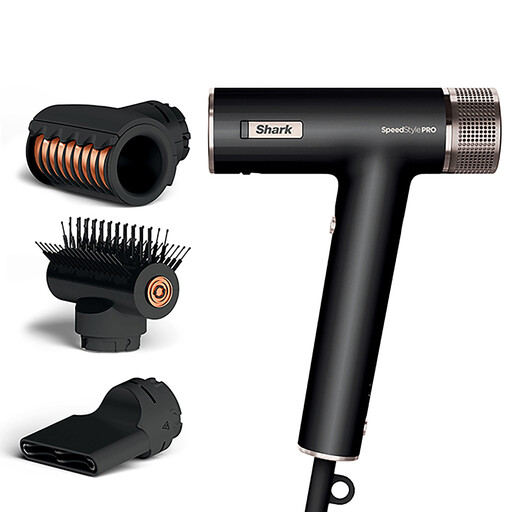
Consider the HD731UK if you want attachments for directing air at individual layers and finishing styled sections.
The Joybuy listing names a Turbo Concentrator, QuickSmooth Brush and FrizzFighter Finishing Tool. It also describes Scalp Shield mode as reducing air temperature; check that the tools suit your hair, and confirm the plug type and handling comfort before purchase.
Start by checking for a concentrator if you want to aim airflow at roots, a fringe or one layer while using a brush. Confirm that it comes with the exact model: ghd describes the Helios nozzle as focusing airflow, and the Joybuy-listed Shark HD731UK includes a Turbo Concentrator.
Not throughout the routine. Adjustable settings let you change heat and airflow as individual layers approach dry; follow the dryer's instructions rather than continuing at the highest setting simply because some sections remain damp.
Electrical Safety First advises against using a hair dryer in a bathroom or near a sink full of water. Use it in a dry area, keep the plug and cable dry, and unplug it after use.
Check that the exact dryer has a standard UK 3-pin plug, as Electrical Safety First advises, and follow its instructions for use and registration. Confirm the plug on the product you are buying rather than assuming it from the model name.
Keep its air openings clear and clean the filter as the manufacturer instructs. Stop using the dryer if you notice sparking, an unusual smell, cracks or cable damage, and seek support from the retailer or manufacturer.