
24/7 Customer Support

Free returns

Same-day & Next-day Delivery

Quality Guaranteed

Unlock Your Welcome Offers: FREE Delivery | Up to 80% OFF | Free 30-day JoyPlus trial
Download the APP
Choosing among the best hair dryers is less about buying the model with the largest wattage or most impressive ion count. UK shoppers also need to consider hair type, handling comfort, attachment quality, noise, temperature control and whether the appliance is practical for everyday use.
A dryer that feels powerful for five minutes may become tiring during a full blow-dry. A compact model may pack easily but lack the diffuser needed for curls. Marketing claims can also make technical features sound more meaningful than they are. The right choice starts with understanding which specifications affect your routine.
Wattage indicates electrical power consumption, not a complete measure of airflow or drying performance. Motor design, airflow speed, nozzle shape and heat control also matter. For example, a 1600W high-speed hair dryer may produce strong airflow using a high-RPM brushless motor, while a 2300W model may prioritise conventional salon-style power.
Treat wattage as one specification rather than a direct promise of faster drying.
An ionic hair dryer can help reduce static and may make frizz-prone hair feel smoother during styling. However, ion technology does not replace suitable heat settings, correct technique or a compatible attachment. Very fine hair can sometimes benefit from less smoothing and more root lift, while thick, curly or Afro-textured hair may need focused airflow or a pik attachment.
Ion counts should therefore be compared alongside temperature controls and styling accessories, not in isolation.
A dryer weighing several hundred grams more can feel noticeably tiring when drying long or dense hair. Likewise, a high-speed hair dryer advertised as quiet should have a stated noise figure rather than an unqualified “silent” label.
Check whether the air filter is removable and cleanable. Lint, hair and styling residue can restrict airflow and contribute to overheating. A foldable or compact travel hair dryer is useful only if its voltage and plug configuration suit your destination.
For fast drying, look for a combination of airflow speed, motor speed and suitable heat settings. High-speed models in this guide list motors of up to 110,000 RPM and airflow figures of up to 70m/s. These numbers are useful for comparison, but they are not directly interchangeable between manufacturers.
A conventional 1800W or 2100W dryer may still be a sensible choice for everyday home styling, particularly when paired with a concentrator nozzle or diffuser.
At least two airflow speeds and multiple temperature settings give you more control over wetness, hair density and styling technique. Intelligent temperature monitoring, such as NTC control, is designed to maintain a more consistent outlet temperature. It should not be treated as a guarantee against heat damage.
Use the lowest effective heat, keep the dryer moving and avoid holding hot air close to the scalp for extended periods. A cold-shot button can help finish a style, particularly when using a hair dryer with concentrator nozzle.
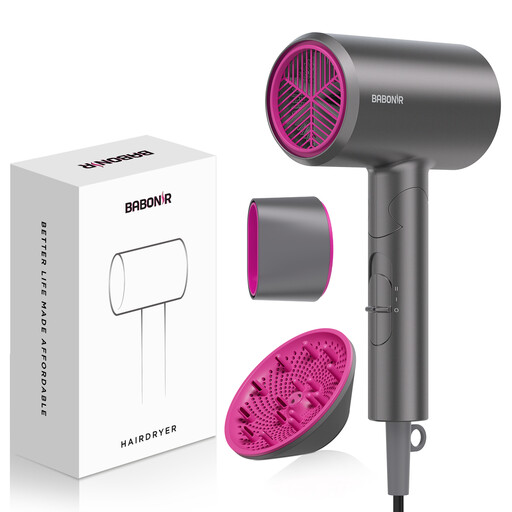
Why This Fits Their Persona: A practical option for everyday home drying and short trips, especially when storage space is limited in a UK flat or shared bathroom.
Its 330g body avoids the heavy-handle problem, while three temperature and two power settings provide more flexibility than a basic single-speed dryer.
1800W power, foldable handle, diffuser and concentrator included; listed airflow reaches 22m/s.
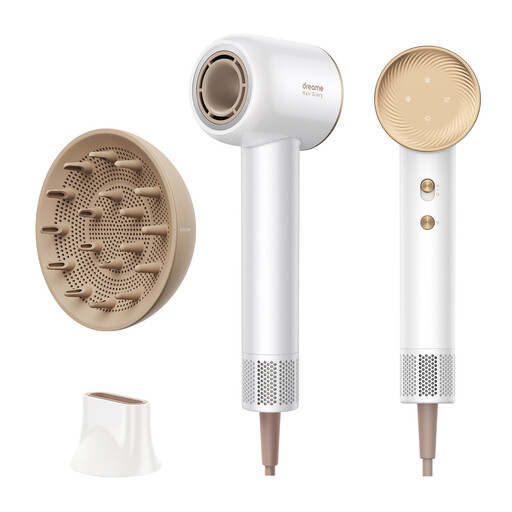
Why This Fits Their Persona: Suits shoppers wanting high-speed performance, temperature monitoring and a refined everyday styling setup rather than a conventional bulky dryer.
The product specification provides measurable airflow, noise and weight figures instead of relying only on vague fast-drying language.
110,000 RPM motor, up to 70m/s airflow, 345g weight, ≤58dB listed noise level, diffuser and smoothing nozzle.
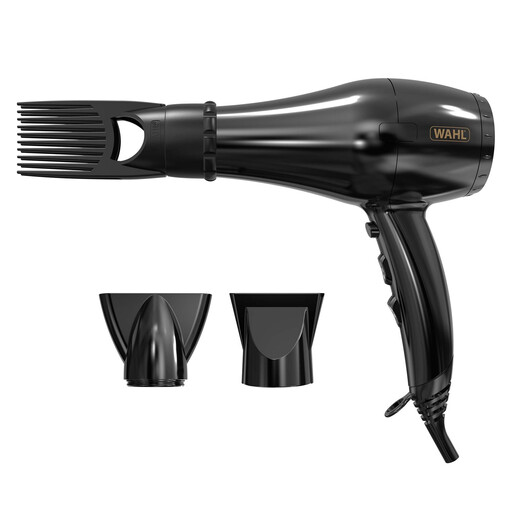
Why This Fits Their Persona: Designed for Afro, curly and textured hair types, with accessories intended to reach roots and manage denser hair.
It does not depend on a diffuser alone: the pik attachment, two concentrator nozzles and three heat settings support different sections and techniques.
1800W power, ionic conditioning, 3m cord, cold-shot function and removable air filter.
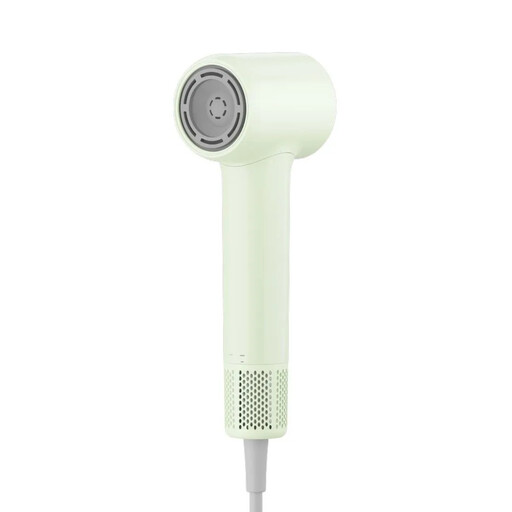
Why This Fits Their Persona: A compact travel hair dryer for commuters, gym bags and UK holidays where luggage space and hand comfort matter.
Its stated 270g weight and compact body address portability directly, while five modes offer more control than many small travel dryers.
100,000 RPM motor, up to 70m/s airflow, 220–240V specification, ≤58dB listed noise level and removable air inlet.
We have compiled a complete, real-time list of products that fully satisfy these strict selection criteria and UK safety regulations.
Hair dryers are electrical appliances and should be kept away from baths, showers, basins and standing water. Do not use one with wet hands, block the air inlet or operate it with a damaged cable or plug. Unplug after use, allow attachments to cool and clean the filter according to the supplied instructions.
For models with attachments, follow the manufacturer’s heat guidance. The Wahl PowerPik specifications, for example, advise against using attachments on the highest heat setting. Always check the product manual before first use.
They may help reduce static and make hair feel smoother during drying. Results depend on hair texture, moisture levels, products and technique. For curls, waves or Afro-textured hair, attachment choice remains equally important.
Choose adjustable heat and airflow, a diffuser with a secure fit and a cool-shot function. A diffuser can distribute air more gently than a bare nozzle, helping you dry curls without directing concentrated airflow at one small section.
Running cost depends on the appliance’s power rating, electricity tariff and drying time. A 1600W dryer uses less power per hour than a 2300W model, but actual cost also depends on how long it operates. Compare the rated wattage and choose a model that dries efficiently without using more heat than your hair requires.