
24/7 Customer Support

Free returns

Same-day & Next-day Delivery

Quality Guaranteed

Unlock Your Welcome Offers: FREE Delivery | Up to 80% OFF | Free 30-day JoyPlus trial
Download the APP
A hand blender can save space and preparation time, but choosing the right one involves more than comparing wattage. UK shoppers often buy a model based on a large power figure or an impressive attachment list, only to find that it is awkward to clean, uncomfortable to hold or unsuitable for the quantities they usually prepare.
This guide explains the practical differences between an immersion blender, stick blender and multifunctional hand blender, while highlighting products suited to different cooking routines.
A 1000W hand blender may offer useful power for dense mixtures, but wattage alone does not describe blade design, torque, speed control or how long the motor can run continuously. Some products also advertise a maximum power rating rather than a normal rated figure.
Check the full specification and operating guidance. For example, some models require a one-minute operating cycle followed by a one-minute rest, while harder ingredients may need shorter bursts. This matters when preparing large batches of soup, hummus or nut-based mixtures.
A hand blender with attachments can include a whisk, chopper, masher, beaker and additional blades. This is useful if you regularly prepare sauces, whipped mixtures, baby food or chopped vegetables. However, extra parts take up cupboard space and require more cleaning.
Before buying, list the tasks you actually need:
Dishwasher-safe accessories can reduce post-cooking work, but the motor body, connector covers and some gearbox components must not be immersed. Always check the instruction manual rather than assuming every detachable part is dishwasher safe.
When using a blender for soups and smoothies, place the blending shaft fully into the mixture before switching on. For hot soup, remove the pan from the hob and allow it to cool slightly. Product guidance commonly advises avoiding liquids above approximately 80°C, particularly in enclosed beakers or chopper bowls, because steam and pressure can cause splashing.
For occasional smoothies, sauces and soft cooked vegetables, a compact 450W model may be sufficient. If you prepare thick soup, frozen-fruit mixtures or dense batters, a 1000W model may offer greater flexibility.
Do not compare wattage in isolation. Look at:
A powerful motor still needs suitable ingredients, enough liquid and sensible pulse operation.
A variable-speed hand blender gives more control than a simple one-speed model. Lower speeds can help reduce splashing, while higher settings may produce finer textures. Trigger-style controls and speed wheels also allow one-handed adjustment during cooking.
Blade guards influence how ingredients circulate around the blades and how much mixture splashes from the container. Stainless steel shafts and blades are practical for regular food preparation, but sharp edges require careful handling during assembly, emptying and cleaning.
Check the actual capacity of the supplied beaker or chopper rather than relying on the phrase “family size”. A 500ml chopper suits smaller portions, whereas a 700ml or 800ml beaker may be more convenient for smoothies and sauces.
A dishwasher-safe hand blender can be easier to maintain, but confirm the permitted temperature and which parts are included. Metal shafts may offer a sturdy feel, while plastic components can keep the overall weight lower. Also check the cord length if your kitchen sockets are not close to the worktop.

Why This Fits Their Persona: A straightforward option for students, smaller households and cooks who mainly blend soups, sauces, smoothies or desserts without needing a large attachment set.
It does not add unused accessories to the purchase. The one-speed design also makes the controls easy to understand.
450W motor, 600ml BPA-free beaker, EasyTwist shaft removal and dishwasher-safe removable parts.
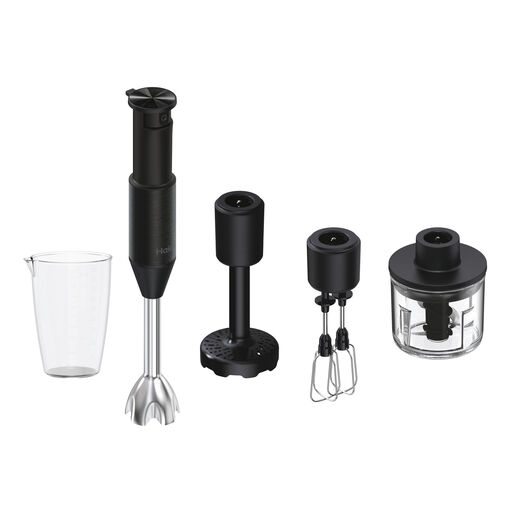
Why This Fits Their Persona: Suitable for home cooks who want one appliance for blending, whisking, chopping and mashing, including soups, baking preparations and purées.
The attachment list is clearly specified, while the trigger control provides adjustment instead of forcing one fixed speed.
1000W motor, stirrer, whisk, double whisk, chopper and masher attachments, with dishwasher-safe removable parts.
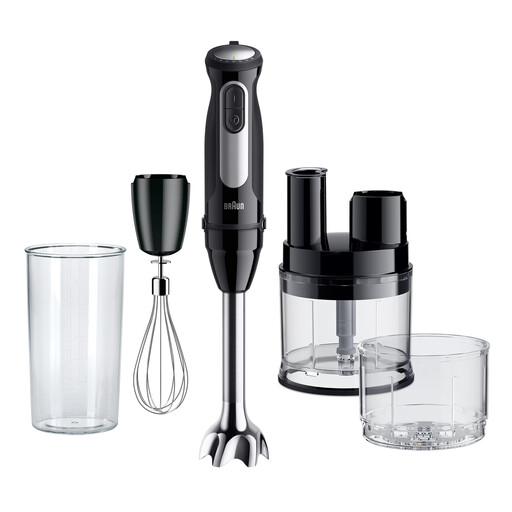
Why This Fits Their Persona: Designed for frequent cooks and baking enthusiasts who need blending, chopping, whisking, slicing, grating and ice-crushing functions from one system.
Its 25-speed wheel and Turbo function offer more adjustment than a basic two-speed hand blender, while the accessory roles are defined.
1000W motor, metal blending shaft, mini food processor, whisk, ice-crush blade and 500ml beaker.
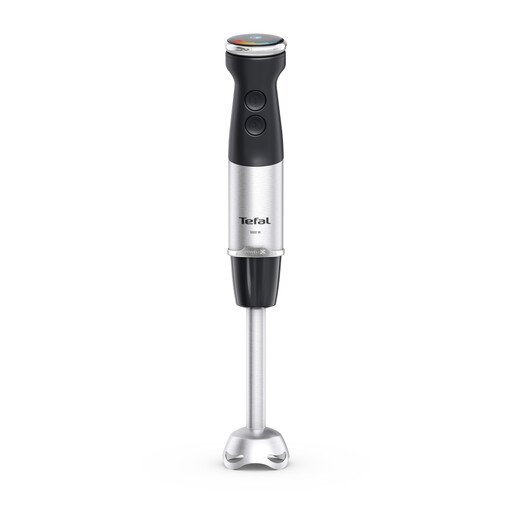
Why This Fits Their Persona: A practical match for households preparing soups, sauces and smoothies regularly and wanting speed adjustment without a very large accessory collection.
The 20-speed dial, Turbo mode and anti-splash guard provide specific controls rather than relying on a headline power figure.
1000W motor, four stainless steel blades, 800ml beaker, Silence Mode and dishwasher-safe removable parts.
We have compiled a complete, real-time list of products that fully satisfy these strict selection criteria and UK safety regulations.
Yes, many are designed for soup, but safe use depends on the product instructions. Remove the pan from the heat, avoid overfilling, keep the shaft upright and allow the soup to cool slightly. Do not blend boiling liquid in a sealed beaker or chopper bowl.
Lifespan depends on build quality, frequency of use, cleaning and whether the motor is overloaded. Following the recommended operating and cooling intervals is important. A model with replaceable or detachable accessories may also be more practical over time, as individual parts can be cleaned or replaced without discarding the motor unit.
A corded hand blender is usually used for short periods, so its total energy consumption depends more on operating time than the wattage printed on the box. A 1000W model running for one minute uses approximately 0.017 kWh. Actual running costs depend on your electricity tariff and the appliance’s real operating power.