
24/7 Customer Support

Free returns

Same-day & Next-day Delivery

Quality Guaranteed

Unlock Your Welcome Offers: FREE Delivery | Up to 80% OFF | Free 30-day JoyPlus trial
Download the APP
A hand blender can make soups, smoothies, sauces and purées quicker, with less washing-up than a worktop appliance. However, the right immersion blender depends on more than wattage or the number of attachments in the box. A model that looks versatile online may be awkward to clean, difficult to control or unsuitable for the quantities you usually prepare.
This guide explains the practical specifications worth checking before you buy, then matches selected models to different UK household needs.
A high wattage figure does not automatically mean smoother results. Blade design, motor control, the shape of the blending guard and the recommended operating time all affect everyday use. A powerful hand blender may also be unnecessary if you mainly prepare soft vegetables, sauces or small smoothies.
Look at the full specification rather than choosing by wattage alone. For example, some models offer variable speed control, while simpler electric hand blenders use one touch-and-hold setting.
A 4-in-1 hand blender can include a blending shaft, whisk, chopper and beaker, but extra accessories need storage and cleaning. If you only make soup and smoothies, a basic model may provide better value. If you bake, prepare baby food or chop herbs regularly, a hand blender with whisk or hand blender with chopper may reduce the number of separate appliances required.
Check the capacity of every bowl and beaker. A 500ml chopper is suited to smaller batches, while a larger beaker can be more convenient for family portions.
Food can collect around the blade guard, particularly after blending thick soup or batter. Detachable, dishwasher-safe parts make a noticeable difference, but the motor housing must not be immersed in water. Also check the manual before blending hot liquids. Some accessories have temperature restrictions, and a narrow container can cause hot liquid to splash.
For everyday soups, sauces and smoothies, a motor in the 450W to 600W range may be sufficient. Models rated at 1,000W or more are more suitable for users who want to process denser mixtures or use food-preparation attachments, but they still require sensible operating intervals.
A variable speed hand blender gives more control over texture and splashing. Starting slowly is useful when blending in a shallow container, while a turbo setting can provide a short burst for tougher ingredients. One-speed models remain straightforward for users who prefer simple operation.
Always follow the stated duty cycle. Several products in this selection specify no more than one minute of continuous operation followed by a cooling period.
A bell-shaped guard can help draw ingredients towards the blades and reduce splashes. It is still important to submerge the shaft before switching on and to stop the motor before lifting it from the mixture.
If you use non-stick pans, look for a pan-protection feature, but do not press the blade guard forcefully against the cookware. For hot soup, keep the shaft upright and blend in a deep saucepan to reduce the risk of splashing.
Stainless-steel shafts and blades are commonly selected for durability and resistance to food contact. Check whether the whisk gearbox is removable from the motor unit and whether each detachable part is dishwasher-safe.
A dishwasher-safe hand blender can simplify cleaning, but “dishwasher-safe” normally applies only to specified detachable components. Wipe the motor body with a damp cloth and dry all parts thoroughly before storage.

Why This Fits Their Persona: A straightforward option for students, couples and smaller households making smoothies, sauces or occasional chopped ingredients.
It does not rely on a long list of accessories: the set focuses on a one-speed blender, beaker and chopper, making the specification easier to understand.
450W motor, 600ml BPA-free beaker and dishwasher-safe specified removable parts.
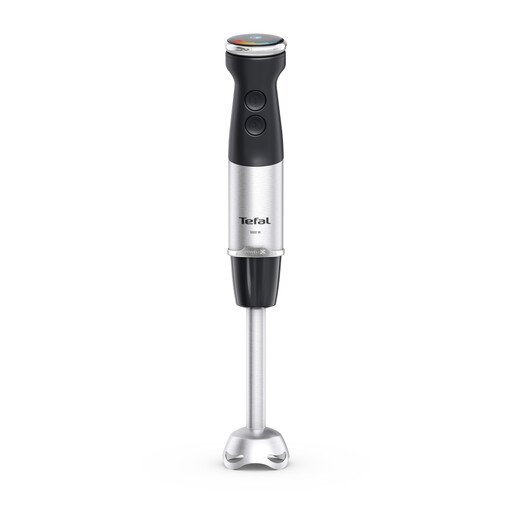
Why This Fits Their Persona: Suitable for regular home cooks who want speed adjustment, a metal housing and a beaker for portioned preparation.
The 20-speed dial and turbo mode offer more practical control than simply selecting a high wattage.
1,000W rating, 20 variable speeds plus turbo, 800ml beaker and dishwasher-safe removable parts.
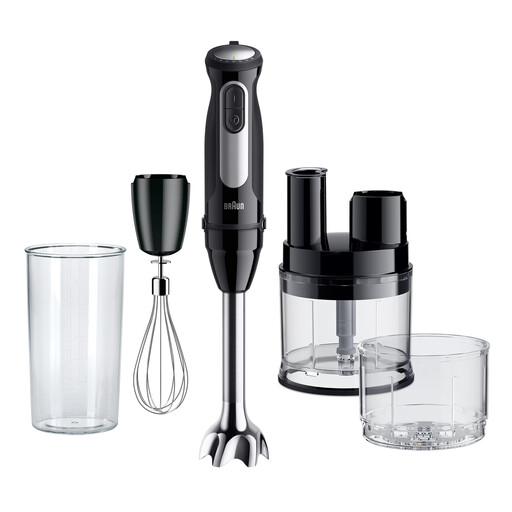
Why This Fits Their Persona: A practical fit for busy families and baking enthusiasts who need blending, whisking, chopping, slicing and grating from one system.
Its usefulness comes from clearly listed attachments, not an unspecified accessory count, with a 25-speed wheel and turbo control.
1,000W motor, mini food processor, metal whisk, ice-crush blade and 25 speed settings.
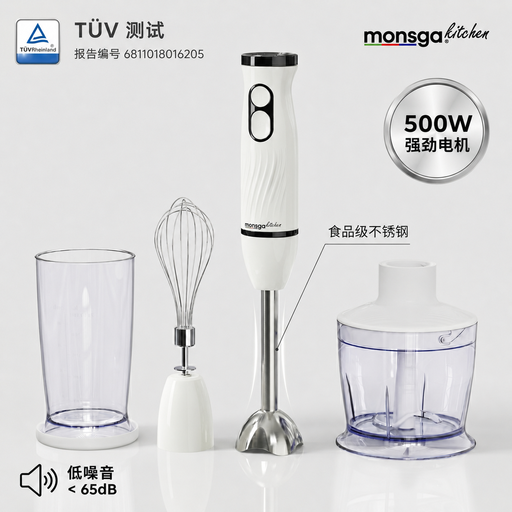
Why This Fits Their Persona: Useful for cooks who prepare soups in deep pans, make smoothies and also want a whisk and chopper for baking or meal preparation.
The 36.5cm reach is specified for deeper pots, while the anti-splash and pan-protection design addresses two common kitchen frustrations.
Normal and turbo modes, 500ml chopper, 500ml beaker, 1.5m cable and dishwasher-safe detachable accessories.
We have collated a complete, real-time list of products that fully satisfy these strict selection criteria and UK safety regulations.
Yes, a hand blender is commonly used for vegetable soups and purées. Use a deep saucepan, keep the shaft upright and avoid blending at a vigorous speed immediately. Check the product instructions for hot-liquid limits, particularly when using a beaker or chopper.
Lifespan depends on construction, frequency of use, cleaning and whether the recommended operating cycle is followed. Avoid forcing the blade through hard or frozen ingredients, do not run the motor continuously beyond the stated limit, and store detachable parts dry.
Most models are used for short periods, so their total electricity consumption is generally limited by brief operating times rather than long cooking cycles. A higher-wattage motor draws more power while running, but blending for a few seconds may still use less electricity than operating a larger worktop appliance for longer.