
24/7 Customer Support

Free returns

Same-day & Next-day Delivery

Quality Guaranteed

Unlock Your Welcome Offers: FREE Delivery | Up to 80% OFF | Free 30-day JoyPlus trial
Download the APP
Tired of wrestling with a clunky ironing board every time a shirt has a few creases? A handheld garment steamer offers a fast and convenient way to refresh your clothes, but the market is flooded with options that often over-promise and under-deliver. As a Joybuy Product Recommendation Officer, my role is to help you see past the marketing jargon and focus on what truly matters.
Many shoppers find themselves disappointed with a purchase that sputters water, fails on tougher wrinkles or simply stops working after a few months. Before you buy, be aware of these common pitfalls that can lead to a wasted purchase.
To avoid these issues, focus your attention on a few key specifications. These are the non-negotiable features that separate a reliable clothes steamer from a disappointing gadget.
Instead of just looking at the wattage, check for the steam output rate, measured in grams per minute (g/min). This figure tells you how much steam the device actually produces.
A higher power rating (e.g., 1400W or more) will ensure the steamer reaches its optimal temperature quickly, usually in under a minute, but it's the combination of power and a high steam output that delivers effective results.
The soleplate is the business end of your steamer. The material directly impacts how smoothly it glides over fabric and how evenly it distributes steam.
For practical, hassle-free use, the water tank matters more than you might think. Look for a capacity of at least 200ml. This should give you enough steam for 10-15 minutes of continuous use, sufficient for several garments. A larger tank is also essential if you plan to use it as a vertical steam iron for larger items like bedding or curtains. Furthermore, a detachable tank is far easier and safer to fill than one that is fixed to the unit.
Based on these practical criteria, here are a few options from our catalogue matched to different user needs.
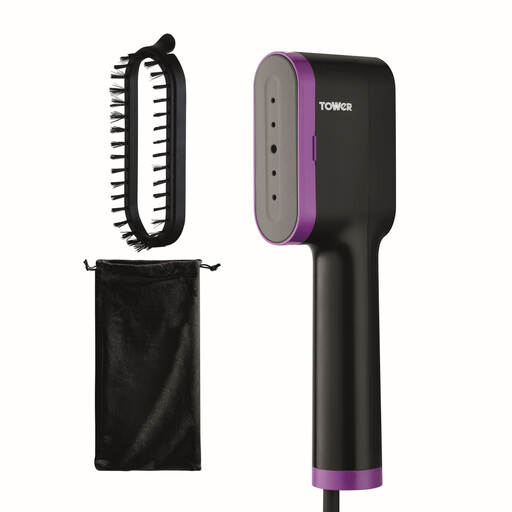
Why This Fits Their Persona: This is an excellent all-rounder for the typical UK household. It's powerful enough for daily work shirts and school uniforms but also gentle enough for weekend outfits. It balances performance with practical features for quick, reliable results.
It features a Ceraglide ceramic soleplate, which avoids the snagging and uneven heating common in basic models. The 260ml water tank is a practical size, preventing constant refills.
The combination of 1400W power and approx. 20 g/min steam output provides a solid balance for quick heat-up and effective wrinkle removal on most common fabrics.
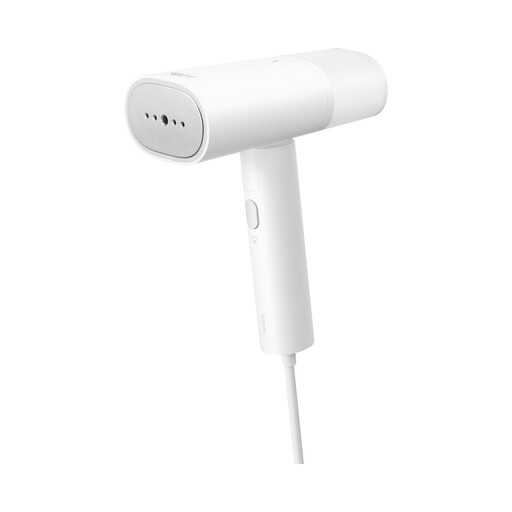
Why This Fits Their Persona: For professionals on the go or those living in compact flats, this portable fabric steamer is ideal. Its foldable design and low weight (770g) mean it can be easily packed in a suitcase or stored in a drawer without sacrificing performance for business trips or holidays.
Unlike many travel steamers with weak output, this model uses pressurised steam (30kPa) for deeper fabric penetration. The 160ml tank is a decent compromise for a travel-sized unit.
Its main advantage is the foldable, lightweight design. The rapid 26-second heat-up time is perfect for last-minute touch-ups before a meeting or heading out.
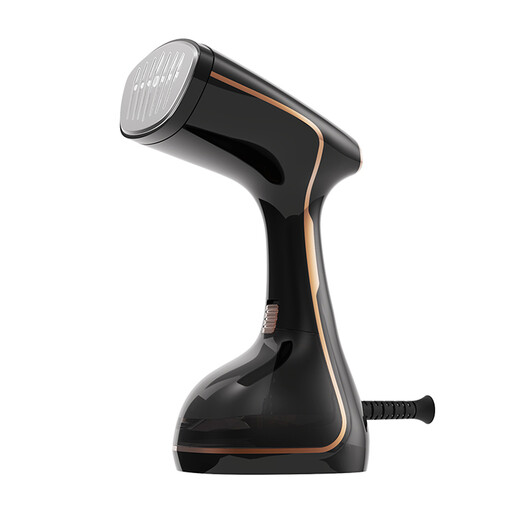
Why This Fits Their Persona: For those who steam large batches of clothing or want to tackle heavy-duty tasks like curtains and upholstery, this model's high power and large tank are a perfect match. It's built for longer steaming sessions and tougher jobs.
It directly counters the 'high-wattage myth' by pairing its 1500-1780W power with a genuinely large 320ml water tank, ensuring the power is sustained over a long period without constant refilling.
The key advantage is its capacity for extended use. The high power ensures it can produce a strong, continuous flow of steam, making it effective on stubborn creases and thick materials.
We have compiled a complete, real-time list of products that fully satisfy these strict selection criteria and UK safety regulations.
Most steamers are safe for common fabrics like cotton, linen and polyester blends. However, you should exercise caution with delicate materials. For silk or velvet, hold the steamer further away (15-20 cm) and keep it moving to prevent oversaturation. Never use a steamer on leather, suede, waxed jackets or plastic materials, as the heat and moisture can cause irreversible damage. Always check the garment's care label first.
The running cost is minimal. For example, a 1500W (1.5kW) steamer used for 10 minutes (0.167 hours) would consume approximately 0.25 kilowatt-hours (kWh) of electricity. Based on average UK electricity prices, this would cost only a few pence per use, making it an energy-efficient alternative to leaving an iron on for long periods.
Proper maintenance is key to longevity. To prevent mineral build-up (limescale) that can clog the device, it is advisable to empty the water tank after every use. Periodically, you should descale your steamer by running a cycle with a solution of one part white vinegar to two parts water, followed by a rinse cycle with plain water. This keeps the steam vents clear and ensures consistent performance. Always refer to the manufacturer's instructions for specific cleaning guidance.