
24/7 Customer Support

Free returns

Same-day & Next-day Delivery

Quality Guaranteed

Unlock Your Welcome Offers: FREE Delivery | Up to 80% OFF | Free 30-day JoyPlus trial
Download the APP
As a parent or teacher, watching a child learn to write is a significant milestone. However, the journey from first scribbles to neat, legible sentences can be challenging. Many children struggle with an uncomfortable grip, hand cramps or messy results, which can lead to frustration. Choosing the right tool is a crucial first step in making this process smoother and more enjoyable.
This guide is designed to help you navigate the options and select a suitable handwriting pen for children. We will explore key features to look for and provide a few recommendations to support your child as they develop this essential skill, just in time for the new school year.
By Joybuy Product Recommendation Officer
Before choosing a pen, it's helpful to understand what makes a writing tool effective for a young learner. Focusing on a few key aspects can make a substantial difference to a child's comfort and confidence.
An ergonomic pen for kids is designed to fit comfortably in a small hand. Look for features like moulded, non-slip grip zones that guide fingers into the correct tripod grip. A well-designed pen promotes a relaxed hand posture, which helps to prevent muscle fatigue and allows a child to write for longer periods without discomfort. This is a key factor in finding a pen to improve handwriting, as comfort allows for better focus on letter formation.
The type of pen matters. A rollerball pen for children is often a popular choice because its water-based ink flows smoothly with minimal pressure. This helps to prevent scratchy, inconsistent lines and reduces the effort needed to write. Gel pens also offer a smooth experience and often come in quick-drying formulas, which are particularly useful for left-handed writers to avoid smudging.
Some pens are created with different versions for left- and right-handed users. These models have grips that are specifically contoured to provide optimal support depending on which hand the child writes with. For left-handers, this can be especially beneficial in improving comfort and visibility of their writing.
Here are a few handwriting pens that incorporate features helpful for young writers.
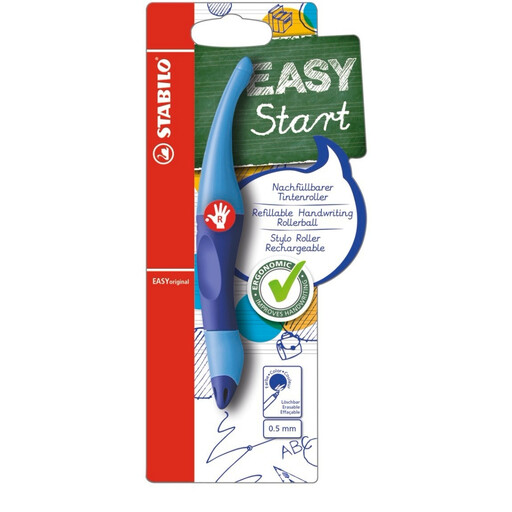
Why It Stands Out The STABILO EASYoriginal is a purpose-built pen for learning to write. Its most notable feature is the distinct ergonomic design, with separate versions available for left- and right-handed children. The non-slip, moulded grip zone encourages the correct hand posture from the start. As a pen that is widely approved by UK teachers, it has become a go-to school handwriting pen. The rollerball technology ensures the ink glides effortlessly across the page, producing clean, blot-free lines without requiring heavy pressure.
Pros
Who is it for? This pen is ideal for children in the early stages of learning to write (ages 5-8) or any child who needs extra support with their pen grip and control.
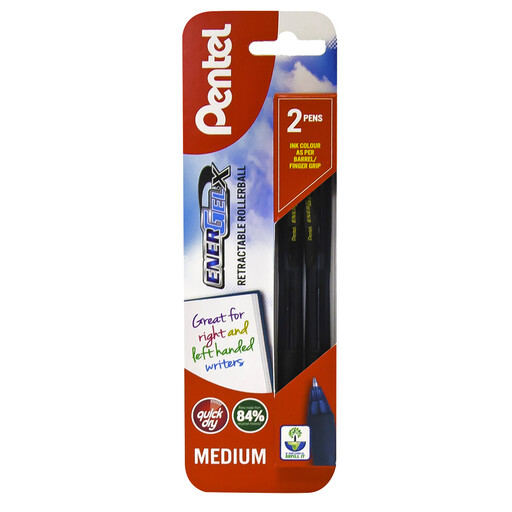
Why It Stands Out For children who have mastered the basics of their grip but struggle with smudging, the Pentel EnerGel X is an excellent option. Its key feature is the quick-drying EnerGel ink, which flows smoothly but dries rapidly on paper. This significantly reduces the chance of smudges, a common issue for both left-handed writers and those who write quickly. The soft, latex-free grip provides sustained comfort, and the retractable design means no more lost caps.
Pros
Who is it for? A great choice for primary school children who need a reliable, comfortable and smudge-resistant pen for everyday classwork and homework.
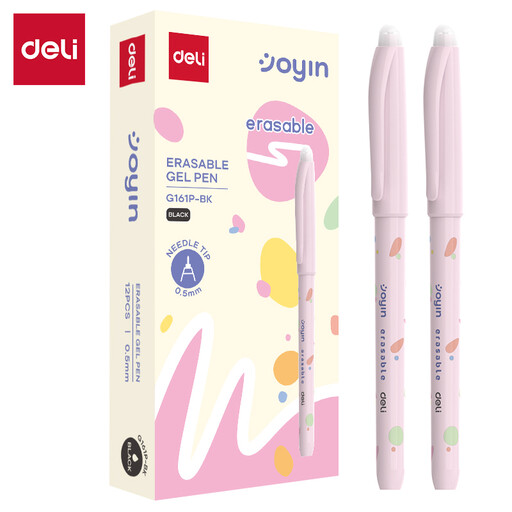
Why It Stands Out The fear of making mistakes can be a real barrier to a child's writing confidence. The Deli Erasable Gel Pen directly addresses this by allowing for clean and easy corrections. The specially formulated gel ink can be erased without a trace, removing the need for messy correction fluid or crossing out words. Its fine 0.5mm needle tip also encourages neat, precise writing, making it useful for practising letter formation or completing worksheets where space is limited.
Pros
Who is it for? Perfect for children who are anxious about making errors, or for drafting work, practising spelling and completing maths problems.
While these recommendations cover some of the most common needs, every child's writing journey is unique. If you are looking for a different style or feature, it may be worth exploring a wider variety of pens.
For more smooth-writing options, browse our full collection of refillable rollerball pens to find the perfect tool for your child.
1. What type of pen is good for a child learning to write? An ergonomic rollerball pen is often recommended for children who are just starting to write with a pen. They require less pressure than a ballpoint, and the smooth ink flow helps create consistent lines. Pens with moulded grips, like the STABILO EASYoriginal, also provide valuable physical guidance for correct finger placement.
2. How can a pen help improve my child's handwriting? A suitable pen to improve handwriting works by reducing physical strain and promoting control. An ergonomic design encourages a relaxed grip, which prevents the hand from tiring quickly. This allows the child to concentrate on forming letters correctly. Additionally, a pen with smooth, reliable ink flow means they do not have to press hard, leading to neater and more fluid writing.
3. Are erasable pens a good idea for school? Erasable pens can be very beneficial, particularly for building confidence. They allow children to correct mistakes neatly without the mess of correction fluid or untidy crossing-out, which can encourage them to write more freely. However, it is always a good idea to check with your child's school, as some may have specific policies regarding the type of school handwriting pen permitted for formal assignments or tests.