
24/7 Customer Support

Free returns

Same-day & Next-day Delivery

Quality Guaranteed

Unlock Your Welcome Offers: FREE Delivery | Up to 80% OFF | Free 30-day JoyPlus trial
Download the APP
Choosing the right highchair can feel like a significant decision. It’s more than just a piece of furniture; it’s where your little one will explore new tastes, develop crucial motor skills, and share in family mealtimes. With so many options available, it’s easy to feel overwhelmed by considerations of safety, space, longevity and, of course, the inevitable clean-up.
As the Joybuy Product Recommendation Officer, my role is to help you navigate these choices. This guide is designed to provide clear, practical information, helping you find a baby feeding chair that fits your family’s needs and your home’s style.
Before we look at specific models, let’s break down the key features to consider. Thinking about these points will help you narrow down your search and make a more confident choice.
Your child's safety is the top priority. In the UK, highchairs must meet specific safety standards. Look for a model with a sturdy, wide base to prevent tipping and, most importantly, a 5-point harness. This type of harness secures the child at the shoulders, hips and between the legs, offering far more security than a simple waist strap.
Babies grow quickly, and a highchair that adapts to their changing needs offers excellent value.
Practicality is key for any product used daily. If you have a smaller kitchen or dining area, a folding highchair that can be stored away compactly is a sensible choice.
And then there’s the cleaning. Mealtimes are messy. An easy to clean highchair will make your life much simpler. Look for smooth surfaces without dirt-trapping crevices, wipe-clean fabrics and removable trays that are ideally dishwasher-safe. Materials also play a role; while a classic wooden highchair offers timeless style and durability, modern plastic designs are often lightweight and very simple to wipe down.
Based on features that address safety, versatility and practicality, here are our recommendations for families to consider this year.
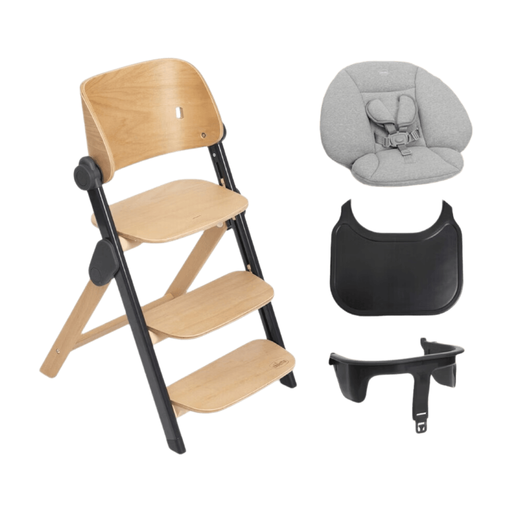
Why It Stands Out: The Chicco Meraviglia is a true investment piece, designed to serve your family from birth through to adulthood. Its 4-in-1 functionality and sustainable wooden construction make it a standout choice for those seeking longevity and style.
Pros:
Who is it for?: Parents looking for a premium, long-lasting seating solution that can be used from the day they bring their baby home and will adapt for many years to come.
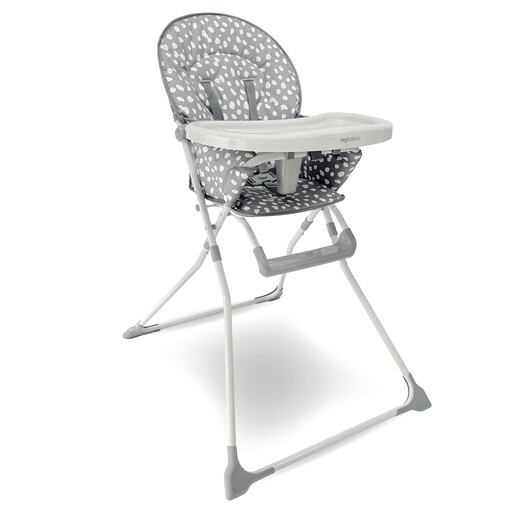
Why It Stands Out: This highchair from My Babiie is the definition of practical convenience. Its ultra-lightweight frame and compact fold make it an ideal choice for modern homes where space is at a premium.
Pros:
Who is it for?: Families living in flats or homes with limited dining space, or for grandparents who need a reliable baby feeding chair that can be easily stored away between visits.

Why It Stands Out: The Mychild Lars combines Scandinavian-inspired design with impressive versatility. This 3 in 1 highchair not only looks great in a contemporary home but also cleverly adapts to a booster seat and a junior stool, offering fantastic long-term value.
Pros:
Who is it for?: Style-conscious parents who appreciate minimalist design and want a multi-functional chair that will remain a useful piece of furniture long after the weaning phase is over.
While a highchair is essential for mealtimes, you may be looking for a different kind of seat for playtime or quiet time on the floor. For younger babies who are developing their sitting skills, a supportive floor seat can be a great addition to your home.
If you're exploring options for comfortable floor seating, you might find our collection of soft baby chairs helpful.
1. At what age can a baby use a highchair? Most highchairs are suitable for babies from around six months of age, or whenever they can sit up confidently on their own. However, some models are designed as a newborn highchair, featuring a full recline function that allows them to be used as a safe resting spot from birth. Always check the manufacturer's age and weight recommendations.
2. What is the easiest type of highchair to clean? An easy to clean highchair typically has smooth, seamless surfaces, a removable seat cover that is machine-washable or wipeable and a detachable tray that is dishwasher-safe. Models made from moulded plastic or treated wood without too many joints or crevices tend to be the simplest to keep hygienic.
3. Is a wooden highchair better than a plastic one? Neither is inherently "better"; they just serve different priorities. A wooden highchair is often prized for its durability, classic appearance and ability to blend with home decor. Many are designed as an adjustable highchair that can last for many years. Plastic highchairs, on the other hand, are generally more lightweight, often feature a folding highchair mechanism for easy storage and can be very straightforward to wipe clean. The choice depends on whether you prioritise aesthetics and longevity or portability and convenience.