
24/7 Customer Support

Free returns

Same-day & Next-day Delivery

Quality Guaranteed

Unlock Your Welcome Offers: FREE Delivery | Up to 80% OFF | Free 30-day JoyPlus trial
Download the APP
Whether you're preparing for exams, organising office documents or designing your next bullet journal spread, the right set of highlighters can make all the difference. A common frustration is finding a pen that doesn't bleed through thin paper, smudge fresh ink or strain your eyes with overly bright colours.
This guide is designed to help you navigate the options. We'll explore the key features to look for, from ink type to tip style, so you can find a reliable highlighter set that suits your specific needs.
Selecting the perfect highlighters goes beyond just picking your favourite colours. Consider these practical points to ensure your notes stay clean, organised and easy to read.
The most significant factor in performance is the ink. Most highlighters use a water-based ink, but their formulation varies. If you frequently work with thin textbook pages or journals, look for no bleed highlighters. These often use a denser pigment ink that sits on top of the paper rather than soaking into it, preventing bleed-through and ghosting on the other side. For glossy paper, ensure the ink is quick-drying to avoid smudging.
Highlighter tips primarily come in two styles: the classic chisel tip and a finer bullet tip.
For maximum utility, consider double-ended highlighters. These combine both a chisel and a fine tip in a single pen, offering excellent versatility for students who need tools for both highlighting and annotating. They also double as effective journaling pens for creative projects.
The choice between neon highlighters and pastel highlighters depends entirely on your purpose and preference.
Here are a few standout options that cater to different needs, from academic study to creative expression.
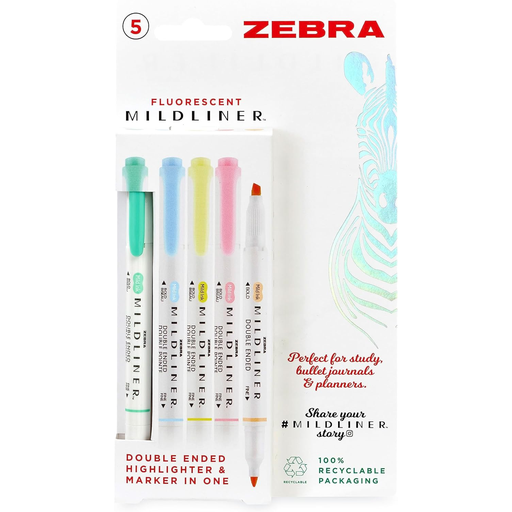
Why It Stands Out: The Zebra Mildliner range redefines what a fluorescent highlighter can be. The ink provides colour that stands out without the harsh glare of traditional neons, making it a more comfortable choice for extended use. Its dual-tip functionality adds a layer of practicality that is hard to overlook.
Pros:
Who is it for? This set is ideal for students and professionals who need to colour-code their work but find conventional neon colours too distracting. It’s a great all-rounder for organised note-taking and document review.
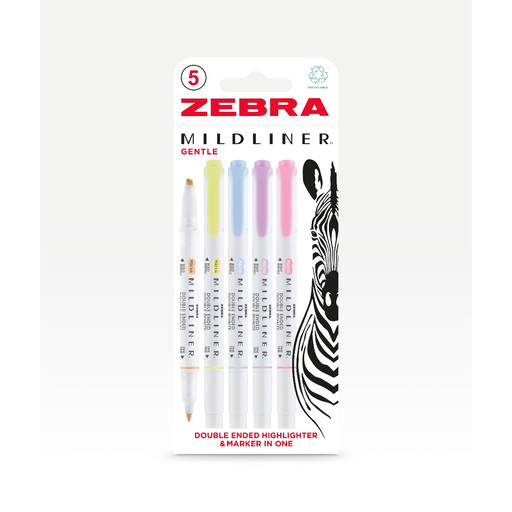
Why It Stands Out: This highlighter set is a favourite among the bullet journaling and studygram communities for good reason. The curated palette of soft, pastel highlighters provides a beautiful aesthetic, while the ink is specifically formulated to minimise bleeding, making it suitable for even thin journal pages.
Pros:
Who is it for? Perfect for creative hobbyists, bullet journal enthusiasts and anyone who prefers a subtle, organised approach to their notes. These are some of the most popular highlighters for studying among those who value aesthetics.
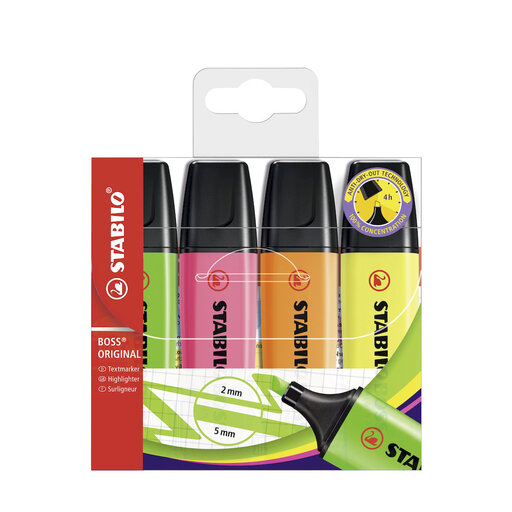
Why It Stands Out: The Stabilo Boss is an icon in the world of stationery. Its distinctive shape is instantly recognisable, but its true value lies in its reliability and thoughtful design. According to the manufacturer, its Anti-Dry-Out technology allows the pen to be left uncapped for up to four hours.
Pros:
Who is it for? This is a workhorse highlighter, well-suited for heavy use in an office or for intense revision sessions. It’s a dependable choice for anyone who prioritises function and durability.
If our recommendations aren't quite what you're looking for, or if you'd like to explore a wider variety of colours, brands and tip styles, we have a broader selection available.
Discover our full collection of Marking Pens to find the perfect tools for your projects.
1. How can I stop my highlighters from bleeding through the page? To prevent bleed-through, choose no bleed highlighters that use a pigment-based ink, as these tend to sit on the surface of the paper. It is also good practice to use a light touch and avoid pausing with the tip held against the paper. If you're using particularly thin paper, it's always wise to test the pen on an inconspicuous area first.
2. What is the difference between pastel and neon highlighters?Neon highlighters use bright, fluorescent colours designed for high contrast and to make information stand out immediately. They are excellent for flagging urgent or critical text. Pastel highlighters use softer, less saturated colours. They are often preferred for organising notes in a more subtle, aesthetically pleasing way and can be less straining on the eyes during long periods of reading.
3. Are double-ended highlighters worth it? For many users, yes. Double-ended highlighters offer great value and convenience by combining two tip types—usually a broad chisel tip and a fine bullet tip—into one pen. This makes them a versatile tool for both highlighting large blocks of text and adding precise underlines or annotations, saving space in your pencil case and streamlining your workflow.