
24/7 Customer Support

Free returns

Same-day & Next-day Delivery

Quality Guaranteed

Unlock Your Welcome Offers: FREE Delivery | Up to 80% OFF | Free 30-day JoyPlus trial
Download the APP
The daily ritual of a perfectly crafted coffee is one of life’s simple pleasures. For many in the UK, this means a trip to a local café. But what if you could replicate that rich aroma and satisfying taste in your own kitchen? Moving from instant or pod coffee to a proper barista coffee machine for home can feel like a significant step, but it unlocks a world of flavour and the rewarding experience of creating your own lattes, cappuccinos and flat whites.
The market is filled with options, from simple manual models to highly automated machines. As the Joybuy Product Recommendation Officer, my role is to provide clear, practical guidance to help you find the right machine for your space, skill level and coffee preferences. This guide will walk you through the key features to consider and highlight a few standout models to help you start your home barista journey.
Before diving into specific products, understanding the landscape is key. Here are a few points to consider when searching for a home espresso machine that suits your needs.
The main choice you'll face is between a semi-automatic machine and a more integrated bean-to-cup model.
Here are a few machines that cater to different needs, from the aspiring beginner to the tech-savvy coffee enthusiast.

Why It Stands Out: The De’Longhi Stilosa is a fantastic entry point into the world of home espresso. It’s a compact, no-fuss semi-automatic espresso machine that focuses on the fundamentals. With its 15-bar pump and manual stainless steel steam wand, it provides all the necessary tools to pull a proper espresso shot and practise your milk-frothing skills.
Pros:
Who is it for?: This machine is ideal for beginners, students or anyone with a smaller kitchen who wants to learn the basics of making espresso-based drinks without a significant initial investment.
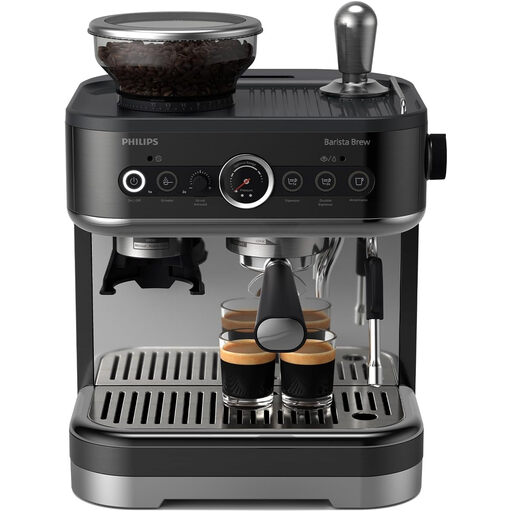
Why It Stands Out: The Philips Barista Brew strikes a balance between manual control and convenient integration. It’s a bean to cup coffee machine in spirit, featuring a built-in conical burr grinder, but retains the hands-on feel of a semi-automatic model with its professional-style 58mm portafilter and manual steam wand. The built-in pressure gauge and PID temperature control help you achieve consistent results.
Pros:
Who is it for?: This is a great fit for the aspiring home barista who wants the freshness of bean-to-cup but still desires the control and ritual of a semi-automatic workflow.

Why It Stands Out: This Sage machine brings café-level technology into the home with a user-friendly touchscreen interface. The Impress Puck System automates the dosing and tamping process, while the step-by-step barista guidance makes it easy to achieve great results. Its standout feature is the new cold extraction technology, making it a top contender for the best coffee machine for iced coffee.
Pros:
Who is it for?: This machine is perfect for the coffee lover who wants premium, consistent results with the help of technology and for those who enjoy both hot and cold coffee beverages.
Finding the right machine is the first step. To truly elevate your coffee experience, the right accessories are just as important. A well-made cup not only feels good to hold but also helps maintain the temperature of your drink.
If you're ready to complete your setup, explore our curated collection of Barista coffee cups and other essential brewing accessories.
1. What is the difference between a bean to cup and an espresso machine? An espresso machine is a broad category. A "semi-automatic espresso machine" requires you to grind, dose and tamp the coffee yourself. A "bean to cup" machine is a type of espresso machine with an integrated grinder that automates these steps for you, offering more convenience.
2. Can you use normal coffee beans in a barista machine? Yes, you can. While beans labelled "espresso roast" are blended and roasted to perform well under pressure, any whole coffee bean can be used. The most important factor is freshness. Using freshly roasted beans, ground just before brewing, will always yield a more flavourful cup.
3. Is a 15-bar coffee machine good enough? Absolutely. A 15-bar pump provides ample power to achieve the optimal 9 bars of pressure at the group head, which is the standard for a proper espresso extraction. This pressure is crucial for forcing water through the finely-ground coffee puck to create a rich, aromatic shot with a stable crema.