
24/7 Customer Support

Free returns

Same-day & Next-day Delivery

Quality Guaranteed

Unlock Your Welcome Offers: FREE Delivery | Up to 80% OFF | Free 30-day JoyPlus trial
Download the APP
As working from home becomes a permanent fixture for many in the UK, the ad-hoc setup on the dining table is no longer a sustainable solution. Finding the right home office desk is crucial for productivity and comfort, but the sheer number of options can be overwhelming. You need a workspace that not only fits your room and budget but also supports your daily tasks without compromising on style.
This guide is designed to help you navigate the choices. We will outline key factors to consider before you buy and present a selection of desks that cater to different needs, from compact study areas to expansive professional setups.
Before browsing, taking a moment to assess your needs will ensure you select a desk that serves you well for years to come.
The most important first step is to measure the area where your desk will go. Note the available width, depth and height. Remember to account for clearance around the desk for your chair and for opening any nearby doors or drawers. A desk that looks perfect online can quickly overwhelm a small room if its dimensions are not a good fit.
Consider what you will be doing at your desk. A minimalist writing desk might be sufficient for occasional emailing and note-taking. However, if you work with multiple monitors, a printer and other peripherals, you will need a larger computer desk with a generous surface area. For those who value organisation, a desk with shelves or integrated storage can keep your workspace tidy. If you spend long hours at your computer, an electric standing desk can provide valuable ergonomic flexibility.
A wobbly desk is a constant source of distraction. Look for a sturdy office table built with a solid frame, often made from powder-coated steel, which provides excellent support. The desktop material also matters; particleboard and MDF are common and affordable, but check for finishes that are scratch-resistant and easy to clean. Features like adjustable feet are a practical addition, ensuring your modern workstation remains level even on slightly uneven floors.
Here are our recommendations, selected to meet a range of common requirements for a home workspace.
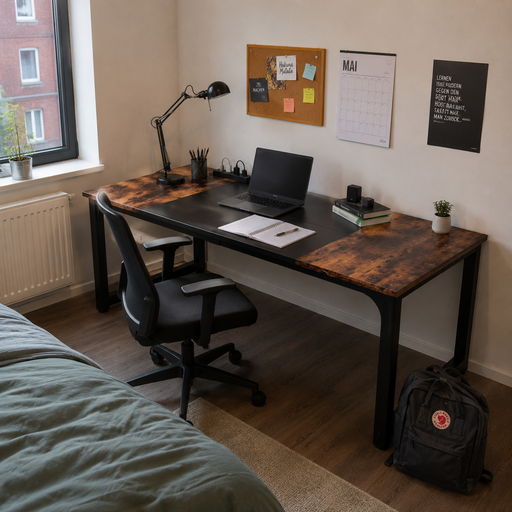
Why It Stands Out: With a vast 180 x 80 cm surface, this industrial desk is built for demanding workloads. It provides more than enough room for dual monitors, a laptop and all your accessories without feeling cramped. The robust steel frame and thick legs contribute to its impressive stability, supporting a maximum load of up to 260 kg. Its minimalist design, combining a rustic brown top with a black frame, fits well in contemporary or industrial-style interiors.
Pros:
Who is it for?: Professionals, gamers or creatives who need a large, heavy-duty workspace for a multi-monitor setup.
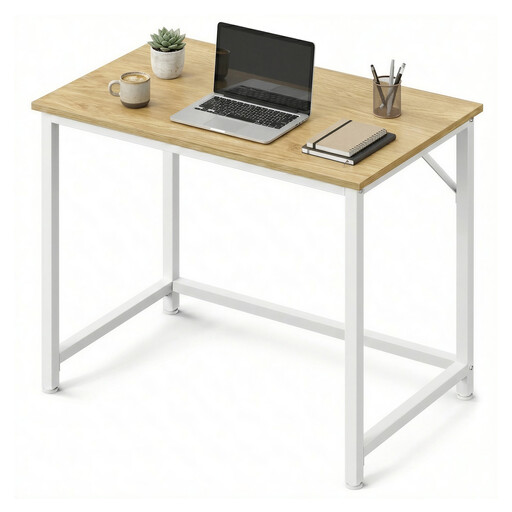
Why It Stands Out: This compact study table is an ideal solution for smaller bedrooms, student accommodation or multi-purpose living areas. Measuring just 80 x 50 cm, it provides a dedicated workspace without dominating the room. The clean lines and two-tone finish of natural oak and pearl white offer a light, modern aesthetic. Despite its smaller size, the steel frame and adjustable feet provide a reliable and stable surface for a laptop or single monitor.
Pros:
Who is it for?: Students, freelancers or anyone needing a simple, functional desk for a small room or flat.

Why It Stands Out: This electric standing desk brings ergonomic flexibility to your home office. The quiet motor allows for smooth transitions between sitting and standing, with 4 memory presets to save your preferred heights. The 120 x 60 cm desktop is a versatile size for most setups. Thoughtful features like a side storage pocket, a headphone hook and integrated cable management holes help maintain a tidy and organised modern workstation.
Pros:
Who is it for?: Individuals working long hours at a computer who want to improve their ergonomic setup and alternate between sitting and standing.
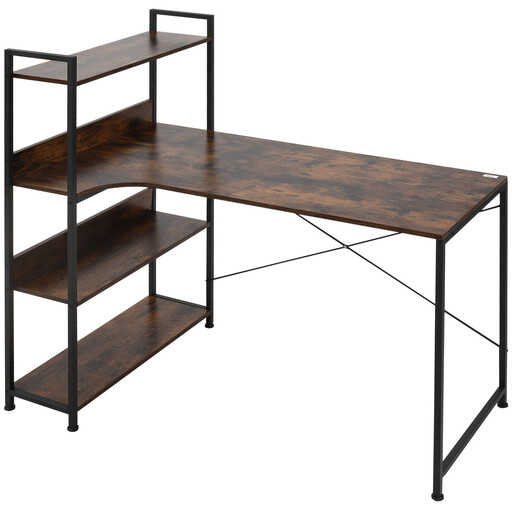
Why It Stands Out: This clever design integrates a functional workspace with four tiers of open shelving, making it a great space-saver for those who need storage close at hand. The desk with shelves keeps books, files and supplies organised and within easy reach. The industrial aesthetic, reinforced 'X' back bar and adjustable feet ensure the unit is both stylish and stable. The melamine-coated particleboard is durable and simple to wipe clean.
Pros:
Who is it for?: Anyone looking for an all-in-one solution that combines a desk and storage, particularly in rooms where floor space is limited.
If your room has a unique layout or you're looking to maximise a specific corner, our curated recommendations might not be the perfect fit. For more specialised options, you might find what you need in our wider collection.
Explore our range of corner desk shelf solutions to find the ideal piece for your space.
The ideal size depends on your needs. A width of 120 cm is a popular all-rounder, offering enough space for a monitor and laptop. For smaller spaces, a desk around 80 cm wide can work well. If you use multiple large monitors or need space to spread out documents, consider a desk that is 160 cm or wider.
Start by adjusting your chair so your feet are flat on the floor and your knees are at a 90-degree angle. The top of your monitor should be at or slightly below eye level. An electric standing desk, like the Ochama model, allows you to change your posture throughout the day, which can help reduce the strain associated with prolonged sitting.
A standard home office desk should typically support at least 50 kg, which is sufficient for a computer, monitor and basic accessories. However, if you have heavy equipment like multiple large monitors, a bulky PC tower or extensive files, it is important to check the manufacturer's specifications. Some heavy-duty models, like the Tribesigns desk, are rated to hold over 200 kg.