
24/7 Customer Support

Free returns

Same-day & Next-day Delivery

Quality Guaranteed

Unlock Your Welcome Offers: FREE Delivery | Up to 80% OFF | Free 30-day JoyPlus trial
Download the APP
With more of us working and studying from home, a dedicated workspace is no longer a luxury but a necessity. The centrepiece of this space is the humble desk, yet finding the right one can feel overwhelming. From sprawling surfaces to compact solutions, the choices are endless. This guide is designed to help you navigate the options and find a functional and stylish home office desk that suits your needs, without the marketing jargon.
Before you start browsing, consider a few key factors. Thinking about these points will help you narrow down your search and select a desk that you'll be happy with for years to come.
The most important factor is size. A desk that's too large can make a room feel cramped, while one that's too small can lead to a cluttered and unproductive workspace. Measure the area where you plan to place the desk. If you use multiple monitors or need space for documents and equipment, a large computer desk might be necessary. For smaller rooms or multi-purpose spaces, a small desk for bedroom or a simple writing desk could be the ideal solution. Consider depth as well; a depth of 60-80 cm is generally sufficient for a monitor, keyboard and writing space.
How will you use your desk? If it's primarily for laptop work or studying, a standard computer desk or study table will likely suffice. However, if you spend most of your day at your desk, an ergonomic office desk can make a significant difference to your comfort. A standing desk, for example, allows you to alternate between sitting and standing, which can help you feel more active throughout the workday. Look for features like adjustable height and stability to ensure a comfortable setup.
Your desk should complement your home's decor. An industrial desk with a metal frame and wood-effect top can add a modern, robust feel to a room. A rustic brown desk offers a warmer, more traditional look that can make a space feel cosy and inviting. Consider the materials—a powder-coated steel frame provides stability, while a laminate tabletop is often easy to clean and resistant to scratches.
Here are a few recommendations that cater to different needs, from expansive workspaces to compact corners.
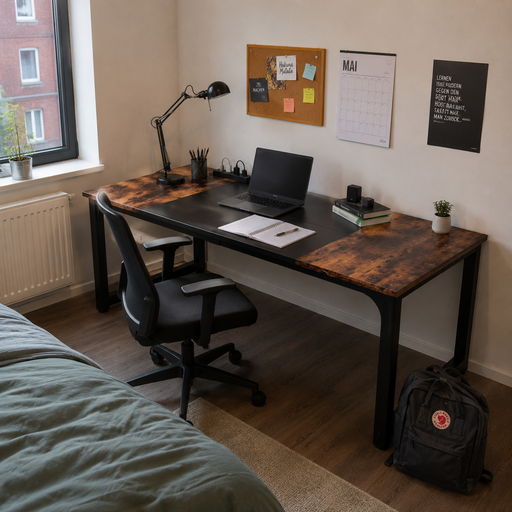
Why It Stands Out: This desk is all about space. With a surface measuring 180 x 80 cm, it provides an enormous amount of room for dual monitors, a PC tower, printers and all your work essentials. The modern industrial design, combining a rustic brown top with a black metal frame, fits well in many contemporary homes. Its stability is a key feature, with a thick steel frame and a high maximum load capacity of 260 kg.
Pros:
Who is it for? This is an excellent choice for professionals who need a large computer desk for a multi-monitor setup, creative individuals working on large-scale projects or partners sharing a single home office.
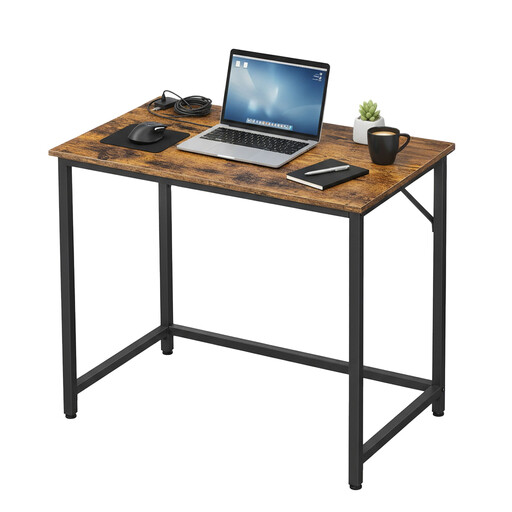
Why It Stands Out: This desk proves that you don't need a lot of space to create a functional work area. At just 80 cm wide, it's a perfect small desk for bedroom use, fitting neatly into alcoves or corners. Its minimalist design features clean lines and a simple brown-and-black colour scheme that blends into most interiors without overwhelming the room. Despite its compact size, the steel frame and particleboard top provide a reliable and steady surface for daily tasks.
Pros:
Who is it for? This writing desk is well-suited for students, those living in smaller flats or anyone needing a simple, dedicated study table for occasional work or hobbies.

Why It Stands Out: This ergonomic office desk brings flexibility to your workday. The electric motor allows for smooth and quiet height adjustments from 72 cm to 120 cm, letting you switch between sitting and standing effortlessly. It features a control panel with four memory presets, so you can save your preferred heights. Thoughtful additions like a fabric storage pocket, a headphone hook and cable management holes help keep your workspace organised and clutter-free.
Pros:
Who is it for? This standing desk is a great option for remote workers who spend long hours at their computer and want the freedom to change their posture throughout the day for improved comfort.
If a standard rectangular desk doesn't quite fit your room's layout, a corner desk can be an excellent way to make the most of your available space. They offer a large surface area while tucking neatly into the corner of a room.
Explore our selection of black office corner desk options to find a model that fits your needs.
Start by measuring the length and width of the space you have available. Then, consider what you'll place on it. A simple laptop setup might only need a desk 80-100 cm wide. If you use one or two monitors, look for a width of at least 120-140 cm. For depth, 60 cm is a good minimum to allow room for a screen, keyboard and some writing space.
A standing desk offers the versatility to change your posture, which many people find helps them stay comfortable and focused during a long workday. An electric model with memory presets makes it easy to switch between your preferred sitting and standing heights. It's a functional choice for anyone who spends the majority of their day at their desk.
A desk depth of 50 cm can work in tight spaces, but a depth of 60-80 cm is generally more comfortable. This provides enough room to place your monitor at a comfortable viewing distance (about an arm's length away) while still leaving space for a keyboard, mouse and notebooks. The 80 cm depth of the Tribesigns desk, for example, is ideal for larger monitors or for users who like to spread out their work.