
24/7 Customer Support

Free returns

Same-day & Next-day Delivery

Quality Guaranteed

Unlock Your Welcome Offers: FREE Delivery | Up to 80% OFF | Free 30-day JoyPlus trial
Download the APP
As working from home becomes a permanent fixture for many, carving out a dedicated and productive workspace is more important than ever. The centrepiece of this space is, of course, the home office desk. But finding the right one can be a challenge, especially when you're trying to balance functionality, style and the reality of limited room in many UK homes.
This guide is designed to help you navigate the options. As a Joybuy Product Recommendation Officer, my role is to sift through the choices and present practical advice, helping you find a desk that fits your space, your work and your budget without the marketing jargon.
Before you start browsing, considering a few key factors will ensure you select a desk that you'll be happy with for years to come.
The most important step is to measure the area where your desk will go. A common mistake is underestimating the space a desk occupies, not just its footprint but also the room needed for a chair and for you to move around comfortably. If you're fitting a desk into an alcove or a tight corner, a small office desk might be the most practical solution. Always check the product dimensions (width, depth and height) against your measurements.
Consider what you'll be using the desk for. A simple computer desk or study desk with a flat surface may be sufficient for laptop work and note-taking. However, if you use multiple monitors, printers or need to store paperwork and stationery, a desk with storage—such as integrated shelves or drawers—will help keep your workspace organised and clutter-free. For those who spend long hours at their computer, a standing desk for home can offer ergonomic benefits by allowing you to alternate between sitting and standing.
Most modern furniture is designed for self-assembly. Look for products with clear instructions and labelled parts to make the process straightforward. In terms of materials, a combination of a particleboard top and a sturdy steel frame offers a good balance of durability and affordability. It provides a stable surface for your equipment without the high cost and weight of solid wood.
Here are a few recommendations that cater to different needs and spaces, selected for their practicality and design.
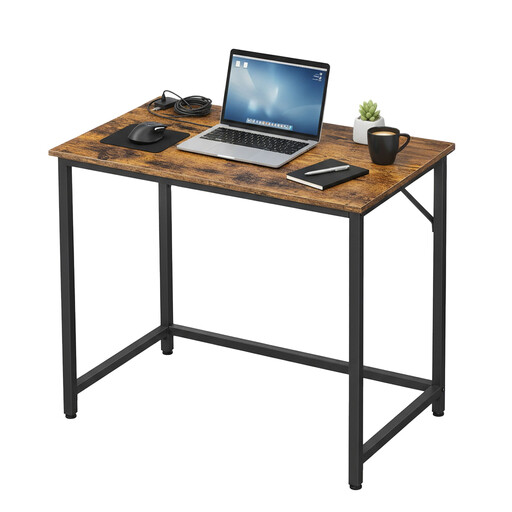
Why It Stands Out: This desk embodies simplicity and function. Its clean lines and minimalist two-tone design allow it to blend into a bedroom, living room or dedicated study without overwhelming the space. The compact footprint makes it an excellent choice for smaller flats or multi-purpose rooms.
Pros:
Who is it for? Students, remote workers with a minimalist setup or anyone needing a functional study desk in a room where space is at a premium.

Why It Stands Out: This electric standing desk for home brings ergonomic flexibility to your workspace. The quiet motor allows for smooth height adjustments from 72 cm to 120 cm, while the memory function lets you save up to four preferred heights for quick transitions. It’s a modern solution for a healthier work routine.
Pros:
Who is it for? Professionals who work from home full-time and want to improve their posture and comfort throughout the day. It's also great for anyone looking to invest in a more dynamic and productive workspace.
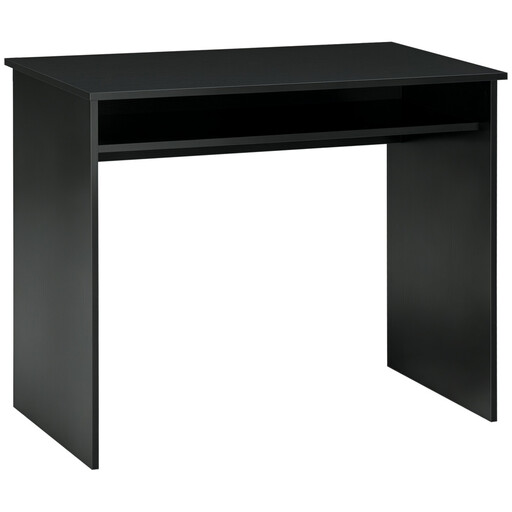
Why It Stands Out: This Homcom desk is a practical choice for those who need storage but lack the space for separate shelving units. The integrated under-table shelf provides easy-to-reach storage for books, documents or tech accessories, helping to keep the main desktop clear.
Pros:
Who is it for? Anyone who needs a work from home desk with simple, effective storage. It's ideal for students, crafters or office workers who want to maintain an organised setup in a compact area.
If your work involves creative brainstorming or collaborative planning, you might be interested in a more innovative solution. For a desk that doubles as a canvas for your ideas, consider exploring our range of whiteboard tables.
For most users with a laptop and a single monitor, a desk with a width of 100-120 cm and a depth of 50-60 cm is usually sufficient. If you have a smaller space, a desk around 80 cm wide can work well, provided you keep it organised. Always measure your available space first.
Many users find that standing desks help reduce the discomfort associated with sitting for long periods. The ability to change posture can improve focus and energy levels. An electric standing desk with memory presets makes it easy to incorporate more movement into your workday, making it a worthwhile consideration for full-time remote workers.
To maximise a small workspace, use vertical storage like monitor stands with drawers, wall-mounted shelves and desk organisers for pens and stationery. A desk with built-in storage, such as an under-table shelf or drawers, is also highly effective at keeping your main work surface clear and ready for use.