
24/7 Customer Support

Free returns

Same-day & Next-day Delivery

Quality Guaranteed

Unlock Your Welcome Offers: FREE Delivery | Up to 80% OFF | Free 30-day JoyPlus trial
Download the APP
As working from home becomes a permanent fixture for many in the UK, the makeshift dining table setup is losing its charm. Creating a dedicated, functional workspace is no longer a luxury but a necessity for productivity and well-being. However, with countless options available, finding the right home office desk can feel overwhelming.
This guide is designed to cut through the clutter. As the Joybuy Product Recommendation Officer, my role is to provide clear, practical advice to help you select a desk that not only fits your space but also supports your work style. We will explore key considerations and highlight a few standout options to help you build a better workspace.
Before you start browsing, a little planning goes a long way. Focusing on these three areas will help you narrow down the options and find a computer desk that truly works for you.
The most important factor is space. Start by measuring the area where you plan to place the desk. Remember to account for chair space and room to walk around it. Are you furnishing a dedicated office or a small corner in a multi-use room? A small desk for bedroom use will have very different dimensions from a large work table intended for a spacious study. Consider the equipment you use daily. A simple laptop setup requires less surface area than a dual-monitor rig with speakers and other peripherals.
Long hours at a desk can take a toll on your body. An ergonomic office desk is designed to promote better posture. For many, this means considering a height adjustable desk. These models, often called a sit stand desk, allow you to alternate between sitting and standing throughout the day, which can help maintain focus and reduce the discomfort of a static posture. Look for desks that adjust to a height that allows your arms to rest at a 90-degree angle, whether you are sitting or standing.
Your desk is a significant piece of furniture, so it should complement your home's decor. Many desks today feature a blend of materials like particleboard and steel, offering a modern desk aesthetic that is both durable and stylish. Consider the finish—do you prefer a classic wood grain, a clean white surface, or a bold industrial look? The material also impacts durability and maintenance, so think about scratch resistance and how easy the surface is to clean.
Based on functionality, user feedback and design, here are our recommendations for different needs and spaces.
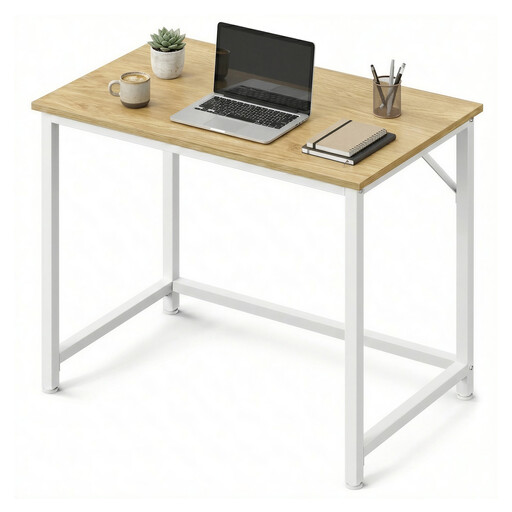
Why It Stands Out This desk is a masterclass in simplicity and efficiency. Its compact 80 x 50 cm footprint makes it an excellent choice for smaller rooms, flats, or alcoves. The combination of a natural oak-coloured top and pearl white steel frame creates a light, airy feel that prevents a small space from feeling cluttered. Despite its size, the reinforced frame provides a stable and reliable work surface.
Pros
Who is it for? This is a great study desk for students, professionals living in city flats or anyone needing to carve out a small, dedicated workspace in a living room or bedroom.
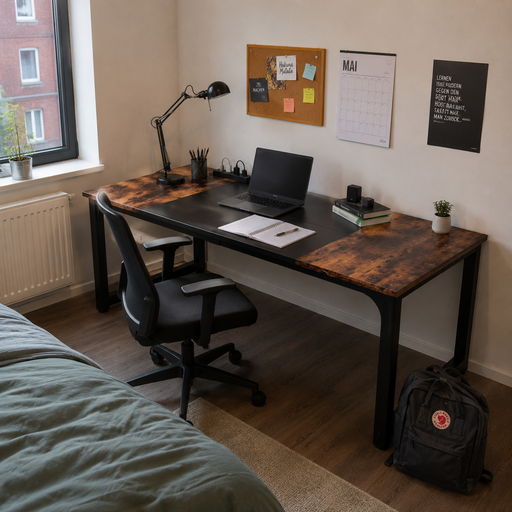
Why It Stands Out For those who need room to spread out, this large work table delivers. The expansive 180 x 80 cm surface can comfortably accommodate multiple monitors, a laptop and all your documents, making it perfect for power users. The robust steel frame, with its 5 x 5 cm thick tubes, gives it an impressive maximum load capacity of up to 260 kg, ensuring exceptional stability for heavy equipment. The rustic brown and black industrial design adds a touch of professional sophistication to any home office.
Pros
Who is it for? This desk is aimed at professionals, gamers, designers and small business owners who require a large, sturdy surface for their daily tasks and complex setups.
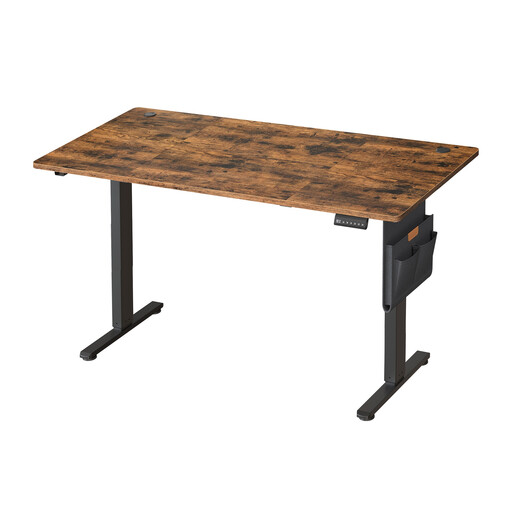
Why It Stands Out This electric standing desk brings ergonomic flexibility into the home office. With a quiet motor, you can smoothly transition from sitting to standing with the touch of a button. The height is adjustable from 72 cm to 120 cm, and you can save up to four preferred heights with the memory presets for quick, one-touch adjustments. It also includes thoughtful features like a fabric storage pocket, a hook for headphones or bags and cable management holes to keep your workspace tidy.
Pros
Who is it for? This sit stand desk is an excellent choice for health-conscious individuals, remote workers who spend long hours at their computer and anyone looking to create a more dynamic and comfortable ergonomic office desk setup.
If your workspace needs to disappear at the end of the day, a permanent desk might not be the right fit. For multi-purpose rooms, guest rooms or anyone prioritising flexibility, a folding desk offers a practical alternative that can be stored away easily.
If flexibility is your top priority, explore our curated selection of folding home office desks to find a model that fits your dynamic lifestyle.
Start by measuring your available floor space. As a general rule, you should leave at least 80-90 cm of clear space behind the desk for your chair to move freely. Then, consider what you will place on it. A desk depth of 50-60 cm is often sufficient for laptop use, while a depth of 70-80 cm is better for larger desktop monitors to ensure a comfortable viewing distance.
For many people, the ability to change posture throughout the workday is a significant benefit. An electric standing desk makes it easy to switch between sitting and standing, which can help you feel more active and focused. While it is a personal preference, those who spend the majority of their day at a desk often find it to be a valuable addition to their home office for comfort and versatility.
The ideal depth depends on your equipment. For a simple setup with a laptop, a depth of 50 cm can be adequate. However, if you use one or more large external monitors, a depth of 60-80 cm is recommended. This extra space allows you to position the screens at an optimal distance from your eyes (typically an arm's length away) to reduce eye strain.