
24/7 Customer Support

Free returns

Same-day & Next-day Delivery

Quality Guaranteed

Unlock Your Welcome Offers: FREE Delivery | Up to 80% OFF | Free 30-day JoyPlus trial
Download the APP
Choosing the best home treadmill is less about finding the longest feature list and more about matching the machine to your available space, workout style and realistic usage. A compact treadmill may suit a flat-dweller who walks during the working day, while a heavier user or regular runner may need a stronger frame, wider belt and higher capacity.
Before comparing prices, look beyond the headline claims. Several common buying mistakes can leave a treadmill unused after a few weeks.
Motor descriptions can be difficult to compare. A stated horsepower figure may refer to peak output rather than continuous operation. For regular jogging or running, check the speed range, motor type, maximum user weight and intended use together rather than relying on one number.
A walking pad treadmill designed for low-speed movement is not automatically suitable for sustained running. Likewise, a compact treadmill with a 12 km/h top speed may be more appropriate for walking and light jogging than intensive sprint training.
Product photographs can make a treadmill appear smaller than it is. Measure the space in which you intend to exercise, then check the machine’s full operating dimensions, folded size and clearance around the belt.
A folding treadmill can reduce storage demands, but it still needs a safe, level area during use. For home offices and flats, check whether transport wheels are included and whether you can move the unit without damaging flooring.
A quiet treadmill can reduce disturbance, but noise depends on the motor, belt, user weight, pace and floor surface. Impact from running is often more noticeable than motor noise, particularly in flats. Consider a protective mat, keep the belt lubricated as instructed and avoid placing the treadmill directly against a shared wall.
For walking, a model with a lower starting speed and simple controls may be sufficient. Joggers should look for a top speed around 10–12 km/h or higher, while runners may require a faster electric treadmill with a stable frame.
Incline adds variety without requiring a larger machine. A manual incline treadmill needs you to stop and adjust the setting, whereas a treadmill with automatic incline can alter elevation from the console or a compatible app. The percentage describes the rise of the belt relative to its length; an 18% setting creates a notably more demanding uphill position than a flat deck.
Do not choose a treadmill at the exact limit of your body weight. Allowing a reasonable margin can help the machine feel more stable and gives flexibility for clothing, footwear and movement. A high-capacity treadmill should also have a suitably robust frame and running deck.
The products below list capacities from 110 kg to 172 kg. Always follow the manufacturer’s instructions and do not exceed the stated maximum load.
A longer and wider belt generally provides more room for a natural stride, which is particularly useful for taller users and runners. Under-desk models are usually shorter because they are designed for walking rather than fast running.
Check whether the belt requires periodic lubrication and alignment. Keep the running surface clean, place the machine on a stable floor and use the supplied safety key. Electrical equipment should be connected and operated according to the supplied instructions, with the cable positioned to prevent trips.
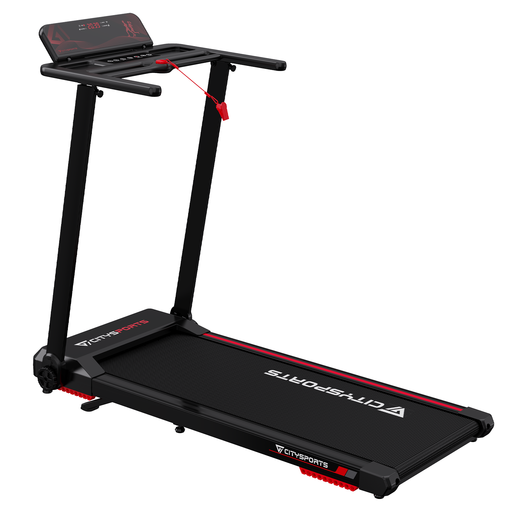
Why This Fits Their Persona: A practical option for UK flats, home offices and first-time treadmill buyers who want walking, jogging and occasional running without a large permanent footprint.
The specifications state a 1–12 km/h range, 120 kg capacity and operation below 45 dB. Its folding design and 26.5 kg net weight also make storage more manageable.
Two manual incline settings, a six-layer belt and LED workout display with optional app connection.
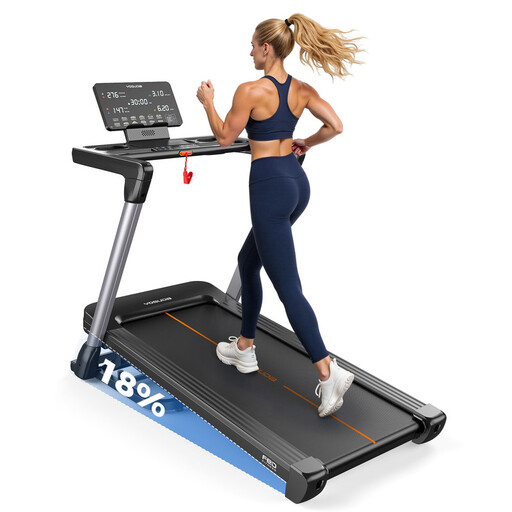
Why This Fits Their Persona: Suits users seeking a more substantial treadmill for home use, with incline training, app connectivity and a higher stated load capacity.
Instead of relying on a headline speed claim alone, its listed specification includes a one-piece steel frame, 172 kg maximum capacity and automatic incline up to 18%.
A 3.0 HP brushless motor, four-way cushioning system, high-resolution LED screen and Bluetooth app compatibility.
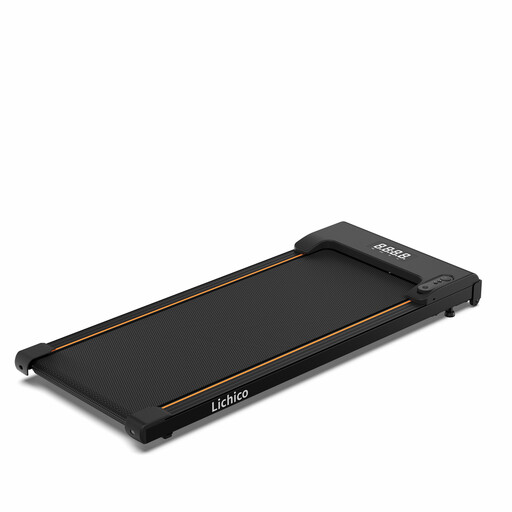
Why This Fits Their Persona: Designed for remote workers and users who prioritise daily walking, step targets or active standing-desk sessions over fast running.
Its 120 × 50 × 10.5 cm format is clearly suited to under-desk use, while the stated 130 kg capacity helps heavier users compare it against smaller walking pads.
Steel frame, rubber running belt, compact profile and a stated maximum capacity of 130 kg.
A treadmill with Bluetooth app support can help you record sessions or access compatible training features, but check which apps are supported before buying. For entertainment, the CITYSPORTS PRO folding electric treadmill includes Bluetooth speakers, a display stand and a 1–12.5 km/h speed range, with a stated 110 kg capacity.
The Mobvoi Home Treadmill Ultra Intelligent AI 3-in-1 model combines a holder for a cup, phone or laptop with a stated 6% gradient, 2.5 HP motor, 12 km/h top speed and 120 kg capacity. It also lists compatibility with TicSports, Zwift and Kinomap. These details make it worth considering for users who want a compact treadmill with connected workout options.
We have compiled a complete, real-time list of products that fully satisfy these strict selection criteria and UK safety regulations.
It can be, provided there is sufficient clearance, a stable floor and a suitable noise-management plan. A quiet treadmill may reduce motor noise, but walking and running impact can still travel through floors. Check the folded and operating dimensions before ordering.
Running cost depends on motor power, speed, incline, user weight and session length. To estimate usage, check the treadmill’s electrical rating and multiply its kilowatt figure by your electricity tariff and operating time. Actual consumption may vary during acceleration and incline changes.
Lifespan depends on construction, frequency of use, user weight and maintenance. Keep the belt clean and aligned, lubricate it as directed and inspect the power cable and safety key regularly. Choosing a model with suitable capacity and intended speed is more useful than paying for features you will not use.