
24/7 Customer Support

Free returns

Same-day & Next-day Delivery

Quality Guaranteed

Unlock Your Welcome Offers: FREE Delivery | Up to 80% OFF | Free 30-day JoyPlus trial
Download the APP
Choosing the best home treadmill is less about finding the longest feature list and more about matching the machine to your room, routine and body weight. A compact walking pad may suit a home-office user, while a high-capacity treadmill with incline is more appropriate for regular running.
Before buying, look beyond promotional wording. The following guide highlights common purchasing traps, the specifications worth checking and suitable options for different UK households.
Motor descriptions can be difficult to compare. A quoted horsepower figure may refer to peak output rather than continuous operating power. This matters if you plan to use an electric treadmill for home running, where sustained performance is more relevant than a brief maximum.
Check the stated speed range, recommended user weight and intended use together. A walking pad designed for low-speed activity should not be treated as a full treadmill for sprint training simply because a motor figure appears in the listing.
A foldable treadmill still needs sufficient space when in use, plus room around the belt for safe access. Measure doorways, storage cupboards and the area beside furniture before ordering.
Also check the folded height and product weight. A machine may fold vertically but remain difficult to move without transport wheels. For flats and smaller homes, a low-profile compact treadmill or under-desk treadmill may be more practical than a larger folding frame.
An incline can increase workout intensity, but manual and automatic systems are not the same. A treadmill with incline that requires stopping to adjust is different from one with motorised incline changes during a session.
Similarly, cushioning systems vary in construction and feel. Bluetooth app support may provide workout tracking or preset programmes, but it does not automatically mean the treadmill offers advanced training control. Confirm which apps are supported and whether any subscription is required.
For regular walking, a shorter deck can be adequate. Running generally benefits from a longer and wider running surface, particularly for taller users or those with a longer stride. Compare the usable belt area rather than relying only on the external dimensions.
Leave clear space around the treadmill as recommended in the user manual. Place it on a flat, stable surface and keep cables away from walkways. In a flat or home office, consider vibration, floor protection and the proximity of neighbours.
A treadmill for running and walking should offer a speed range that covers your current routine and allows reasonable progression. The products below range from under-desk walking designs to models reaching 12 km/h.
Incline is another practical distinction:
Never choose a treadmill solely by matching your weight closely to the maximum capacity. Allow a sensible margin, especially for running, and follow the manufacturer’s stated limit.
Check whether the listing provides continuous motor information, speed, belt dimensions and maintenance instructions. Most treadmills require belt cleaning, alignment checks and lubrication at intervals stated in the manual. Regular upkeep can help avoid slipping, noise and uneven wear, but it does not remove the need to follow safety guidance.
For UK use, review the supplied instructions, electrical information, warranty terms, returns policy and seller contact details before purchase. Keep children and pets away from moving parts, use the safety key where supplied and do not use the machine on an unstable surface.
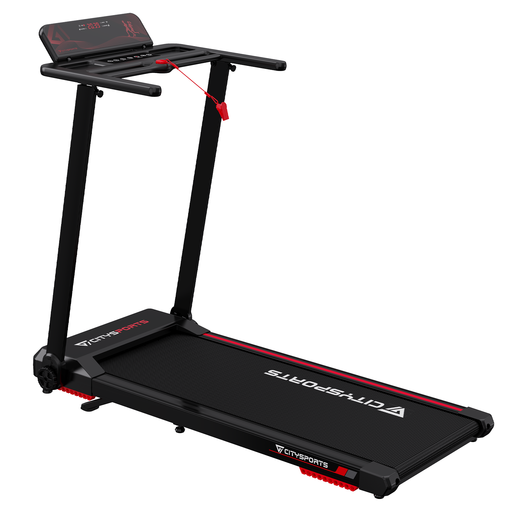
Why This Fits Their Persona: A practical option for beginners wanting indoor walking, jogging or occasional running without a large, heavy frame. Its foldable design is suited to flats and smaller rooms.
The listing specifies a 1–12 km/h speed range, 120 kg maximum user weight and two manual incline settings, making its intended use clearer than vague “multi-purpose” wording.
Foldable 26.5 kg frame; 0% or 8% manual incline; stated operating noise below 45 dB.
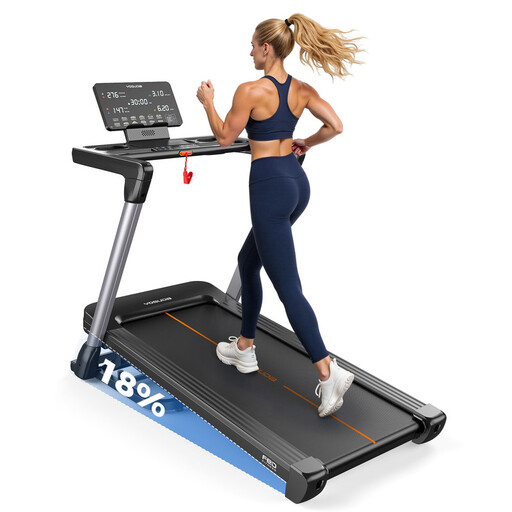
Why This Fits Their Persona: Suitable for households wanting a more substantial machine for structured walking, jogging and running sessions, with incline and connected training features.
The listing separates its automatic incline, motor specification, cushioning construction and maximum capacity, helping buyers compare meaningful details rather than only app features.
Automatic incline up to 18%; 3.0 HP brushless motor; 172 kg stated maximum load; Bluetooth app compatibility.
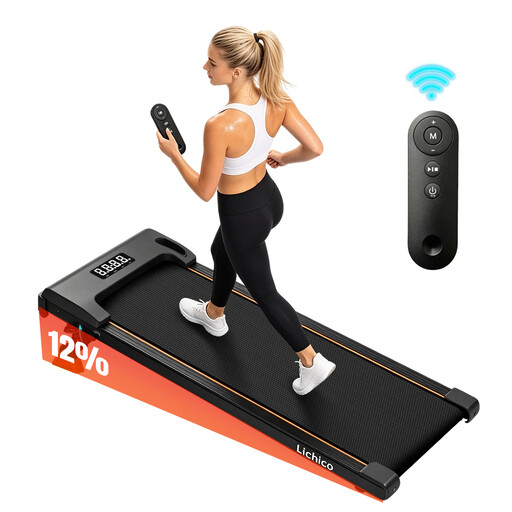
Why This Fits Their Persona: Designed for home-office walking, active workstations and users who prioritise a low-profile format with a higher stated capacity.
Its listing identifies the under-desk format, 130 kg capacity and 9% incline, so shoppers can check whether the low-profile design matches their intended activity.
Remote control; 9% stated incline; maximum capacity of 130 kg; designed for under-desk use.
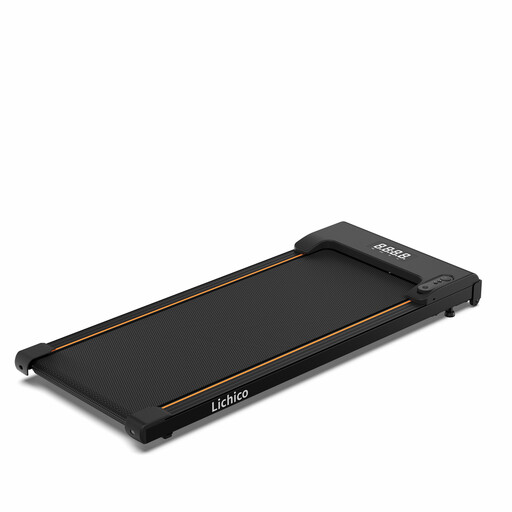
Why This Fits Their Persona: A straightforward walking pad for daily steps, low-impact home exercise or use beneath a standing desk where a 120 cm by 50 cm footprint is manageable.
The stated dimensions and 130 kg maximum capacity make it easier to assess storage and suitability before purchase. It is not presented as a full-speed running machine.
10.5 cm height; steel frame and rubber belt; 130 kg stated maximum capacity.
We have compiled a complete, real-time list of products that fully satisfy these strict selection criteria and UK safety regulations.
It can be, provided the floor is stable and there is enough space around the machine for safe use. Check the treadmill’s noise information, but remember that measured noise can vary with speed, flooring, footwear and the user’s stride. A mat may help protect flooring and reduce vibration, subject to the manufacturer’s guidance.
Lifespan depends on construction, frequency of use, user weight, maintenance and storage conditions. Keep the belt clean, check alignment and apply lubricant only as instructed. Avoid exceeding the stated user capacity and follow the recommended duty cycle. A treadmill used occasionally for walking may experience different wear from one used daily for running.
A walking pad generally uses less power when operating at lower speeds, but running cost depends on motor output, session length, electricity tariff and incline. To estimate the cost, multiply the appliance’s power consumption in kilowatts by hours used and your electricity unit rate. Check the product specification for the available electrical information rather than relying on its size alone.