
24/7 Customer Support

Free returns

Same-day & Next-day Delivery

Quality Guaranteed

Unlock Your Welcome Offers: FREE Delivery | Up to 80% OFF | Free 30-day JoyPlus trial
Download the APP
Keeping an eye on your home, whether you're in the next room or across the country, offers valuable peace of mind. An indoor security camera can serve many purposes: a watchful eye in the nursery, a way to check on a mischievous pet or an added layer of security for your property. However, with so many features like pan-tilt functions, night vision and various installation methods, choosing the right device can feel overwhelming.
As the Joybuy Product Recommendation Officer, my role is to help you understand the practical features that matter. This guide will walk you through key considerations for selecting a home security camera in the UK and highlight a few models suited for different needs, from monitoring pets and babies to keeping watch through a window.
Before diving into specific products, let's outline a few important features to look for. Thinking about these points will help you narrow down the options to what best suits your home and lifestyle.
A camera's field of view determines how much of a room it can see from a fixed position. For monitoring a large, open-plan space, a pan tilt camera is an excellent choice. These models can rotate horizontally (pan) and vertically (tilt), often providing a full 360° view that you can control remotely from an app. This eliminates blind spots and means a single device can cover an area that might otherwise require multiple cameras.
Many incidents you might want to monitor, from a baby stirring to a potential break-in, happen in low light. While standard infrared night vision shows a black-and-white image, newer models now offer colour night vision camera technology. By using more sensitive sensors and sometimes a subtle spotlight, these cameras can produce a full-colour picture in near darkness, providing far more detail. This can be particularly useful for identifying clothing colours or other specific details.
For renters or anyone who wants to avoid damaging walls, a no drill security camera is essential. Many modern indoor cameras are designed for simple plug-and-play setup. They can be placed on a shelf, table or mounted with non-damaging adhesive strips. A window security camera, for instance, might use a special mount to attach directly to the glass, offering a view of your driveway or garden without any outdoor wiring or drilling.
Here are a few indoor camera options that address common household needs, from all-around monitoring to specific placement challenges.
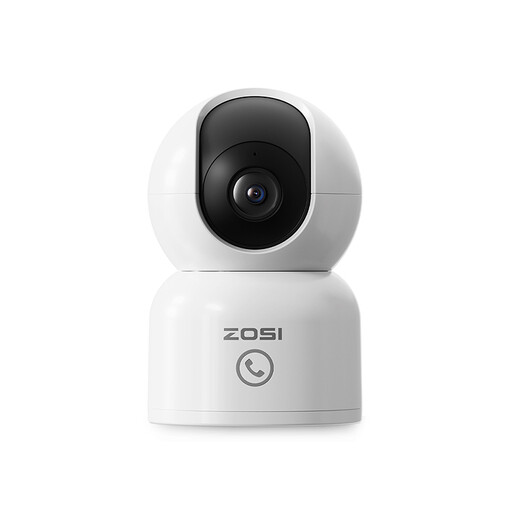
Why It Stands Out: This model is a versatile all-rounder, combining full room coverage with smart features that make it a great pet camera or baby monitor. Its ability to automatically track movement is a standout function.
Pros:
Who is it for? This is an ideal choice for parents, pet owners or anyone caring for an elderly family member. The combination of a pan tilt camera, motion tracking and easy two-way communication makes it a highly interactive monitoring solution for inside the home.
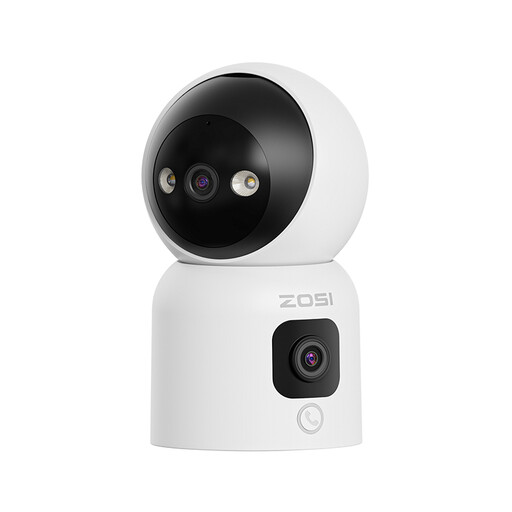
Why It Stands Out: This camera offers a unique dual-lens system. One lens provides a wide, panoramic view of the room, while the second lens can pan and tilt to focus on specific details, giving you both context and a close-up view simultaneously.
Pros:
Who is it for? This is a great option for users who want maximum visual information from a single device. The ability to see a wide overview and a detailed close-up at the same time is perfect for monitoring large, active spaces like a living room or playroom.
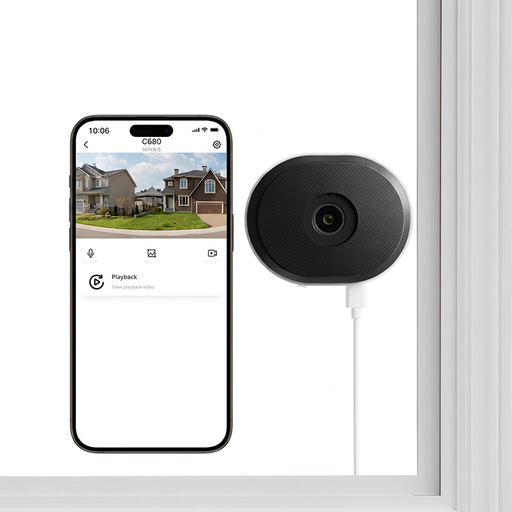
Why It Stands Out: Specifically engineered to solve a common problem: recording clearly through glass. Its anti-glare technology minimises reflections from sunlight or indoor lights, making it a functional window security camera.
Pros:
Who is it for? This camera is the solution for anyone living in a flat or rental property who wants to monitor the area outside their home—like a car park, front entrance or garden—without installing an outdoor camera.
The cameras highlighted here are just a starting point. The world of smart home security is constantly evolving, with devices tailored to every possible need and budget. If you're looking for different features or want to explore a wider selection, you can browse our full range of devices.
Explore All Intelligent Electronics
1. Can indoor security cameras see through windows at night? Standard indoor cameras struggle with this. Their infrared (IR) lights reflect off the glass, creating a white glare that obscures the view. To monitor through a window effectively, you need a specialised window security camera, like the ZOSI C680, which uses anti-glare technology and ambient light to capture a clear image without using reflective IR LEDs.
2. Do I need a subscription for an indoor security camera? Not necessarily. Most WiFi security camera models, including the ZOSI camera options listed, offer flexible storage. You can typically use a local microSD card (purchased separately) to store recordings without any monthly fees. Cloud storage is usually offered as an optional subscription, which provides off-site backup of your footage.