
24/7 Customer Support

Free returns

Same-day & Next-day Delivery

Quality Guaranteed
Download the APP
Categories
By Joybuy Product Recommendation Officer Updated: 07 June 2026
Finding the right frying pan for an induction hob can feel like a challenge. Unlike gas or electric cooktops, induction technology requires specific magnetic materials to generate heat, meaning not every pan will work. Whether you're searing a steak, flipping pancakes or sautéing vegetables, the pan you choose directly impacts your results.
This guide is designed to help you understand the key differences between popular pan types and identify a high-quality pan for your induction hob. We will look at options that offer durability, performance and value, helping you make a confident choice for your kitchen.
Before looking at specific products, it's helpful to understand what makes a great induction pan. Here are a few key points to consider during your search.
The material of your frying pan is the most significant factor in its performance.
non-stick frying pan offers easy food release and simple cleanup. Modern non-stick surfaces are increasingly durable, with some designed to be a scratch resistant pan that can even handle metal utensils. They are a practical choice for everyday cooking.cast iron skillet is prized for its exceptional heat retention and even distribution. It excels at high-heat searing, creating a perfect crust on meats and vegetables. While heavier, a well-maintained cast iron pan develops a natural non-stick surface over time and can last for generations.stainless steel frying pan offers excellent control and responsiveness. It's perfect for browning, searing and creating pan sauces (deglazing). It requires a bit more technique to prevent sticking, but its durability and performance are hard to match for certain cooking styles.A good pan is an investment. Look for a flat, heavy base that makes full contact with the induction hob for efficient energy transfer. Check if it is an oven safe pan, which adds versatility for finishing dishes or keeping food warm. Features like comfortable, heat-resistant handles and dishwasher-safe cleaning also contribute to a better user experience.
For daily tasks, a small frying pan is often the most practical tool. A 21cm frying pan or a 22cm model is perfect for cooking for one or two people, frying a couple of eggs or preparing side dishes without taking up unnecessary space on the hob or in the cupboard.
Here are our recommendations, selected to cover a range of cooking needs and preferences, from convenient non-stick to classic cast iron.
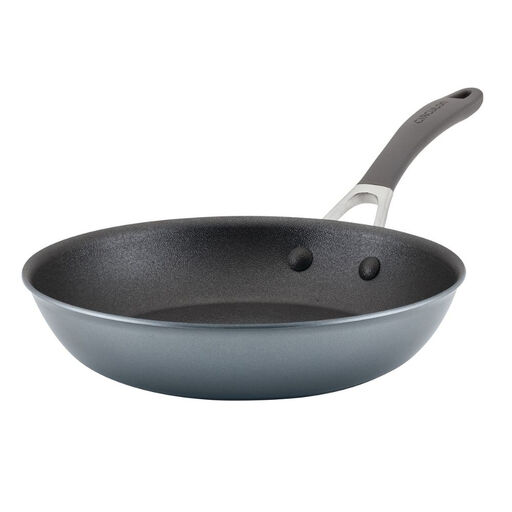
Why It Stands Out: This pan is built around a highly durable non-stick system. According to Circulon, its ScratchDefense technology is designed to eliminate scratching and flaking. The pan's aluminium core ensures fast, even heating, while the solid stainless steel base makes it perfectly suited for induction hobs. Its combination of convenience and robust construction makes it a strong contender for daily use.
Pros:
Who is it for? This is an excellent choice for home cooks who value convenience and reliability. If you want a non-stick frying pan that simplifies cooking and cleanup without compromising on durability, this is one to consider.
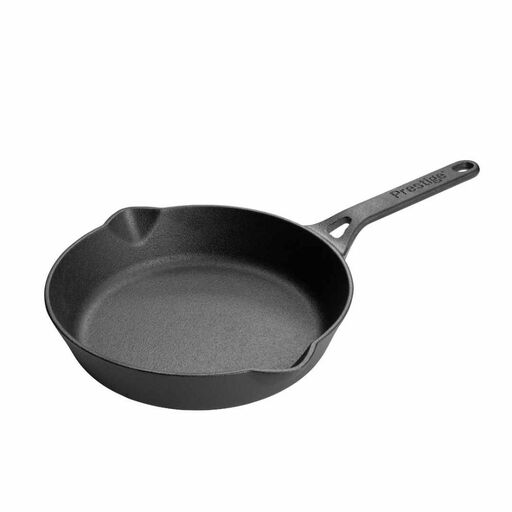
Why It Stands Out: This cast iron skillet brings traditional cooking performance to modern induction hobs. It arrives pre-seasoned with soybean oil, so it's ready to use straight away. Its main advantage is its ability to get extremely hot and retain that heat, delivering an unbeatable sear on steaks, burgers and other meats. At 2.23 kg, its weight is a testament to its solid build.
Pros:
Who is it for? For the cook who loves rustic, flavourful results and enjoys the process of cooking. If you want to achieve a deep, flavourful crust on your food and own a pan that will last a lifetime, this cast iron skillet is a fantastic option.
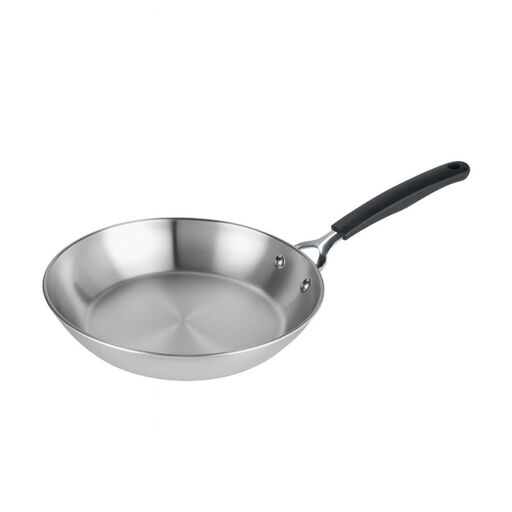
Why It Stands Out: This stainless steel frying pan is for those who prefer a traditional, uncoated cooking surface. Made from 100% stainless steel, it offers precise temperature control, making it ideal for searing and browning. The encapsulated steel base ensures fast and even heating on an induction hob. While it requires proper preheating and the use of oil to minimise sticking, its durability and performance are what make it a kitchen workhorse.
Pros:
Who is it for? This pan is suited for confident home cooks who are comfortable with stainless steel and want the control it provides for techniques like searing and deglazing to make pan sauces. It's a durable, no-fuss tool for those who prioritise performance over non-stick convenience.
The pans highlighted here represent some of the most popular material types for induction cooking. However, every cook's needs are different. If you're looking for a different size, style or feature set, there are many other excellent choices available.
Explore our complete collection to find the perfect frying pan induction model for your kitchen. [Browse our full range of induction frying pans here](https://www.joybuy.co.uk/explore/frying-pan-induction/TyfYVto3)
The simplest way is the magnet test. If a magnet sticks firmly to the bottom of the pan, it contains ferrous metal and will work on an induction hob. Most compatible cookware also features a specific symbol on the base, which looks like a coil of wire.
A non-stick pan is designed for easy food release, making it ideal for beginners or for cooking delicate items like eggs and pancakes. A stainless steel pan excels at creating a fond (the browned bits on the bottom of the pan) for flavourful sauces and achieving a hard sear on meat, but it requires more skill to prevent food from sticking.
Many modern cast iron pans, like the Prestige model featured, come pre-seasoned and are ready for use. However, the "non-stick" properties of cast iron are built up over time with use and occasional re-seasoning (applying a thin layer of oil and heating it). This process helps protect the pan and enhances its cooking surface.