Students with a short break
If you have a mug and access to hot water, plain instant coffee avoids the need for a coffee machine or filter equipment. Follow the instructions on the product you choose.


If you prefer a smoother cup between lectures, start with a blend described as smooth or mild, such as Kenco Smooth or Douwe Egberts Pure Gold; Nescafé Original is described as fuller and bolder. Choose a clearly labelled decaf product if caffeine is a consideration, and check the exact pack for preparation instructions and ingredients—particularly when choosing sachets.
For a university lunch break, the useful distinction is whether you need simple preparation, a particular flavour profile or a closer look at caffeine and ingredients.
If you have a mug and access to hot water, plain instant coffee avoids the need for a coffee machine or filter equipment. Follow the instructions on the product you choose.
Kenco describes Smooth as full-flavoured without an overly strong or bitter taste. Sainsbury’s describes Douwe Egberts Pure Gold 190g as medium roasted with a smooth taste. These descriptions can help narrow your choice, but they are not a shared taste scale.
Look for an explicit decaf designation rather than judging caffeine by flavour. If you choose a milky or flavoured sachet, read its ingredient and allergen label: the Joybuy listing for NESCAFÉ Latte sachets, for example, identifies milk as an allergen.
Choose a format you can prepare during your break, then use the exact product’s flavour description, caffeine designation and ingredient label to narrow the options.
| Priority | What to check | Your needs |
|---|---|---|
| Preparation | Check whether you need hot water, a spoon and a mug. Follow the pack’s amount and water instructions rather than applying one recipe to every blend. | I want to make a drink during a short break without using brewing equipment. |
| Flavour | Read the exact product description for smooth, mild, bold or dark-roast wording. Treat each brand’s strength or intensity number as its own description, not a common scale. | A gentler-tasting cup appeals to me—or I may prefer the more pronounced flavour described for Nescafé Original. |
| Caffeine | Look for a clearly labelled decaf product if that is what you want. Do not use roast, flavour or strength wording to estimate caffeine. | I want to distinguish decaf from ordinary instant coffee before choosing a lunch drink. |
| Ingredients | Read the current ingredient and allergen information, especially on latte, 2-in-1 and 3-in-1 sachets. The Joybuy NESCAFÉ Latte listing, for example, identifies milk. | If I carry a sachet, I need to know whether it contains plain coffee or other ingredients. |
| Pack format | Compare the stated pack quantity and whether it is a jar, refill or portioned sachets. Check that the format is practical to store or carry. | I can keep a larger pack where I make coffee, or take individual servings with me. |
Kenco’s intensity 7 and the strength 3 shown on Sainsbury’s listing for Douwe Egberts Pure Gold describe different products under different labelling systems. They do not establish a direct flavour or caffeine comparison.
Use the wording to shortlist flavours, then check the description of the exact blend you plan to buy.
The Joybuy listing for NESCAFÉ Latte sachets includes milk ingredients and sugar and identifies milk as an allergen. A sachet is not necessarily equivalent to a serving of plain instant coffee.
Check the current ingredient and allergen label when choosing milky, flavoured, 2-in-1 or 3-in-1 products.
A mild-tasting product is not necessarily decaf. For pregnancy, NHS guidance advises no more than 200mg of caffeine a day from all sources and estimates 100mg in a cup of instant coffee.
Check for an explicit decaf designation and use the exact product’s serving information when keeping track of caffeine.
These named products illustrate different descriptions and formats; a brand name alone does not tell you how every blend in its range will taste.
Nescafé describes Original as a medium-intensity instant coffee with a full, bold taste.
Kenco describes Smooth as full-flavoured without an overly strong or bitter taste.
JDE Professional describes Pure Gold as a freeze-dried Arabica-and-Robusta coffee. Sainsbury’s describes its 190g Pure Gold listing as medium roasted.
Sainsbury’s lists Carte Noire Classique as instant coffee with instructions for one or two teaspoons per cup.
Tesco describes its Gold Instant Coffee as freeze-dried coffee made from Robusta and Arabica beans.
Sainsbury’s describes Gold Roast as freeze-dried instant coffee with a smooth, rich profile and strength 3 medium.
These options include clearly named decaf coffees alongside Kenco and Douwe Egberts blends. Compare the exact pack for preparation and caffeine information that matters to your break.
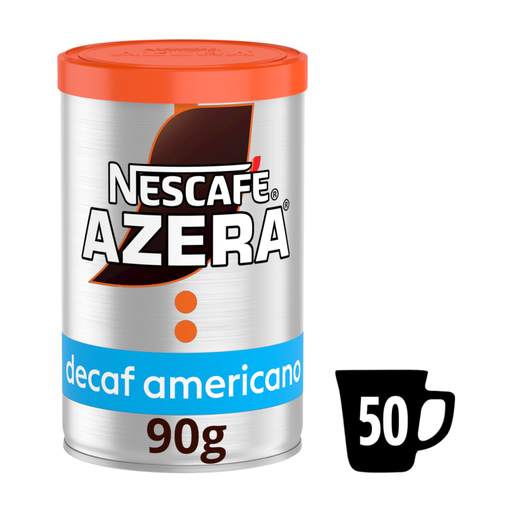 Image unavailable
A named decaf Americano option for a short break. Check the pack’s serving instructions if you need a particular amount of coffee per cup.
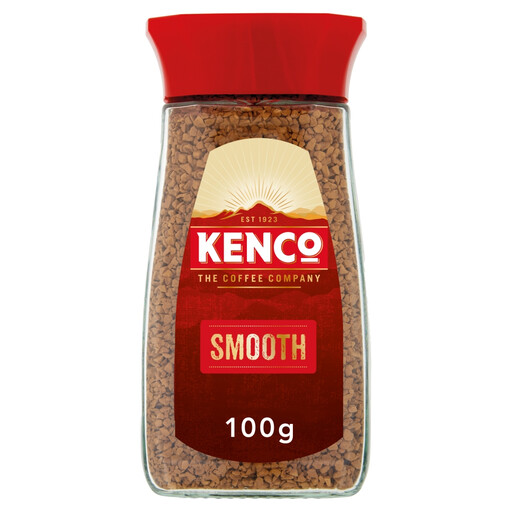 Image unavailable
Consider this 100g pack if Kenco’s description of Smooth—a full flavour without an overly strong or bitter taste—matches your preference. The description is the manufacturer’s, not a comparison with the other coffees here.
 Image unavailable
The product name explicitly identifies this 190g Gold Blend variant as decaf. If you track caffeine by serving, check the information on the exact pack rather than relying on the blend name.
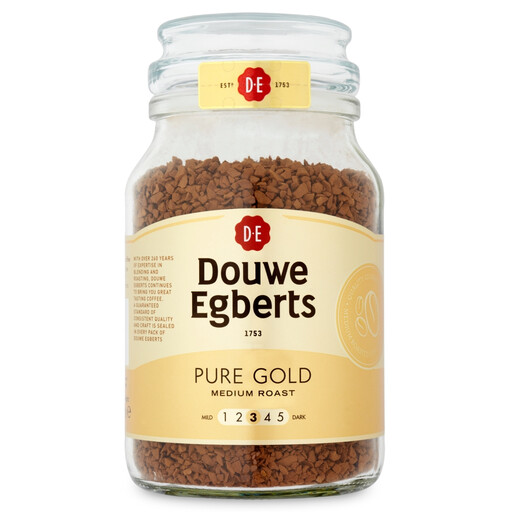 Image unavailable
This 190g product is named as a medium roast; Sainsbury’s also describes its 190g Pure Gold listing as medium roasted. Check this pack’s preparation directions before making it, as the available product descriptions give differing serving directions.
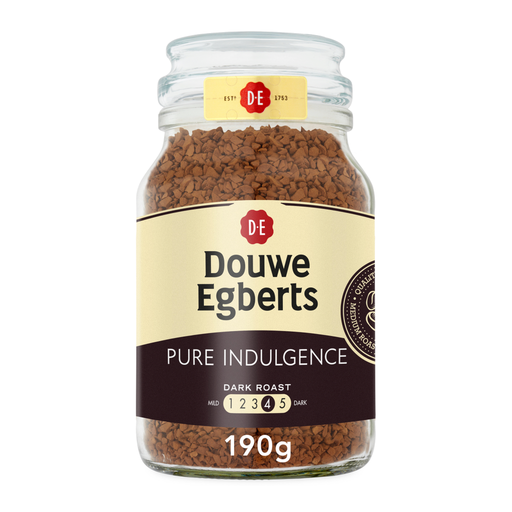 Image unavailable
This 190g Pure Indulgence pack offers another named Douwe Egberts blend to consider. Do not infer its caffeine per cup from flavour or strength wording; check the exact pack and serving instructions if you monitor your intake.
Choose a jar when you can keep coffee where you make your drink and have a mug, spoon and hot water. A sachet is easier to carry as a single portion, but check whether it contains plain coffee or added ingredients.
Follow the instructions on the exact pack. Sainsbury’s listing for Carte Noire Classique, for example, says to use one or two teaspoons per cup with water just off the boil; that is not a serving instruction for every blend.
Do not treat flavour or strength wording as a caffeine measurement. Check the exact product’s caffeine information or choose a product explicitly labelled decaf if that designation matters to you.
Read the current ingredient and allergen label. The Joybuy listing for NESCAFÉ Latte sachets includes milk ingredients and identifies milk as an allergen, so it should not be treated as plain instant coffee.
NHS guidance advises no more than 200mg of caffeine a day during pregnancy and estimates 100mg in a cup of instant coffee. The daily figure covers caffeine from other foods and drinks as well as coffee.